




Editor's note. At the end of December 2014 Jean Georges Klein left Arnsbourg. The new head chef is Philippe Labbé, who previously cooked in Paris at l'Abeille. Consequently the review below is now of largely historical interest only.
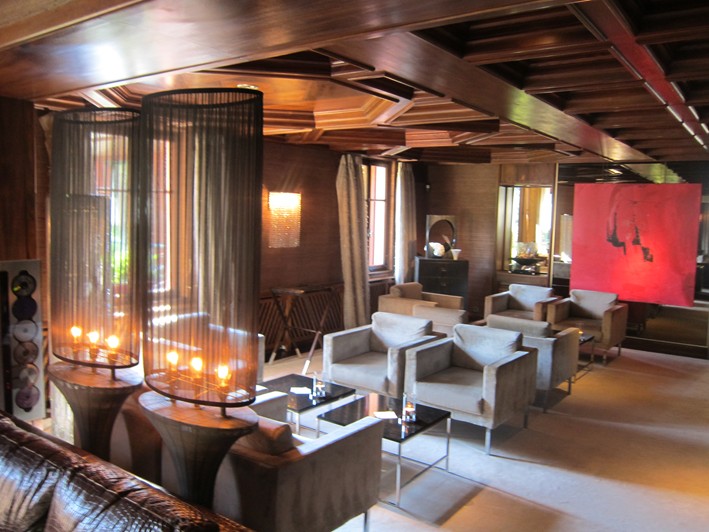
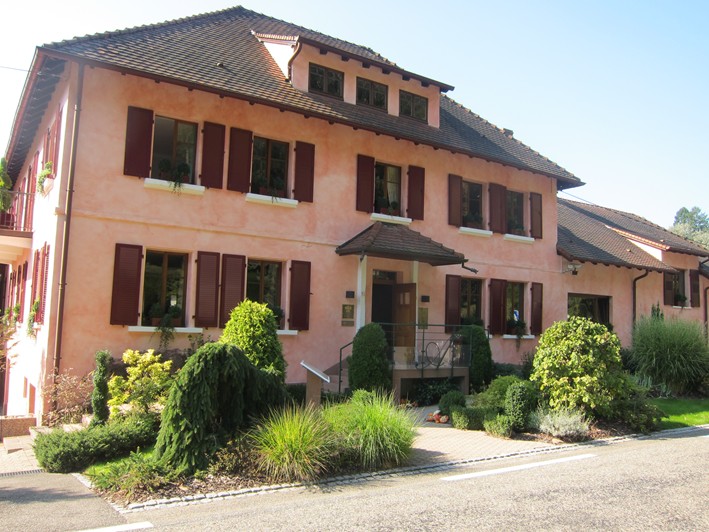
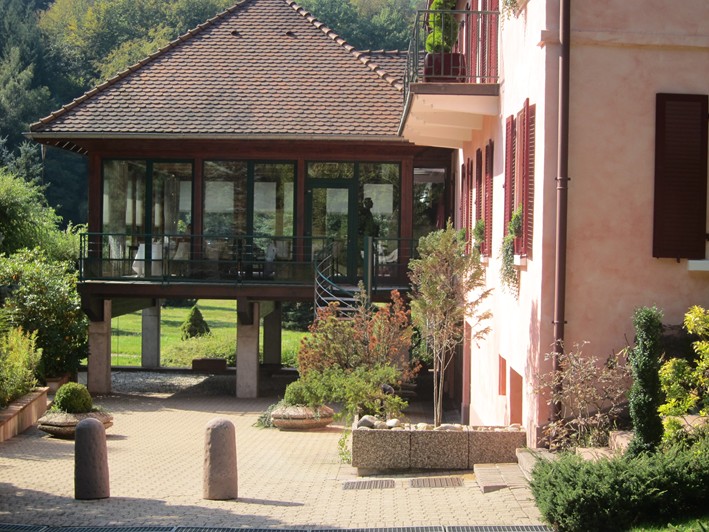
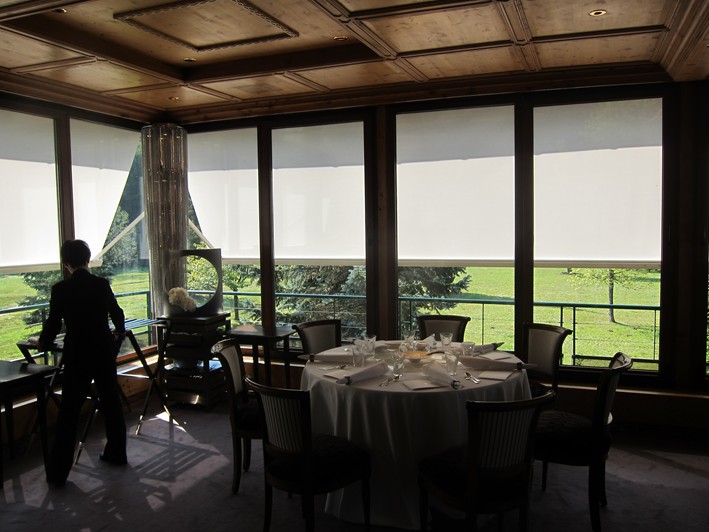
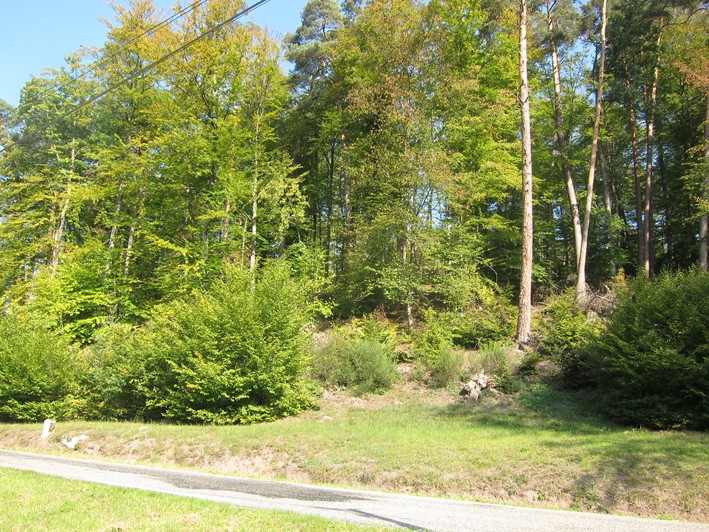
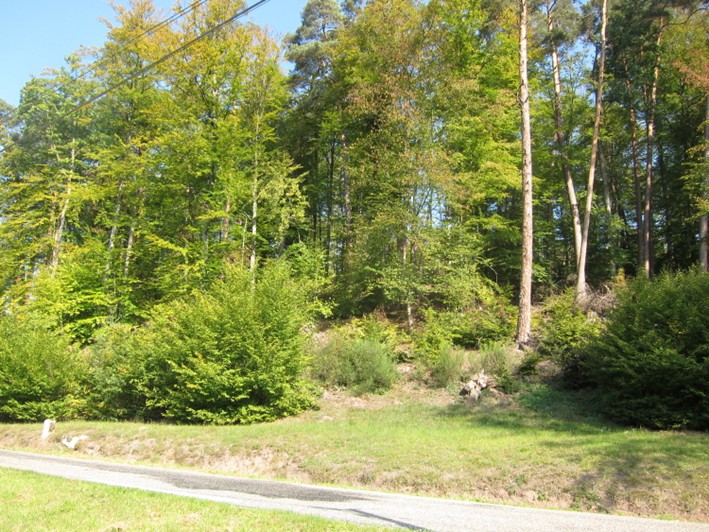
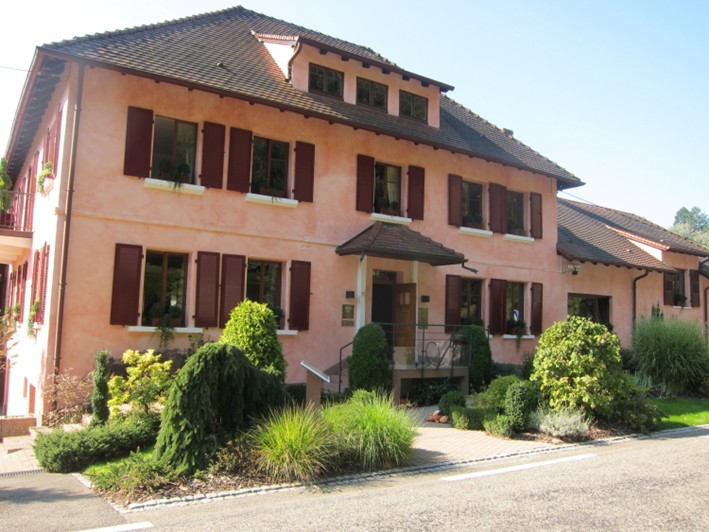
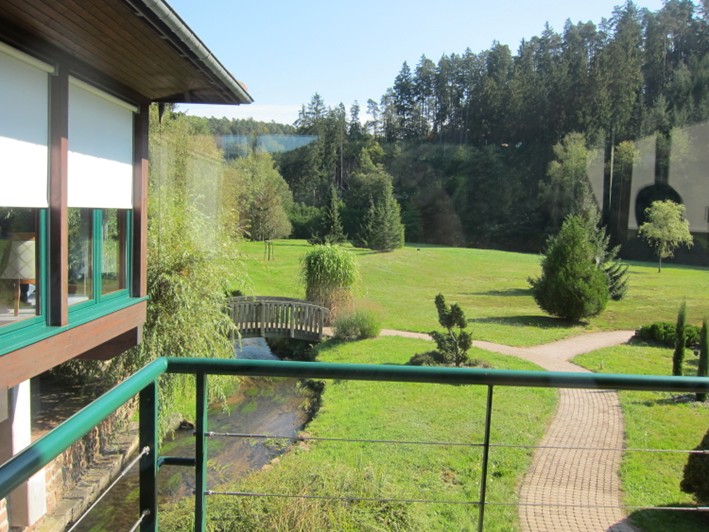
Arnsbourg is in a fairly remote part of Alsace, an hour or two’s drive from just about anywhere you are likely to be. The scenery is very pretty, with a nearby forest and river. The building itself now has some rooms attached (very useful as there are no really convenient hotels nearby), on the opposite side of the road from the dining room. As you enter there is a large lounge area, and the dining room has two conservatory areas built out with views over the woods. On a sunny day the view is very pretty indeed.
The dining room has a mauve carpet rather than a wooden floor, so noise levels are low. Tables are large and generously spaced, with white linen tablecloths carefully ironed on each table. On this sunny September day the dining room became uncomfortably warm in the conservatory section, which was a pity. The building that houses the restaurant was originally a home for forestry workers, but became a restaurant in the 1980s, gaining its first Michelin star in 1989.
Chef Jean Georges Klein was unusual in being a front-of-house manager at his family restaurant before moving to run the kitchen relatively late in life (aged 40), taking over from his mother and guiding it to three Michelin star level in 2002. The cooking style is decidedly modern. The main tasting menu, which we tried, was EUR 160, with a smaller menu at EUR 135, in addition to the a la carte. There is apparently a cheaper lunch menu available on weekdays.
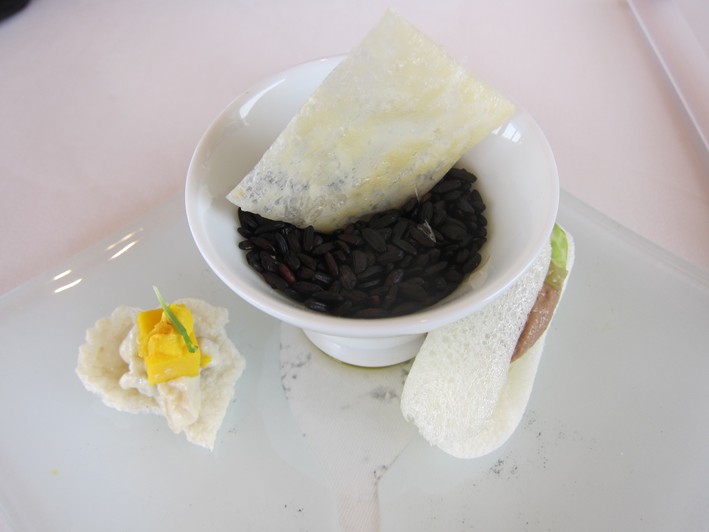
A series of nibbles arrived as we looked at the menu. The first set was tomato, basil oil and mozzarella mousse, with a dried tomato served on a spoon. It was paired with a nibble of sheep milk, a mini sandwich with liver flavour, and rice toast with shellfish (18/20).
The 21 page wine list started at €45 (Coudoulet de Beaucastel 2004, which sells for €17 in the shops) and climbed rapidly in price, with mark-up levels that variable and far from kind in places. The excellent Vega Sicilia Alion 1999 was a little matter of €280 for a wine you can buy in a shop for €51, more than five times the retail price, one of the worst mark-up levels I spotted on the list. Au Bon Climat Santa Maria Pinot Noir 2000 was €120 for a wine you can pick up for €40, Leflaive Pucelles 2004 was €270 for a wine you can buy for €150 in the shops, while Leflaive Batard-Montrachet 1999 was €580 compared to a retail price of €291. The Winesearcher database lists the average price of Hermitage la Chapelle Jaboulet Aine 1990 at €492, but it was listed here at €3,600; perhaps this was a typo on the list, but I fear it was not. Water was a ludicrous €14 a bottle. We drank a basic Leflaive at €75, a relative bargain for a wine that retails at around €25.
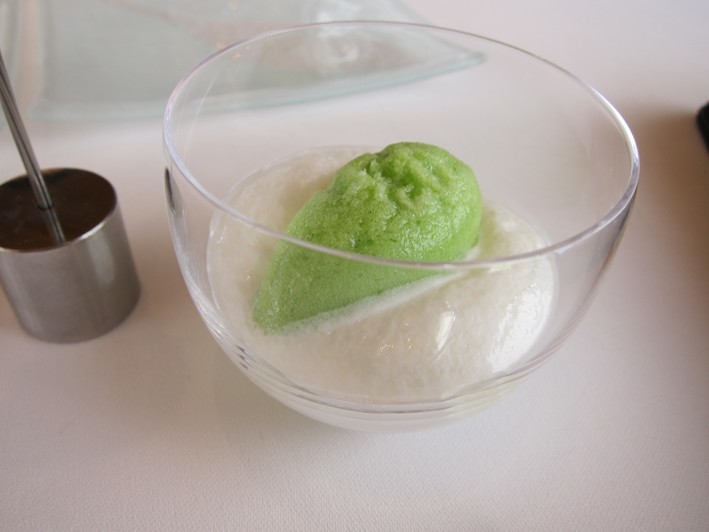
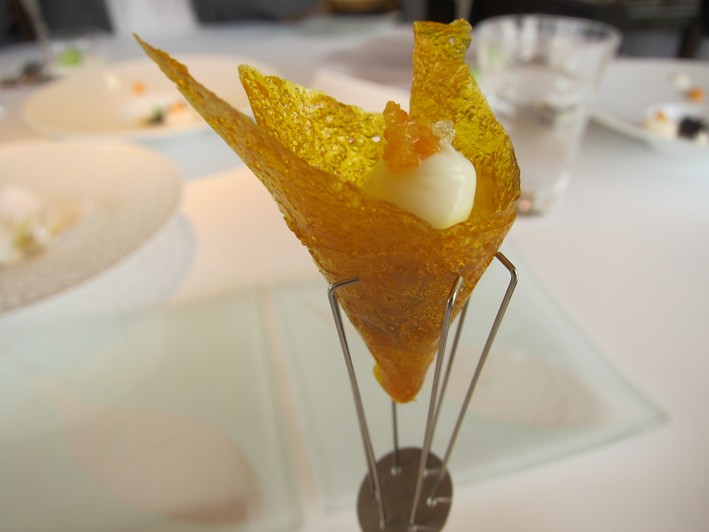
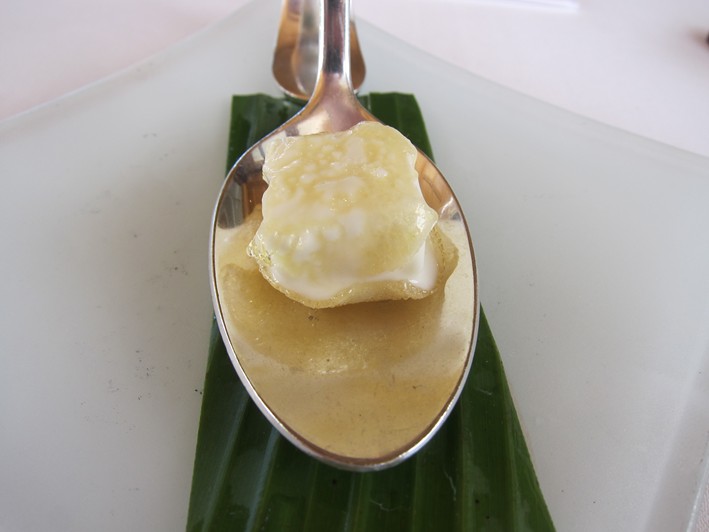
Yoghurt croustillant was nicely caramelised and was lovely (19/20). Yellow pepper cornet was served alongside green pepper sorbet and yoghurt cream, with verbena oil and herring tartare. The pepper cornet was nice but I did not think the green pepper nibble flavours combined very well, though at least the verbena taste was mercifully subtle (16/20).
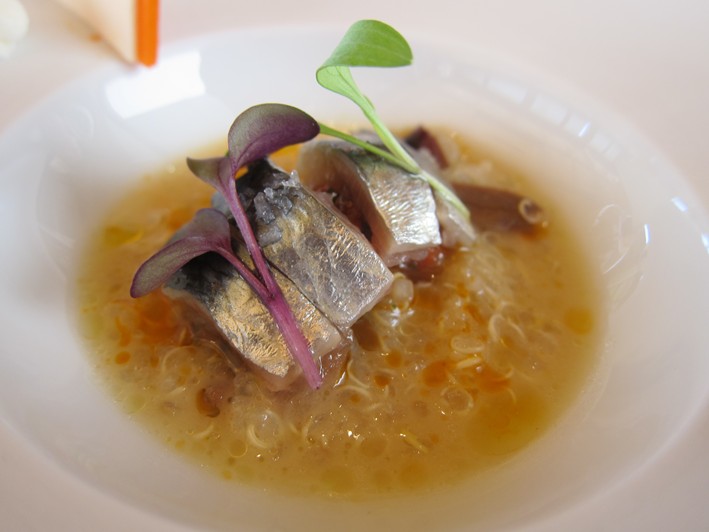
Much better was an initial course of sardine, black olive, couscous, red pepper with goat cheese ribbon and fresh vinegar, with three different cress as garnish. The mix of textures worked well here (19/20). Lemon and Pisco sour sorbet was very refreshing (19/20).
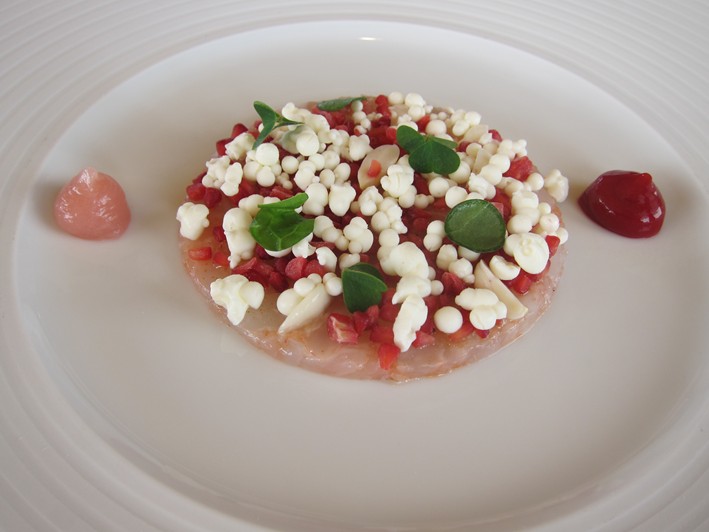
Next was langoustine carpaccio, with peach and raspberry flavours in different textures: dried crunchy fruits on top of the carpaccio, and also some herbs with a lemon flavour, with the fruits as mousse on the side also. One problem was that the dish was served really cold, so much so that the flavour of the langoustine was rather lost, though the flavour combinations worked better than they sound (17/20). Bread, initially a choice of white or cereal, was served warm and had very good texture but was not dazzling (18/20).
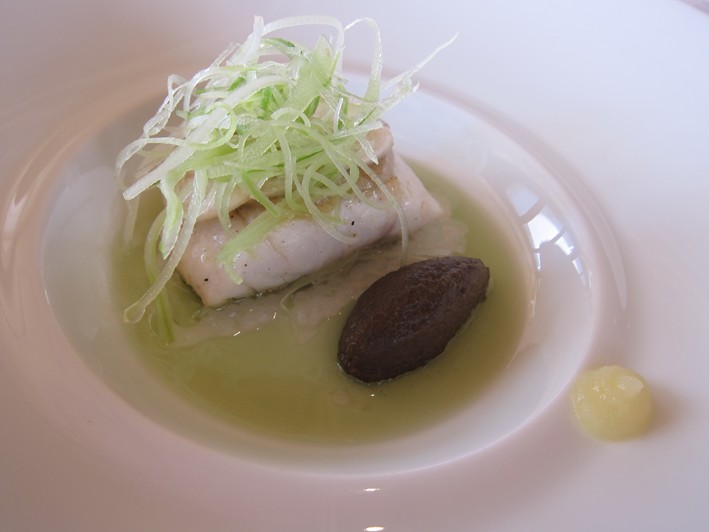
Sea bass was precisely cooked and served with Paris mushrooms and a bouillon of angelica oil and salty lemon; this was probably the best dish of the meal; perhaps not coincidentally it was one of the simplest dishes (19/20). Beer bread and baguette appeared at this stage.
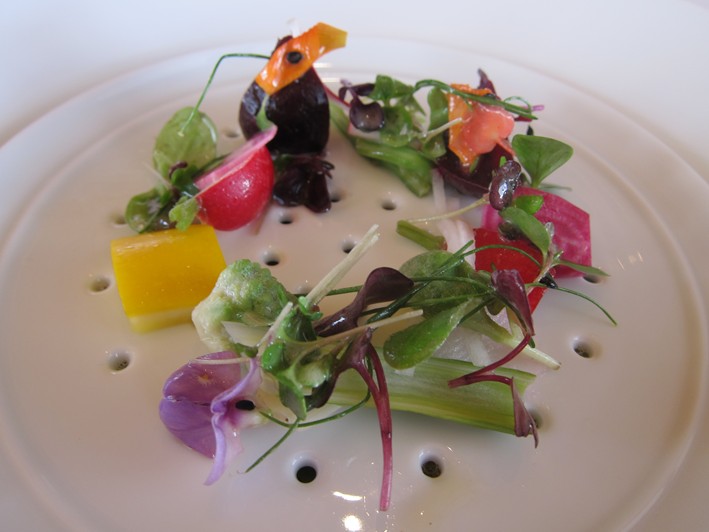
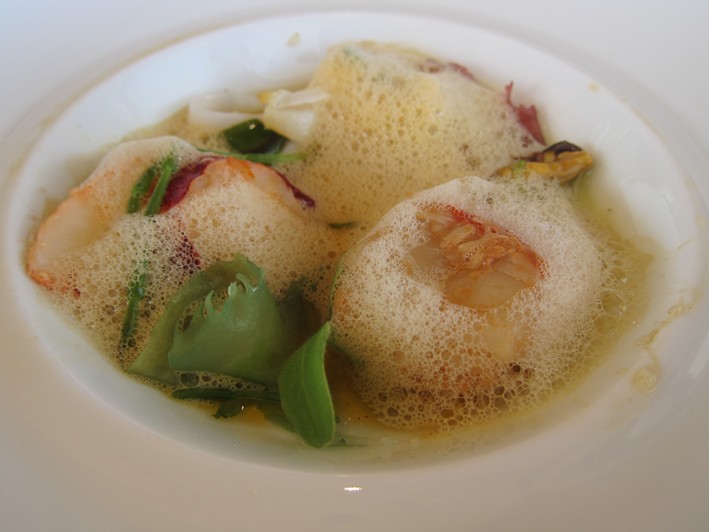
The enigmatically named "Up and down. Earth and sea" dish was served in a bowl covered with a plate of prettily presented vegetables and herbs that were surprisingly lacking in flavour. After this was eaten the plate was removed to reveal the other part of the dish underneath in the bowl: blue lobster with seaweed from Japan, and an emulsion of paella. Unfortunately the innovation of having the dish in two stages meant that the hot part of the dish, the lobster, is left to congeal while the diner is busy consuming the salad, which is a really odd idea. Surely it would be better to serve the salad on the side so that the lobster stays hot and fresh (16/20 is a kind mark).
Napolitan “spaghetti” was actually just tomatoes in agar shaped into a spaghetti shape; this was hardly an innovation as El Bulli had done this many years ago. The texture itself was not that great, though the Parmesan mousse was nice. However was this really as good as a real plate of high quality pasta? No. This tells you that in this case the kitchen has opted for showing off a cooking technique at the expense of the actual taste experience (15/20).
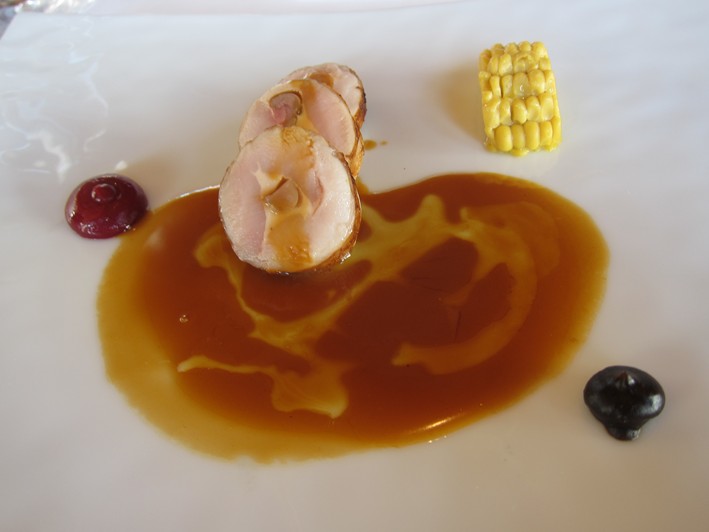
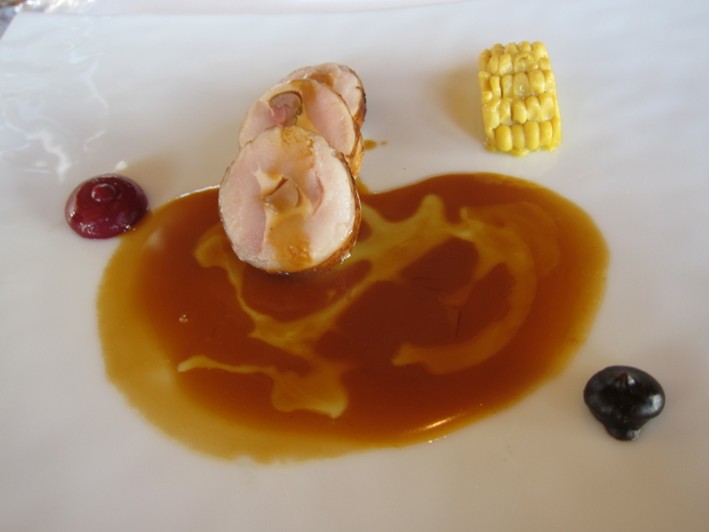
Rabbit ballotine was served with maize, the rabbit itself stuffed with rabbit kidney, garlic puree and served on a sherry gelee with olive oil. The gelee was rather glutinous in texture, though its flavour was good, and rabbit itself had good flavour (18/20).
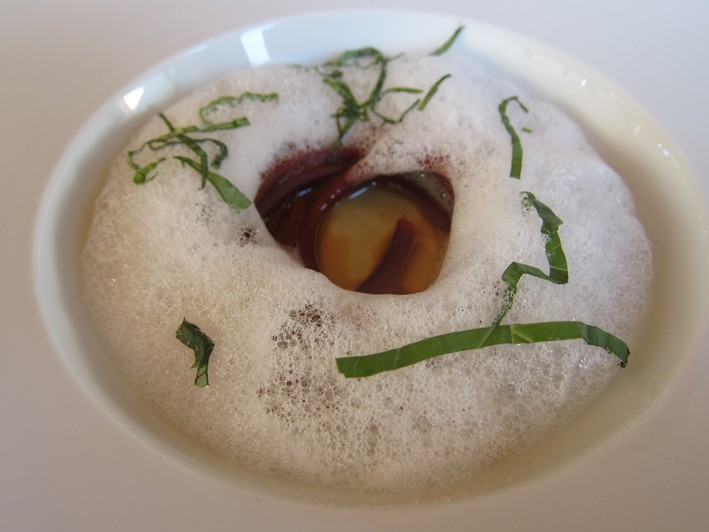
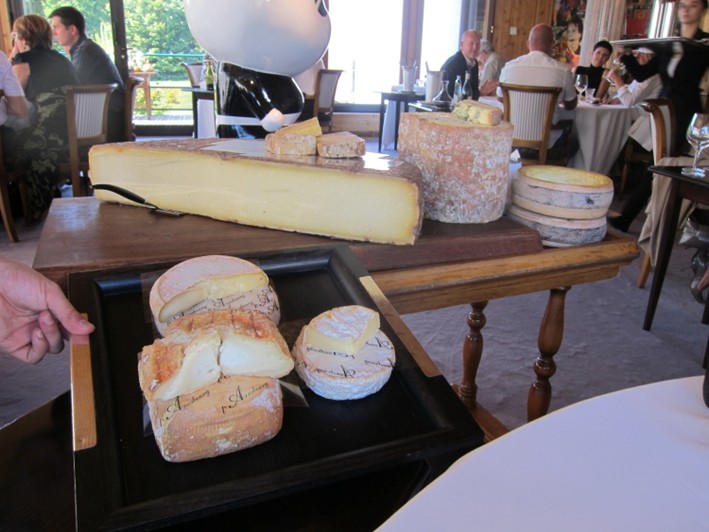
Cappuccino of black truffle and potatoes is a signature dish of the restaurant, but although enjoyable and with good truffle flavour was marred by significant over-salting, too much even for my taste. This was a pity as the person we went with, who had eaten this dish on multiple occasions, said that it was usually better executed than this (18/20 at most today). Cheese these days is from Bernard Antony, and so is of very high quality.
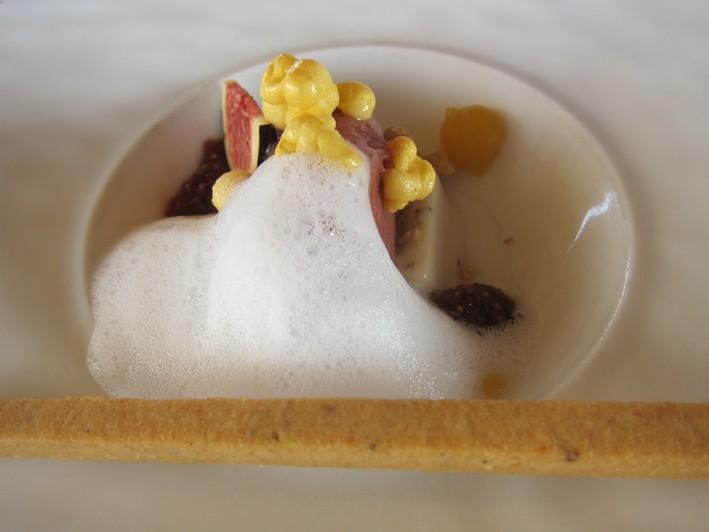
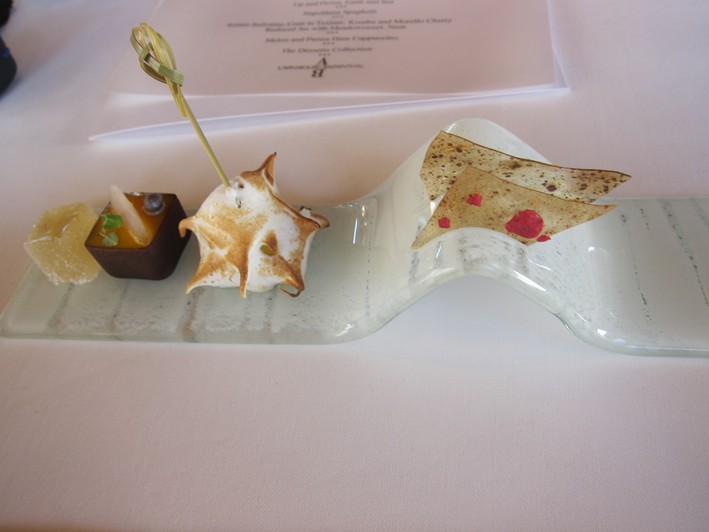
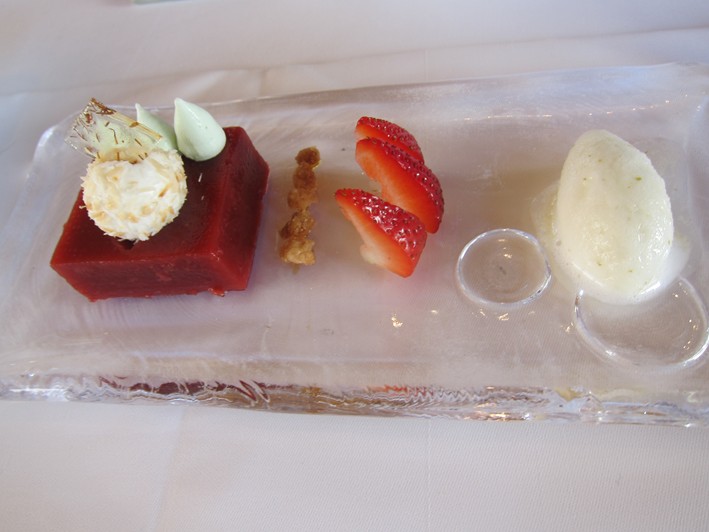
Dessert comprised a wild strawberry gelee with a few strawberry slices, pine sorbet, fig sorbet and Sambuca emulsion. This worked quite well, the strawberry flavour itself excellent (18/20). A tuile of ceps with green tea and a dried grapefruit tuile was a misconceived idea in my view. Pineapple with meringue and ginger nice was nice, while a concoction of peanuts and mango tasted just weird. A herb jelly hardly rescued things. Although technically fine, some of these flavours were really not that pleasant (16/20 is a charitable score).
Service was extremely good throughout, though I did not really need my breadcrumbs swept up after every course, messy eater though I am. However the dishes arrived at a steady pace, topping up was excellent and our waiter was particularly good. The bill came to €208 per person, with one bottle of wine between three and mineral water at a ridiculous price of €14 per bottle, a new record in my experience, at least at the time of writing. I don’t mind paying a premium for sophisticated cooking, but a bottle of water at much more than 10 times its retail price rankles. Overall I felt that this meal hung together less well than my previous experience. Some flavour combinations seemed odd, while in a couple of cases theatre or technique seemed to be showcased at the expense of the flavour of the dish, which cannot be right.
Further reviews: 01st Jun 2002
Max
They have generously dropped the price of the mineral water. To €11 a bottle.
Judy Adamsen-Buehrle
We have eaten there at least 5 times. What a treat. The food, service wine setting is absolutly perfect! The finger salt and pepper bowls were unique and different along with all of the other serving platters. I loved the perfect service this is something I have not experienced in the US. What a treat. Can't wait to go back in 2011
Cameron Clark
One little known fact about this place is that the head chef, Jean George Klien, is very vriendly with the head of the 1* 't Brouwerskolkje in Holland. So much so that Moshik Roth, widely reaguraded as the top exponent of moleclar cooking in the country, heads a couple of times per month to the Elsas and spends all day Sunday and Monday together with Jean in the kitchen. The result of all this collaberation is that the basically same menu appears in both locations. Not sure if they share the same suppliers, which could effect quality, but the Dutch version is 20 euros cheaper than the French. Ive eaten the the Dutch version though and although its very interesting, the restaurant is too small and this constains the service. I imagine the extra 20 Euros in France would be money well spent, paritularly as the wine list in the Dutch restaurant is a bit limited.
steve west
We had dinner in sept of 07. Wonderful experience.Setting,service and the meal brought everything together. I am glad we had a chance to dine here, which made our experience at Grand Vefour almost tolerable.