



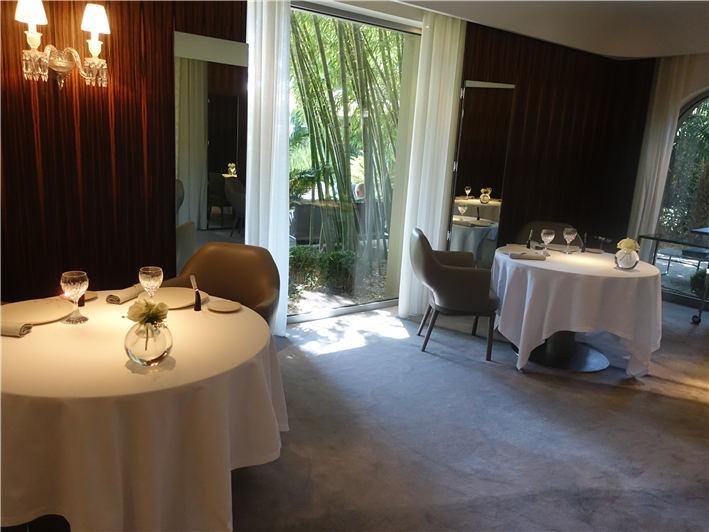
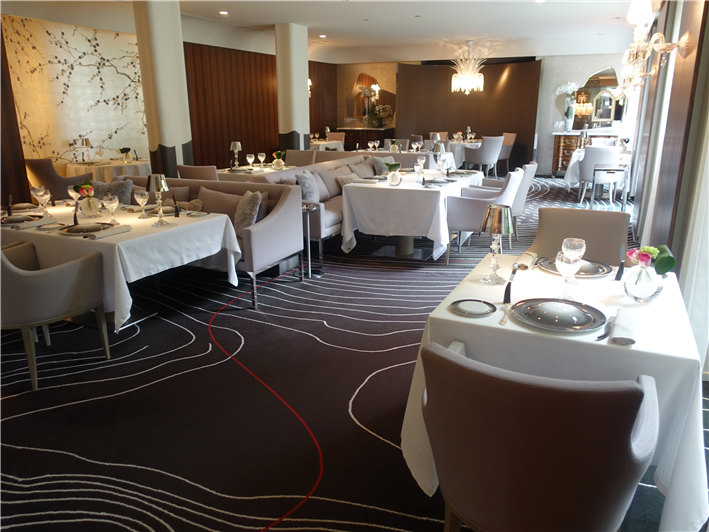
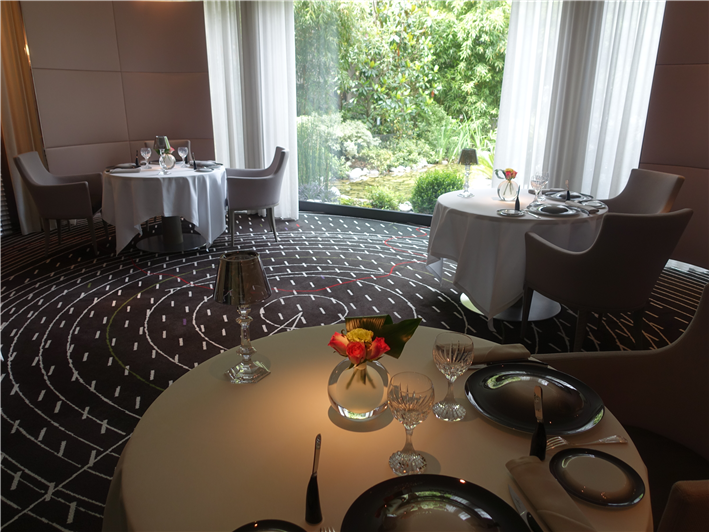
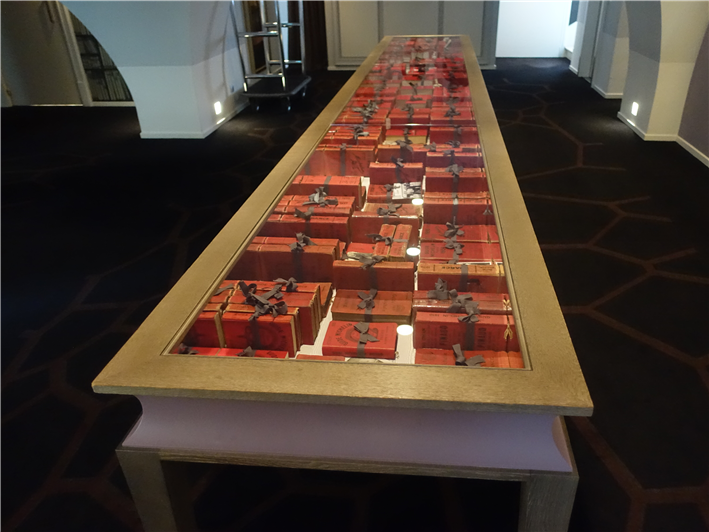

I have written previously about the remarkable history of Pic and also covered its wine list, so please see my previous reviews for background. These days a series of tasting menus is offered, the shortest price at €180 (£159), a longer one at €260 (£230) and the longest at €340 (£301), while there is also a three course lunch available at €120 (£106).
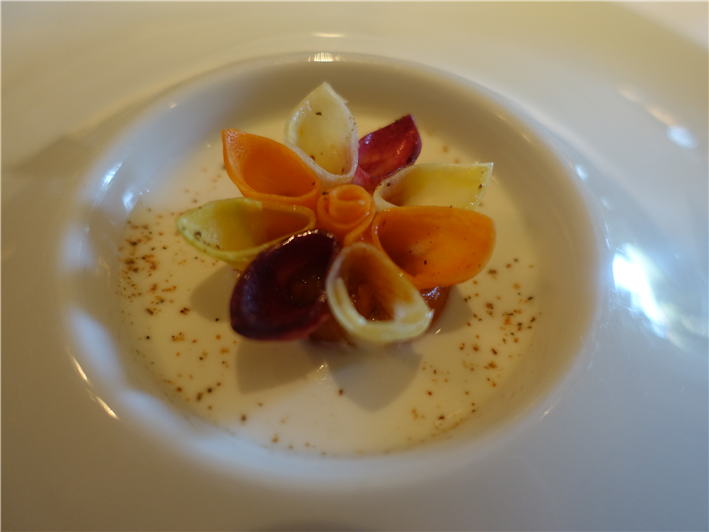
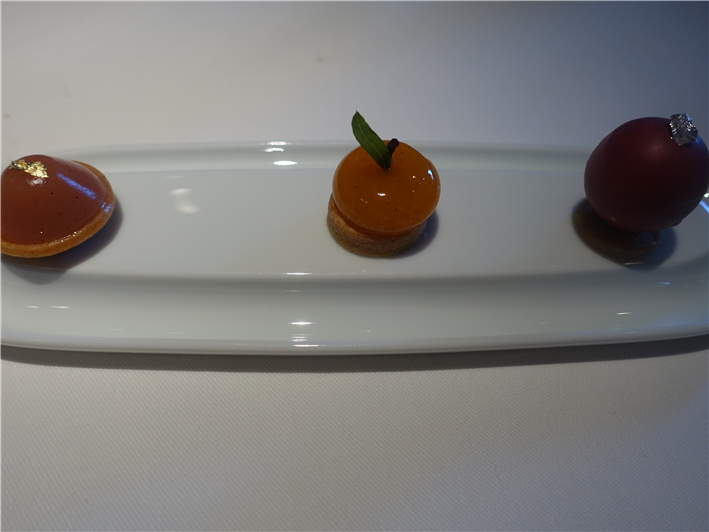
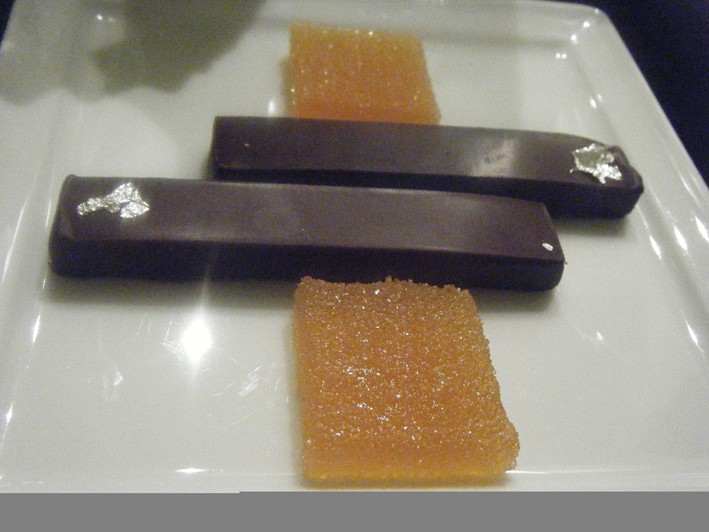
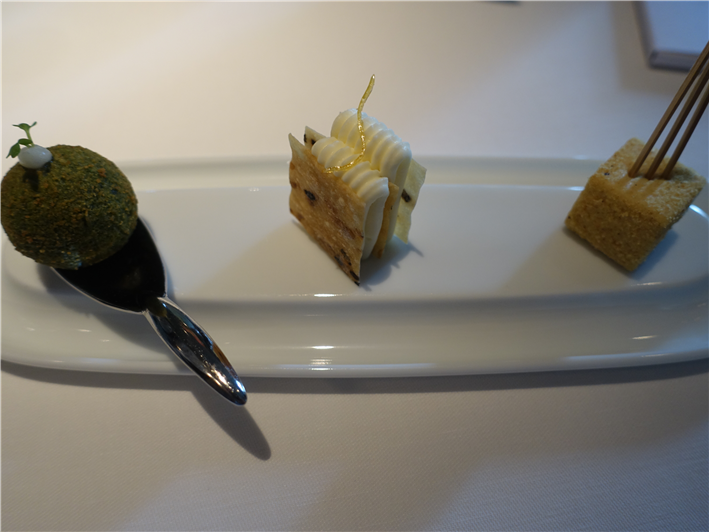
An initial tray of nibbles had a tart of mushroom with ginger and geranium bulb, marshmallow of nutmeg and curry, and a cocoa butter shell containing a liquid centre of yuzu, coffee and anise, as well as crisps of sweet potato flavoured with a little spicy sriracha. The crisps were delicate and the marshmallow pleasant, but the best of these were the cocao shell and especially the delicate ginger and mushroom tart. A final bouche was a pretty display of carved carrots of assorted colours that had were served with yoghurt infused with pepper from Madagascar. This was an attractive and appealing nibble, the carrots of high quality as well as just being pretty, with the spiciness of the peppers balanced by the yoghurt (19/20 nibbles).
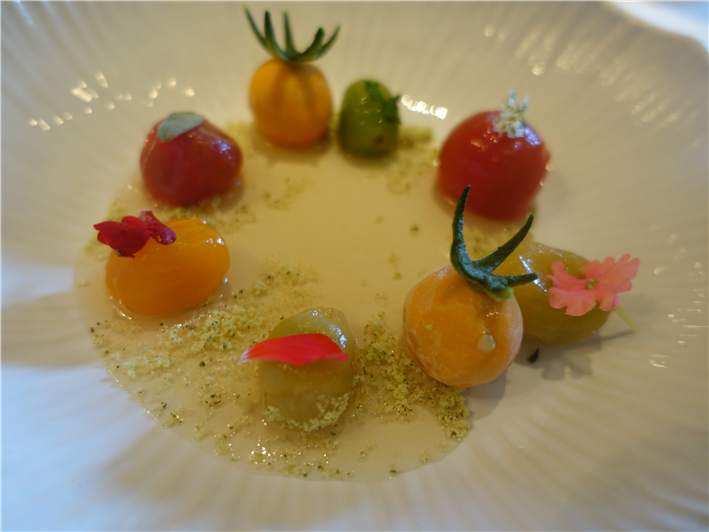
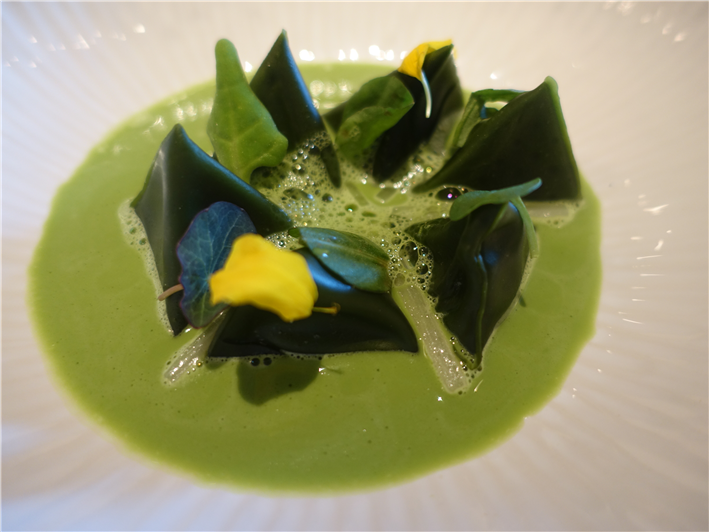
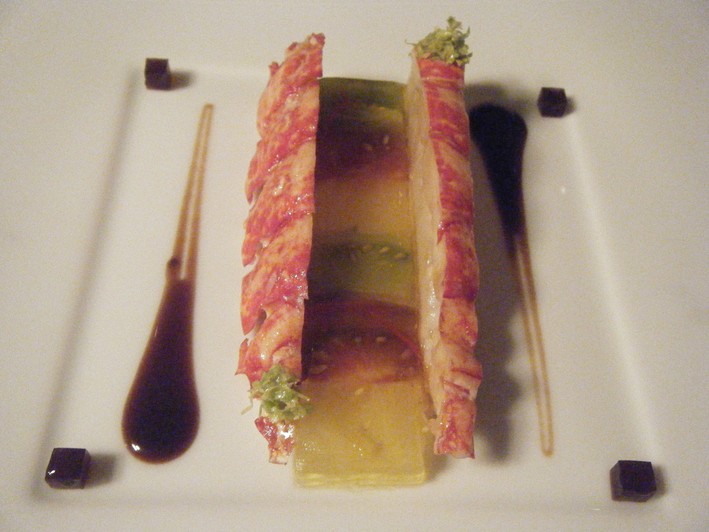
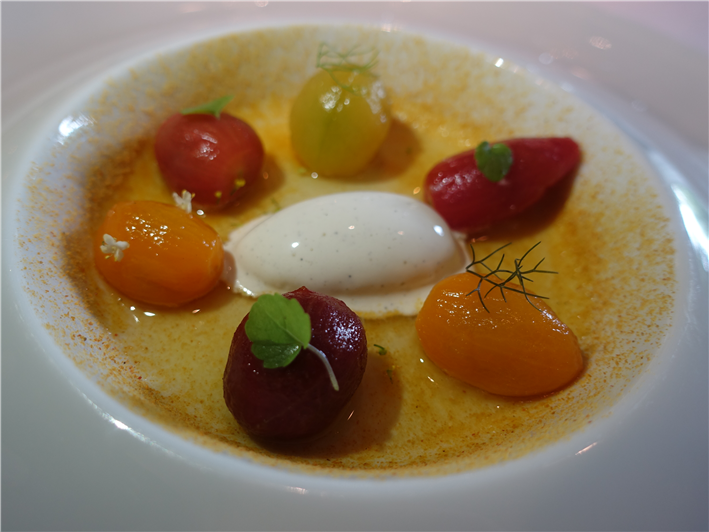
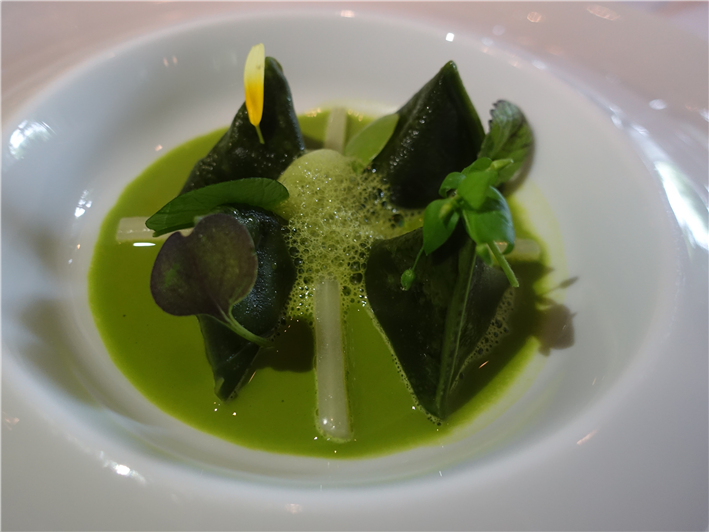
I write in my last review about the tomato dish here. The dish is based on a marinade of tomato juice, vinegar and sugar infused with elderflowers, elderberry and blackcurrant leaf. Several different varieties of tomatoes are peeled and then plunged into the marinade, soaking it up, so that when you bite into the tomatoes you get a complex mix of flavours on the tongue. Just before serving they are seasoned with a little pastis. On this occasion one of the “tomatoes” turned out to have a frozen centre of olive oil ice cream, which was surprising but not necessarily an improvement. This was followed by a pasta dish I have also written about previously called “berlingot”. A berlingot is a Provencal boiled sweet, but here the term is used for a pasta parcel made into the characteristic triangular shape. A Provencal goat cheese called Banon is combined with marscarpone and heated to get a creamy texture. Brousse de Brebis cheese is then added, and this cheese mix is used to stuff triangular pasta parcels. These are served with a watercress sauce flavoured with bergamot and matcha tea. The pasta had excellent texture and the strong cheese flavour was matched quite well by the aromatic sauce.
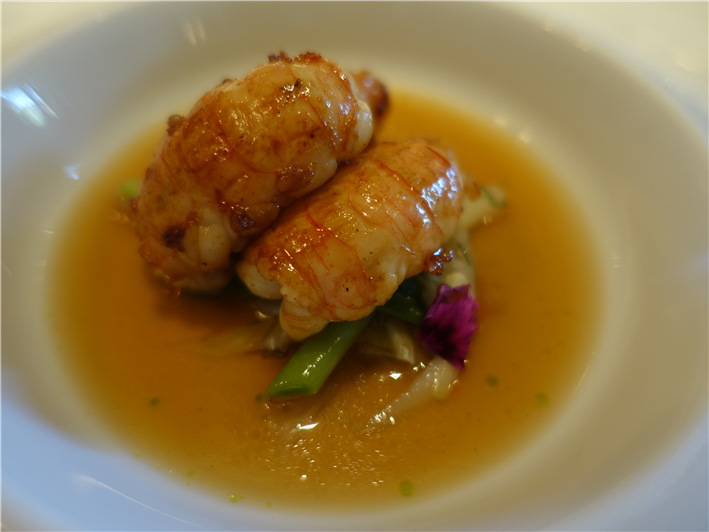
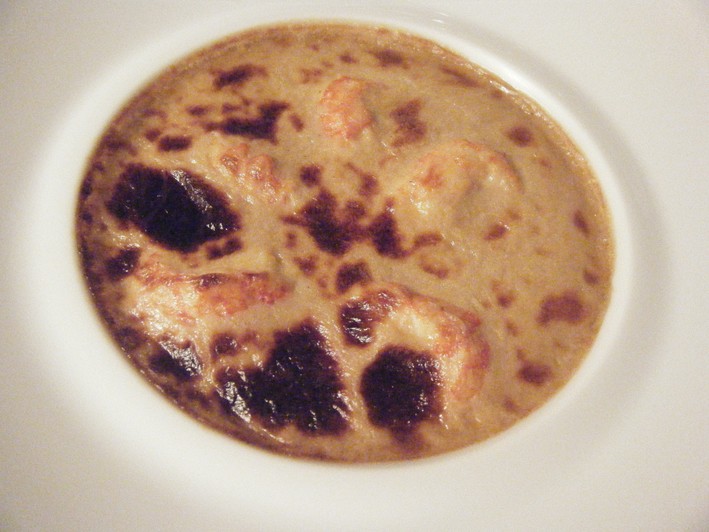
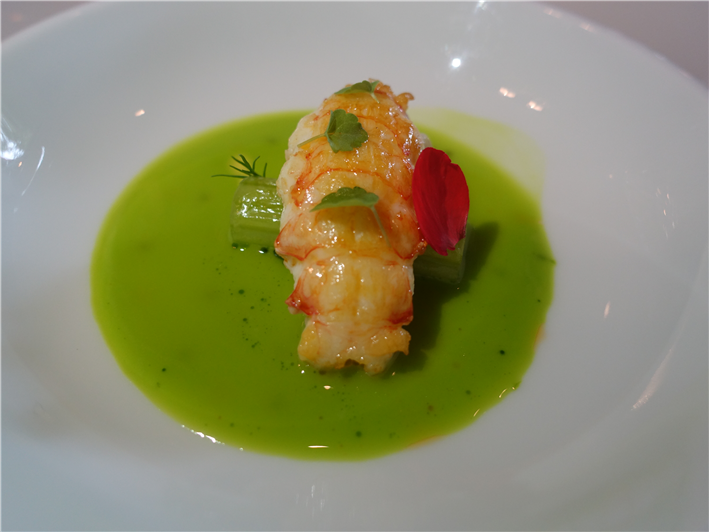
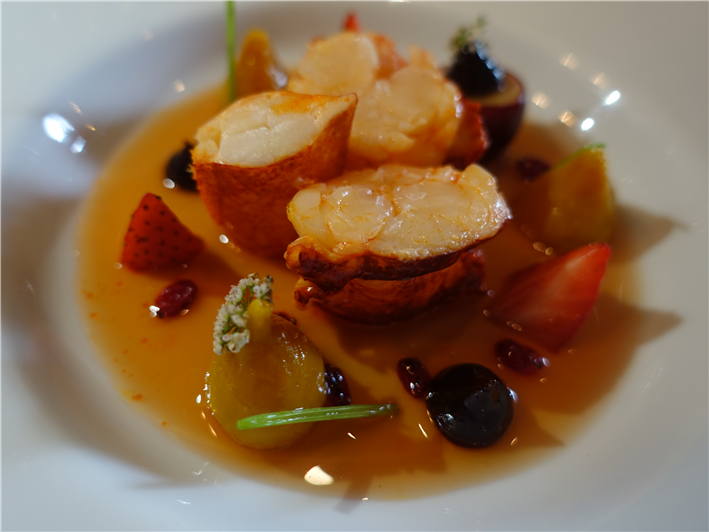
Langoustine tails were cooked a la plancha with a marinade of yuzu, honey, angelica and kororima (an Ethiopian spice in the ginger family known as false cardamom) that caramelises when cooked, the shellfish served in a dashi sauce. The langoustines were beautifully timed and had good inherent sweetness. The marinade combined sweetness from honey with acidity from the yuzu, given an aromatic note from the spices. This was an interesting combination of a classic French dish with a distinctly Japanese influence (19/20).
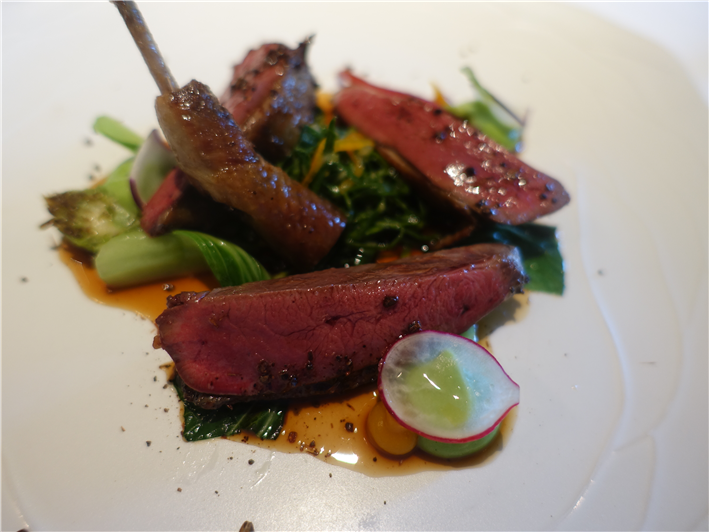
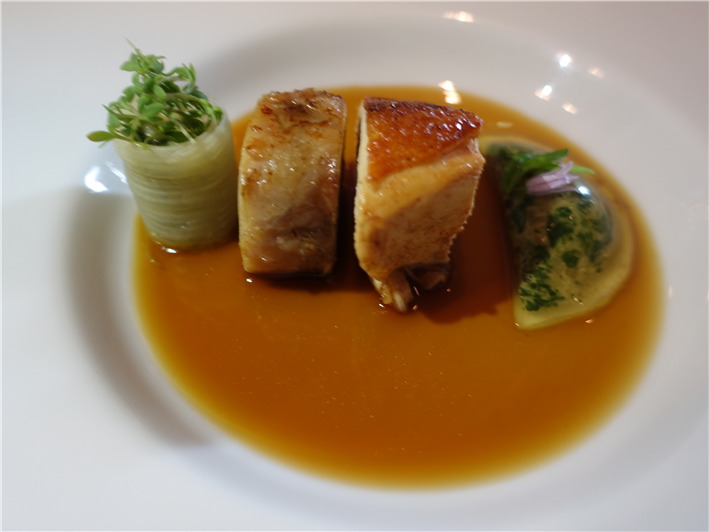
Pigeon from Drome was superb, lightly smoked and roasted in Madagascar vanilla broth, served with roasted barley and pear. The quality of the pigeon, supplied by the farm of Jean-Louis Chabert in Vercors, was remarkable. The smoking process gives the pigeon a gamey note, the subtle use of vanilla bringing a hint of sweetness combined with Vietnamese Phu Quoc pepper, as well as roasted barley and sweet woodruff. The overall effect was terrific, and this was one of the best pigeon dishes that I can recall eating (20/20).
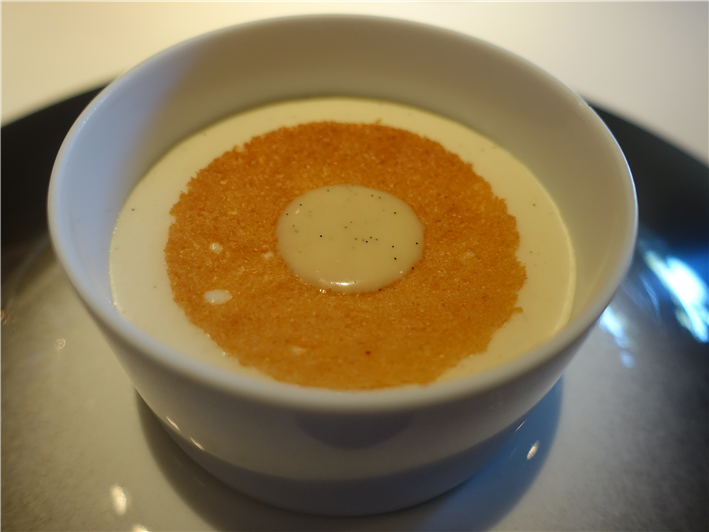
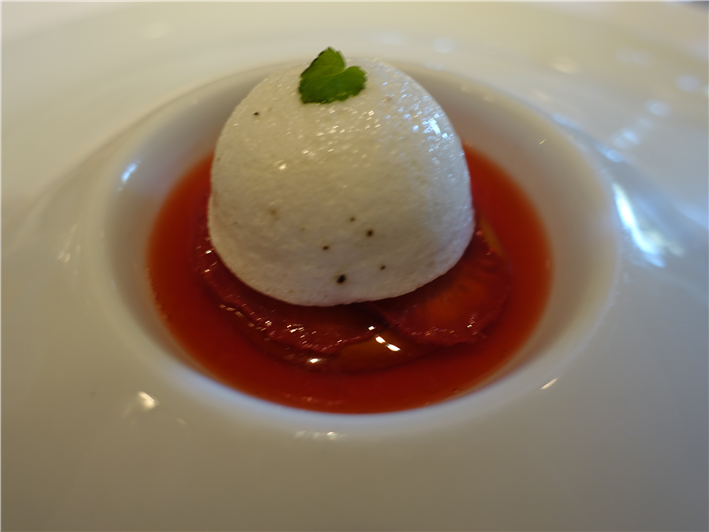
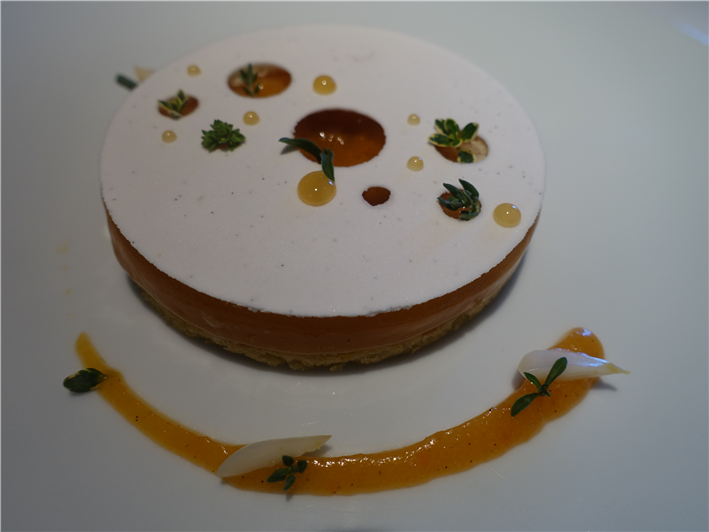
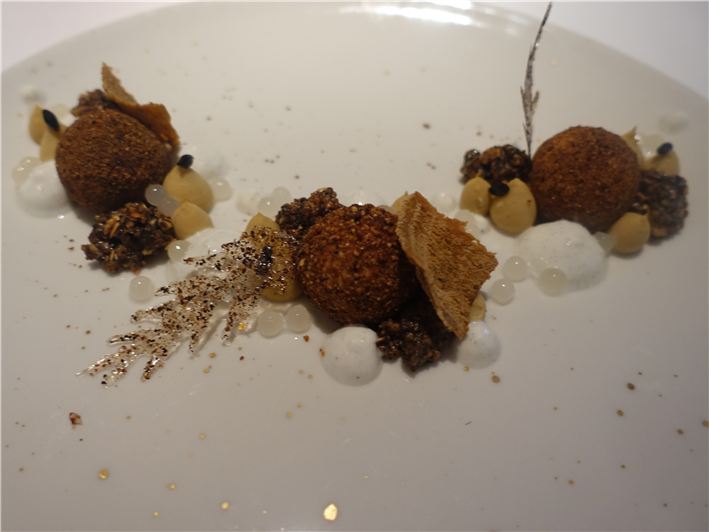
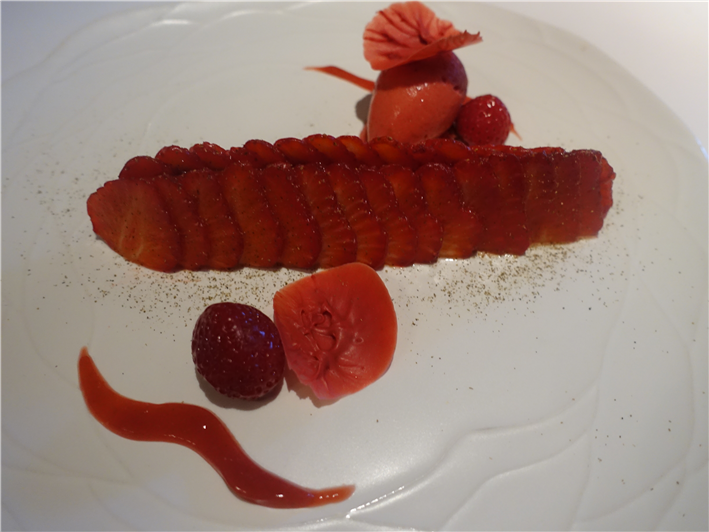
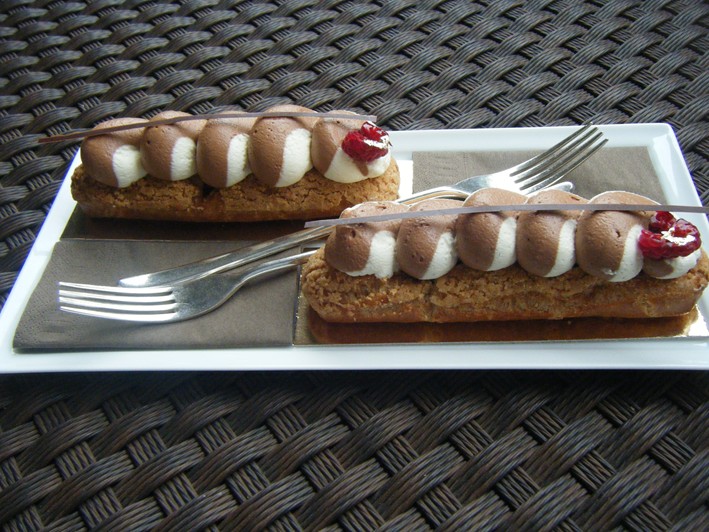
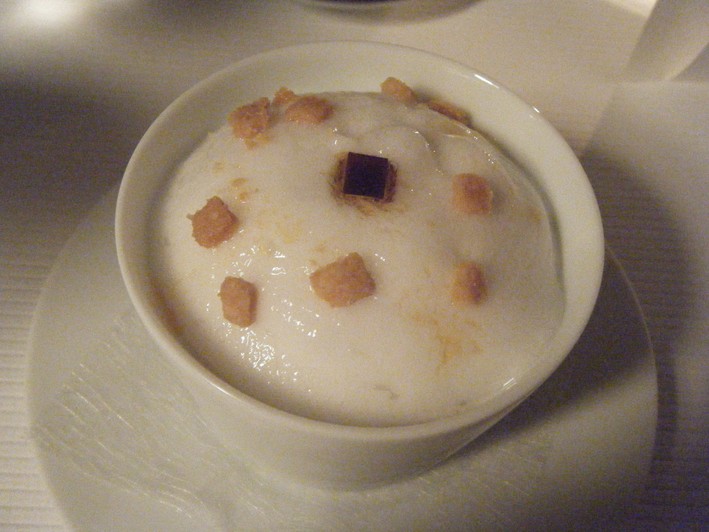
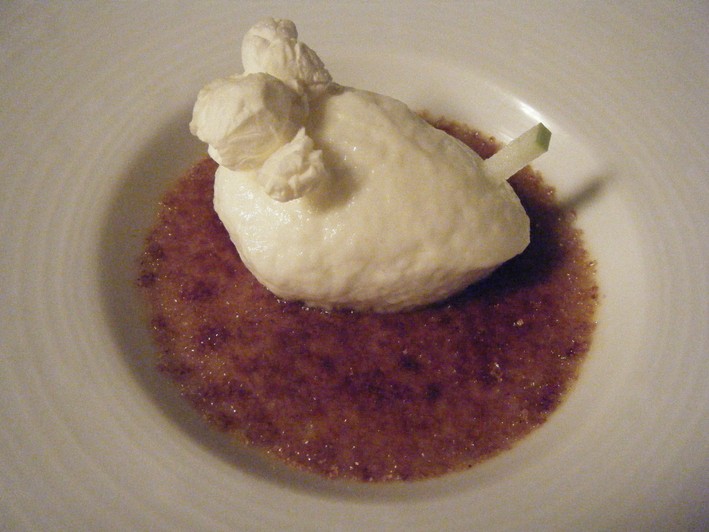
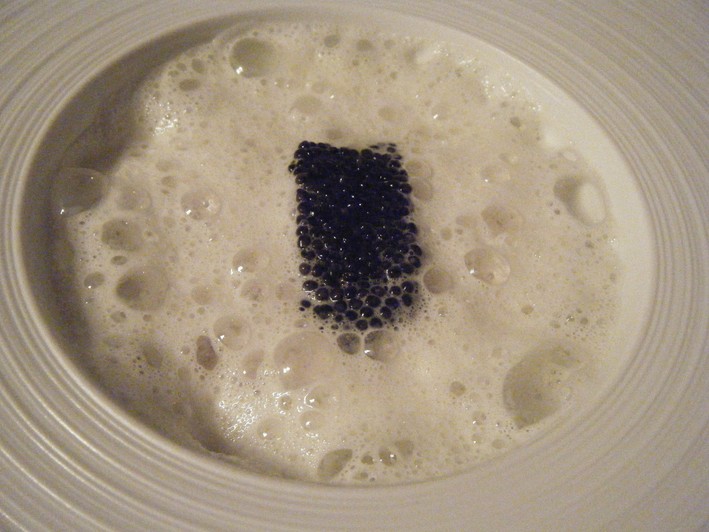
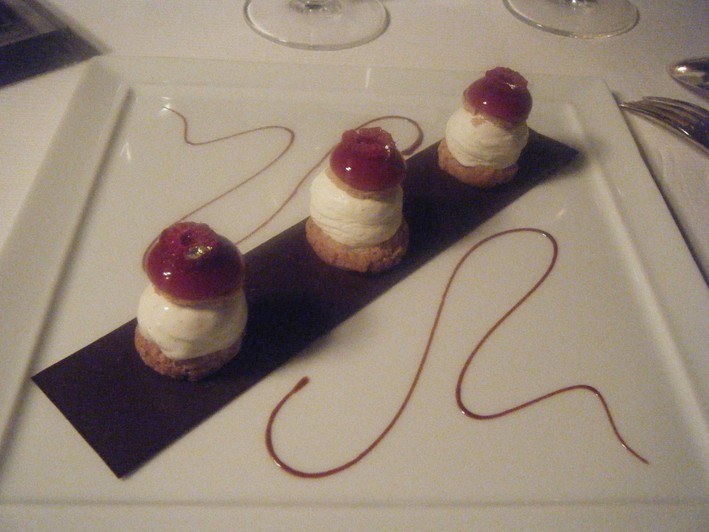
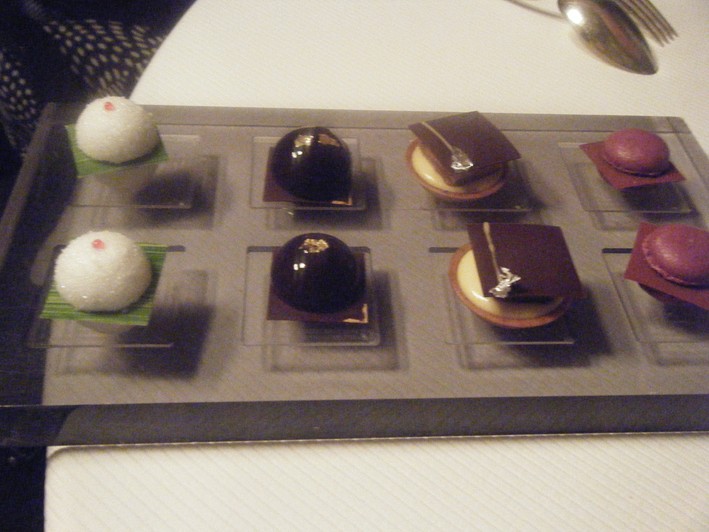
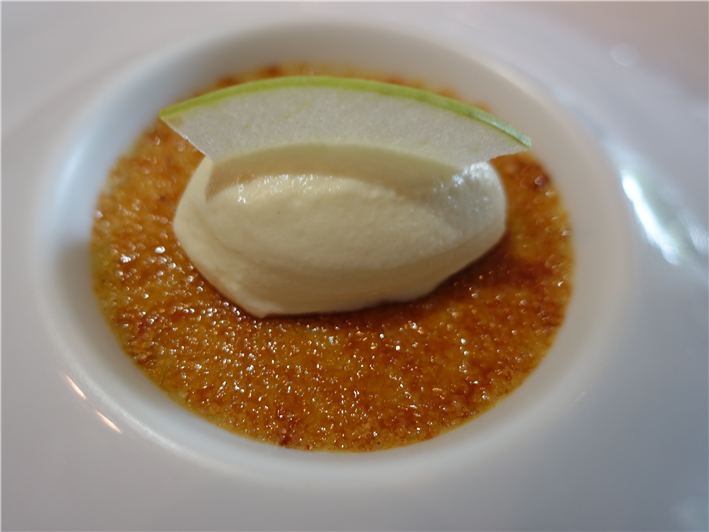
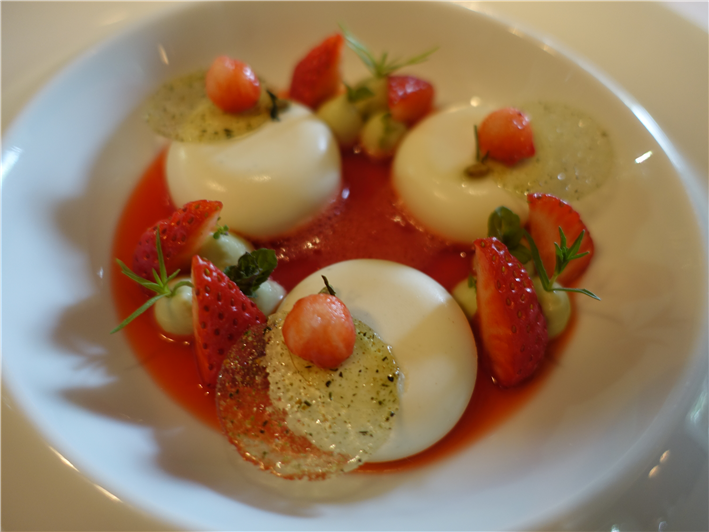
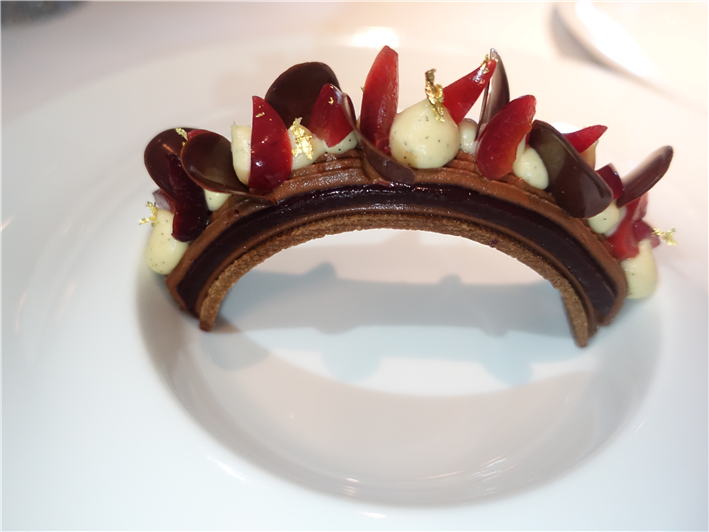
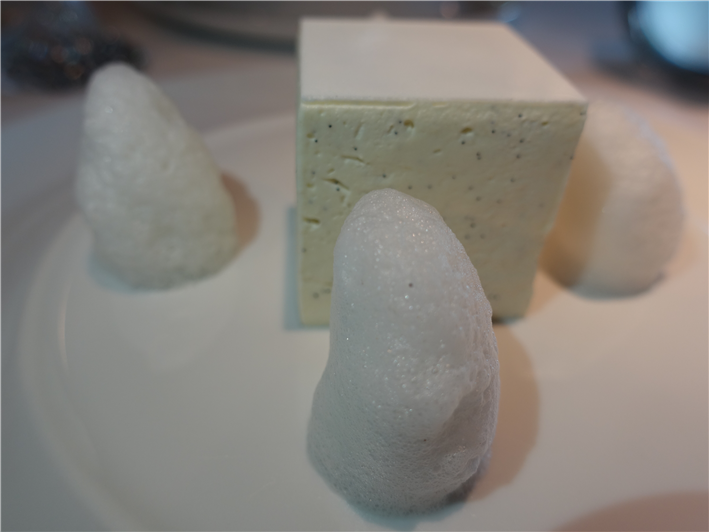
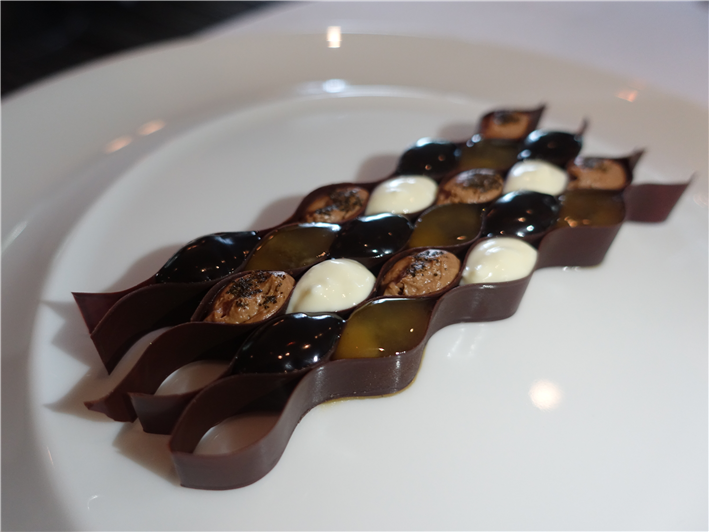
There was a transition between savoury and sweet in the form of a Brie de Meaux emulsion flavoured with vanilla. This was intriguing and worked very effectively (19/20). We then tried a few desserts, the pastry section here being one of the very finest in France. There was a particularly pretty strawberry dessert. This was made using Mara des Bois strawberries, which has the flavour and aroma of a wild alpine strawberry, served with strawberry sorbet and little leaves of strawberry – this was a stunning as it looked (20/20). I was somewhat less take by a malt dessert with white beer and sobacha (Japanese buckwheat). This was certainly interesting but I didn’t think it worked as well as the other desserts (18/20). Best of all was a brand new apricot dessert that involves aromatic herbs. An apricot broth was made using camphor, lemon thyme and white rosemary. There was a temperature contrast too, with still warm apricot compote with honey and fresh almonds, paired with an apricot sorbet infused with more aromatic herbs. The intensity of flavour of the apricots from Drome was extraordinary, the temperature contrast intriguing and the acidity of the fruit beautifully balancing the sweetness. This was one of the best desserts I have ever tasted, and a mere 20/20 seems inadequate as a score for it.
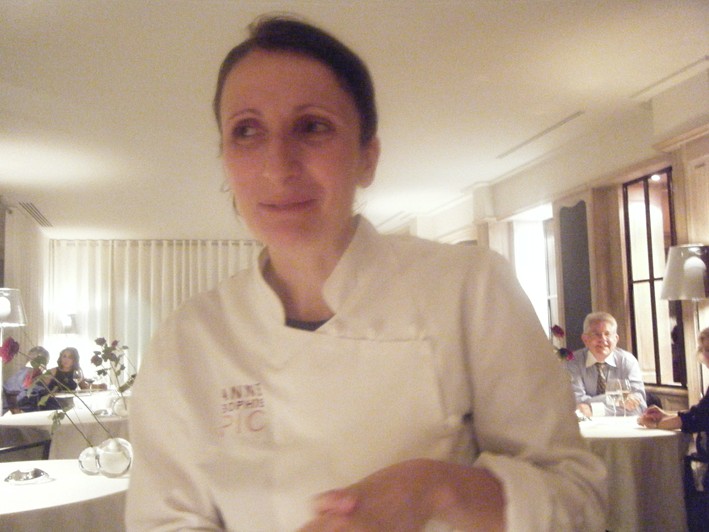
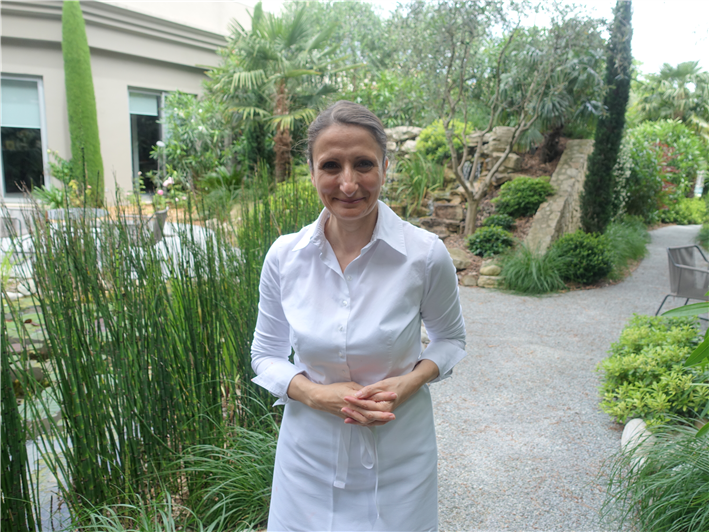
Service was superb, and since we drank just water the bill was a very reasonable €180 (£159) per person. One noticeable theme in the cooking at present is the use of spices, which is rare in French cookery with the exception of the pioneering dishes of Olivier Roellinger. The use of aromatic spices is genuinely interesting and was very successful in the dishes I tried here, showing that Anne Sophie-Pic, who was in the kitchen today, is not content to just rest on her laurels.
Further reviews: 18th Jun 2016 | 01st Sep 2008
Peter Auburn
We had the Harmonie menu a month ago and although I don't concur with you on every dish as regards the sauces going with the main element it was undoubtedly the best restaurant food we have ever tasted. The langoustine, turbot and beef fillet were simply wonderful. My wife agreed with you on the apricot pudding. The sommelier recommended a very good white Crozes Hermitage too.
Jason Carroll
Your review has me very excited as we are dining here this Friday night. Hopefully the apricot dessert will be on the menu.