



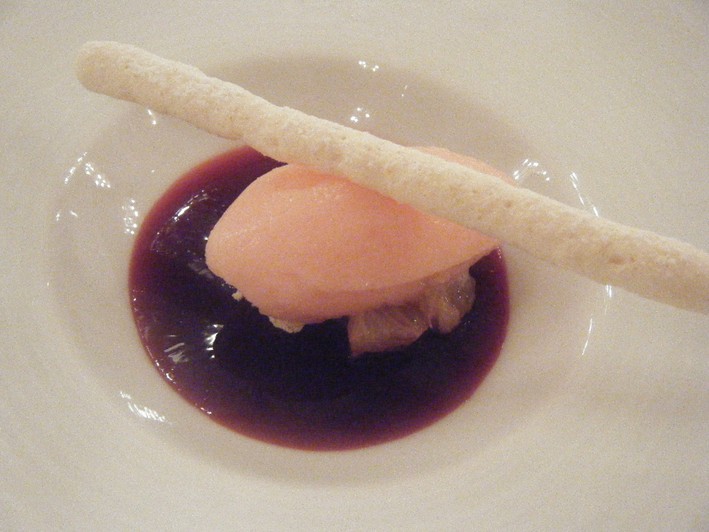
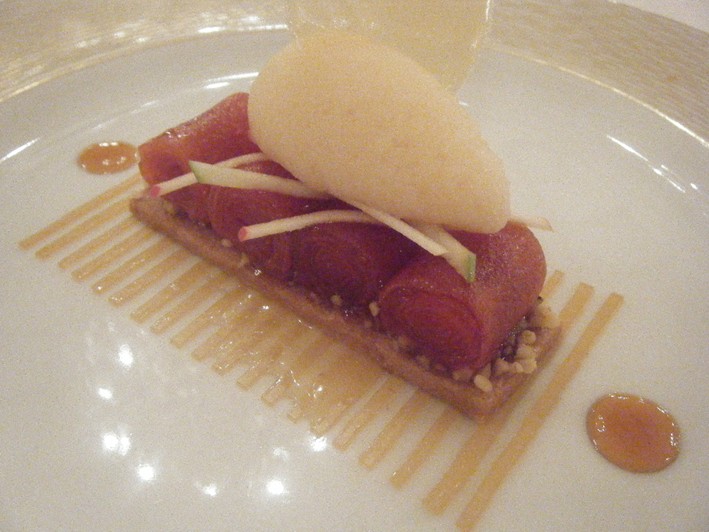

The Bristol Hotel opened in 1925 on the prestigious Rue du Faubourg Saint-Honoré. Its flagship restaurant is Epicure, and there is also a one-star Michelin brasserie “114 Faubourg” in the hotel. Executive chef Eric Frechon trained at restaurants including Taillevent, La Tour d’Argent and the Hotel de Bristol itself. When he was at Crillon in 1993 he was awarded the prestigious MOF (Meilleur Ouvrier de France) and he opened his own restaurant in 1996. In 1999 he returned to The Bristol as head chef. Under his leadership, Epicure gained a second Michelin star in 2001 and a third star in 2009.
The menu offered either a la carte or a tasting menu option at €420. Starters were priced between €92 and €155, main courses between €98 and €230, while cheese was €39 and desserts were €39 to €53. Three-star restaurants in Paris are not for the faint hearted or light of wallet. Since I am often asked about this, before the review itself let me just set out the current pricing of tasting menus at the Paris three-star Michelin restaurants. Topping the list was Guy Savoy at €630, though this restaurant appeared to about to lose its third star-based on press reports today. Going through the current three-star restaurants, the tasting menu at Le Cinq today was €580, Ledoyen/Alléno €425, Arpege €420 and Pierre Gagnaire was €390. L’Ambroisie has no tasting menu but the priciest three courses plus cheese would come to €385, while Pre Catelan’s tasting menu today was €380, that at Kei was €320 while Plenitude’s menu (which was €320 in 2022 when I went) has now jumped to €435. To this of course you need to add drinks, so the top end of Paris dining is never going to be a cheap experience.
I tried to get hold of the Epicure wine list in advance as it is not on the web site. I spoke to a sommelier and they would not send a copy of the list in any form in advance “because it might change”. This kind of nonsense is very common in France, where the wine list of a restaurant seems to be regarded not as a menu or a brochure but as some sort of state secret, to be jealously guarded from the prying eyes of customers. After all, if a customer saw the list in advance they might, well, study it and pick a wine they liked, and where would that kind of madness end? At one three star restaurant with rooms in France they even refused to show me the list on the afternoon before my dinner (despite me staying in the same building before dinner) because, well,… “it is our intellectual property”. Uh huh. Of course, when you actually arrive at the restaurant the sommelier really does have to show you the list, though you can be sure that some French sommelier association is working secretly on a plan to prevent even that sort of indiscretion. The Epicure list was very lengthy, with around three thousand different wines on offer, and the cellar in the hotel holding about 50,000 bottles, with a similar sized cellar offsite where wines are aged. It had mostly French wines, but there were respectable choices from several other countries, including a whole page of Swiss wines. There were few labels below €100, with for example Domaine Dupasquier Roussette de Savoie Marestel 2014 listed at €90 for a wine that you can find in the high street for €20. The interesting Vina Tondonia Rioja Reserva Blanc Lopez de Heredia 2004 was relatively kindly priced at €145 compared to its shop price of €182, and Etienne Sauzet Puligny Montrachet 2016 was €260 compared to its retail price of €151. As you moved up the list the relative markups could still be quite steep but also erratic. Guigal La Landonne 1997 was €1,430 for a wine that retails at €523, but by contrast the Leflaive Chevalier Montrachet 2006 was €1,285, well below its current market value of €1,914. One nice touch was the selection of the rare Clos Rougeard wines, the trio of cult Loire reds that are arguably the best expression of the Cabernet Franc grape. There were no less than sixteen different Clos Rougeard wines on offer, from the Saumur-Champigny through the Les Poyeux up to Le Bourg, with one vintage going back to 1996. For example, Le Bourg 2009 was €560 compared to its current market value of €598.
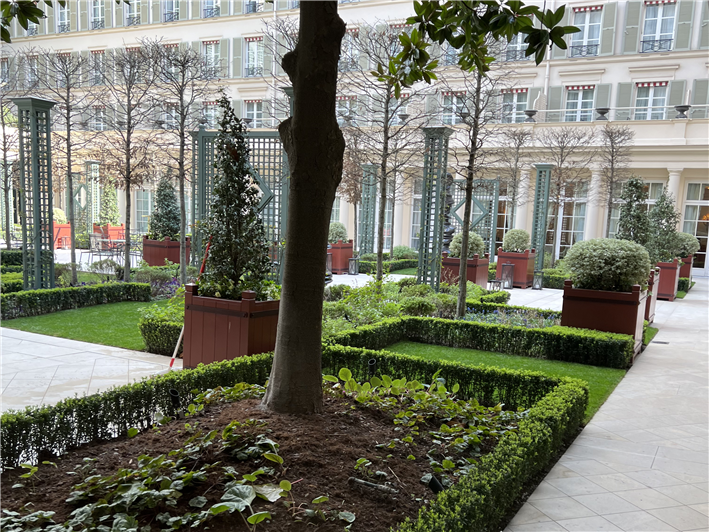
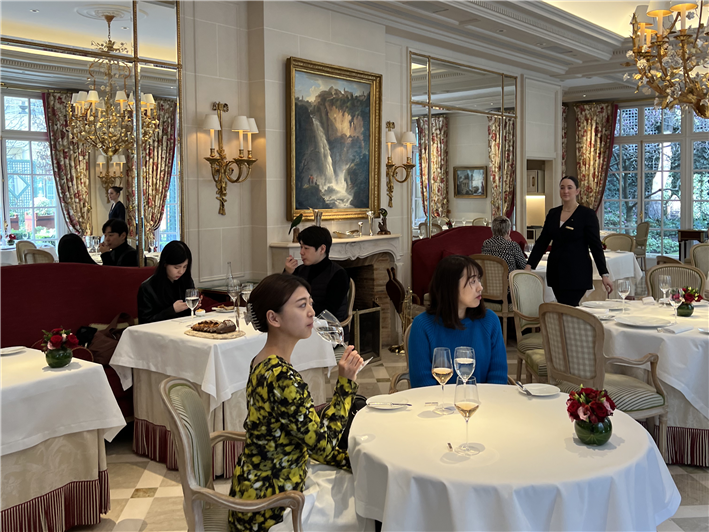
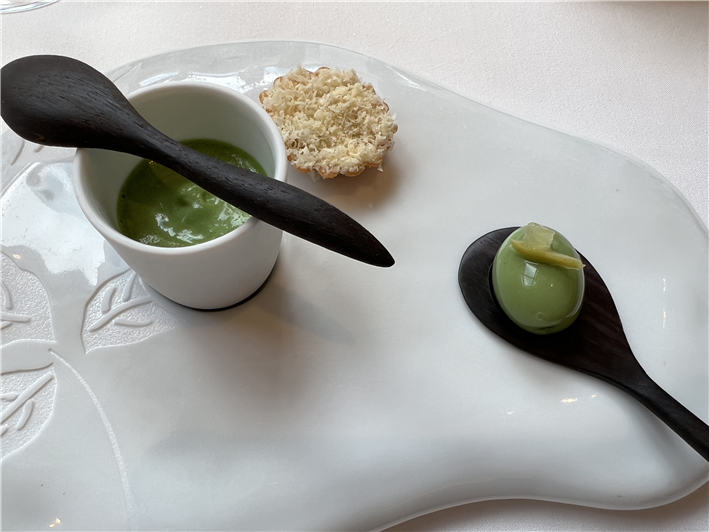
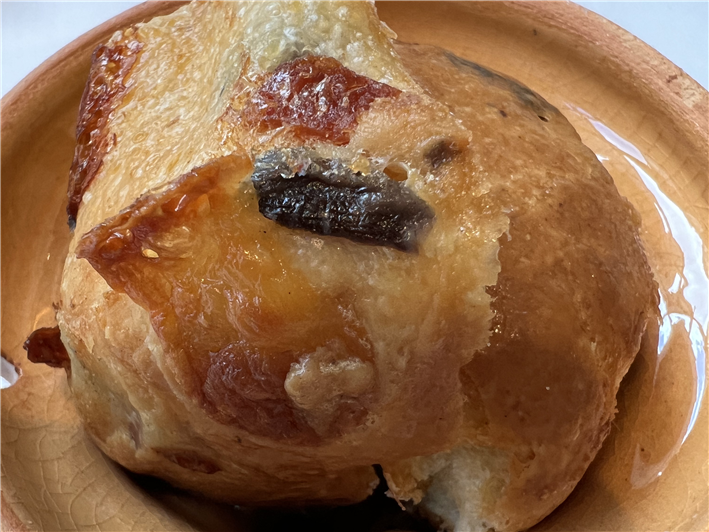
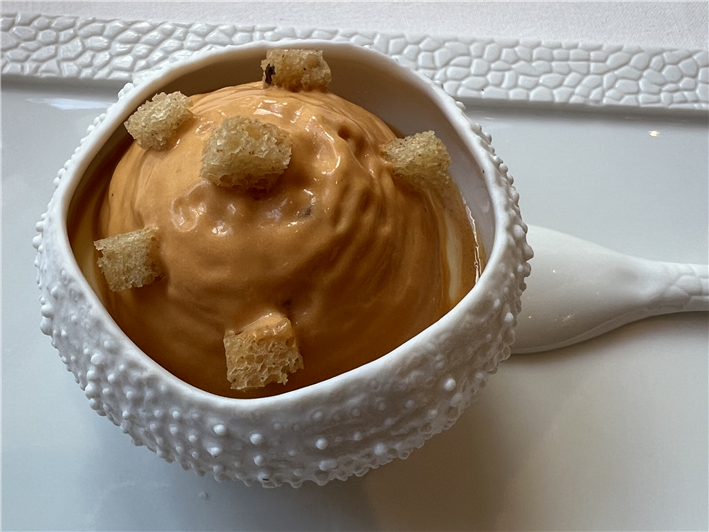
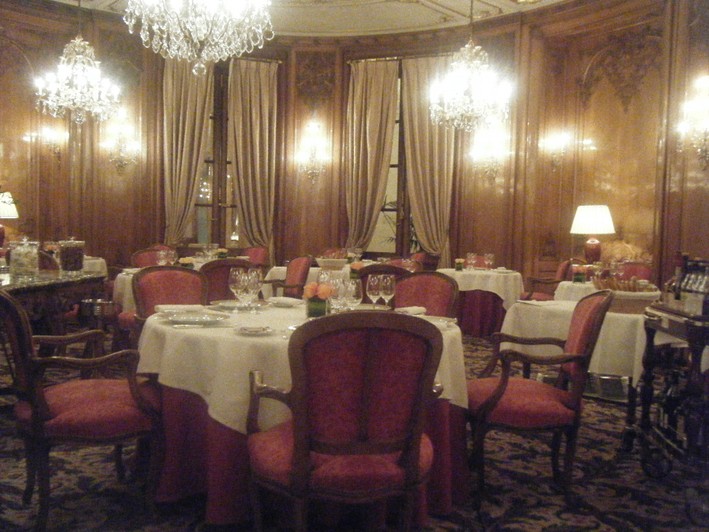
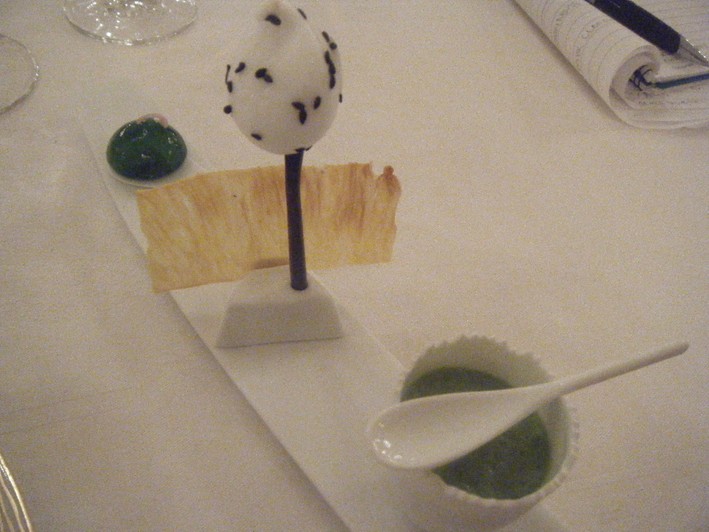
The Epicure dining room used to be in a windowless room, but now has a much more appealing setting overlooking a courtyard and its garden. It is perhaps not the very grandest Paris dining room of all, but it is an attractive room with lots of natural light, well-spaced tables and tasteful décor. We opted for the tasting menu at €420, and it was nice to see a full vegetarian tasting menu alterative, while there was no fuss if the odd substitution was requested. The meal began with a trio of initial canapes. Foie gras and sorrel mousse was gorgeous, the tart sorrel nicely balancing the silky richness of the foie gras. A little tartlet was filled with a mix of apple compote with Comte cheese, vin jaune and nuts, which sounds an odd combination but actually was lovely, while the pastry was superbly delicate. Served on a spoon was an emulsion of green olives and melon, which had quite silky texture and distinct olive flavour. This was followed by a very impressive further canape of an Alsatian brioche bread called Kouglof, in this case laced with an array of filling flavours: chorizo, lardo di colonnata, Comte, black olives, garlic and tomatoes. The result was gorgeous, the bread airy and light in texture, the flavours combining very well. A final canape was scrambled egg with sea urchin foam and seaweed butter. I was a little nervous about how this might turn out but it worked very well, the egg having lovely light fluffy texture, the sea urchin not too dominant and the hot and cold elements of the dish combining well Overall these were 19/20 canapes, with my favourites being the tartlet and the Kouglof.
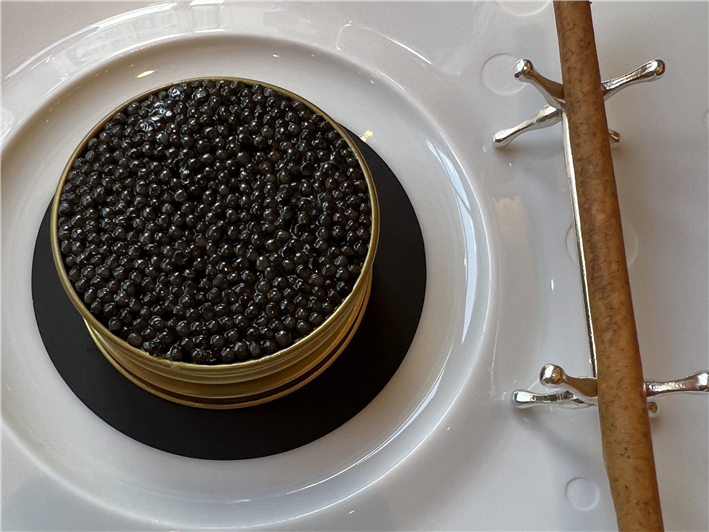
The first formal course of the meal was a pretty presentation that looked on the service like an open caviar tin. In fact this was just a neat layer of French caviar covering a gorgeous mousse of warm Ratte potato mash flavoured with haddock, served with a separate buckwheat crisp stuffed with lemon and chives. The mash was dazzling, the Ratte potatoes having great texture, with the haddock adding a pleasing flavour contrast to the salinity of the caviar. The acidity of the lemon was a clever touch to provide some freshness to balance the richness of the potato and its caviar coating. This was a really impressive dish, pretty to look at, original and glorious to eat (20/20).
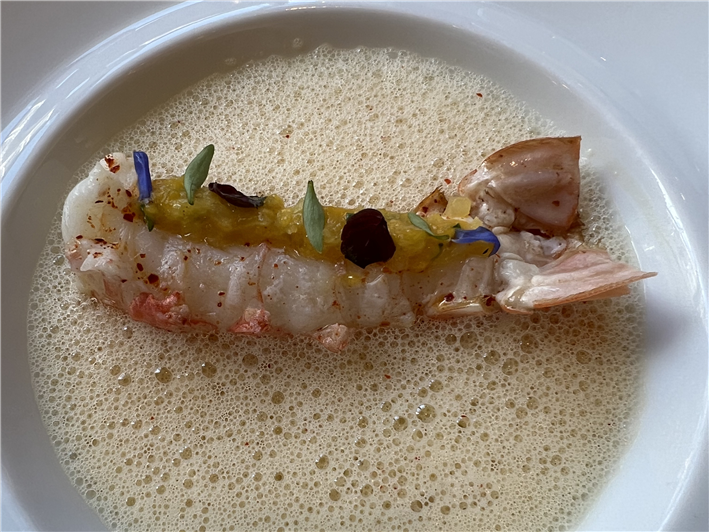
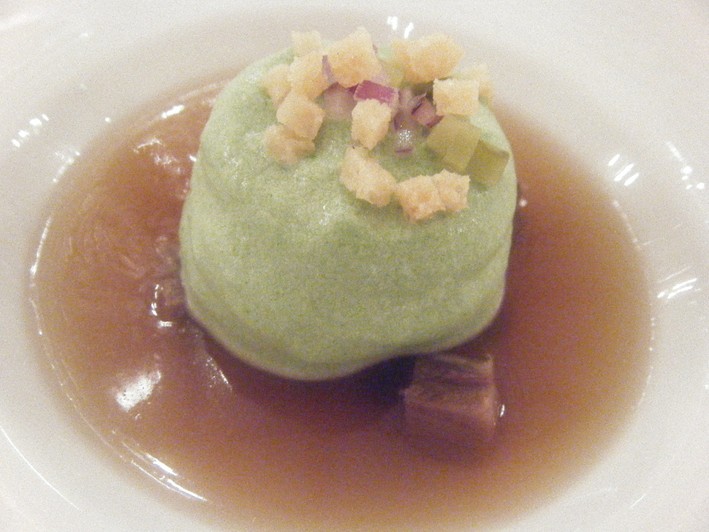
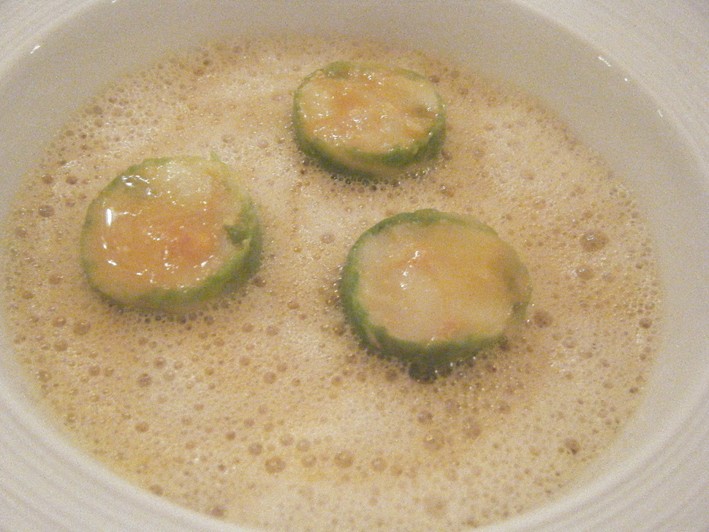
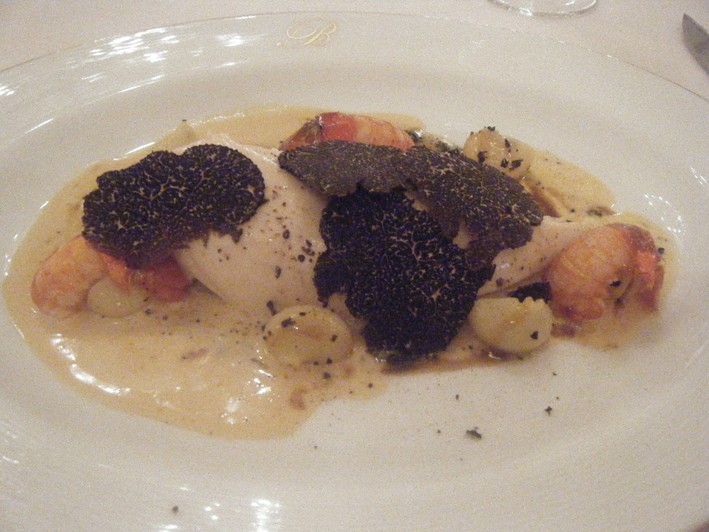
A large langoustine tail was lightly cooked with lemon thyme and served with a condiment of onion and mango, resting in a broth made from the shellfish claws that had been flavoured with yuzu and orange with a little coriander. The shellfish was immaculately cooked and had lovely natural sweetness, but for me even more impressive was the superbly balanced sauce that had precisely the right level of acidity from the yuzu to bring freshness and balance (20/20).
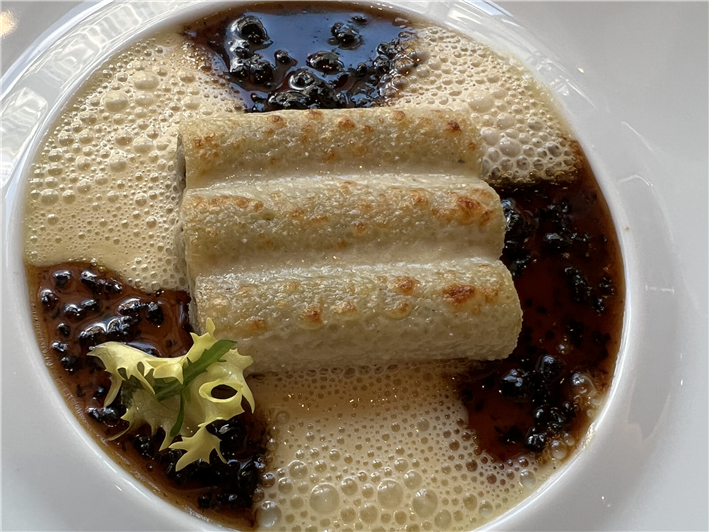
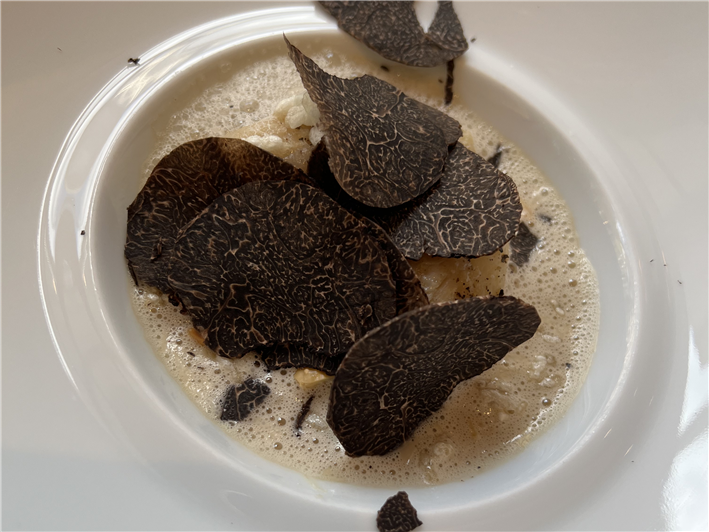
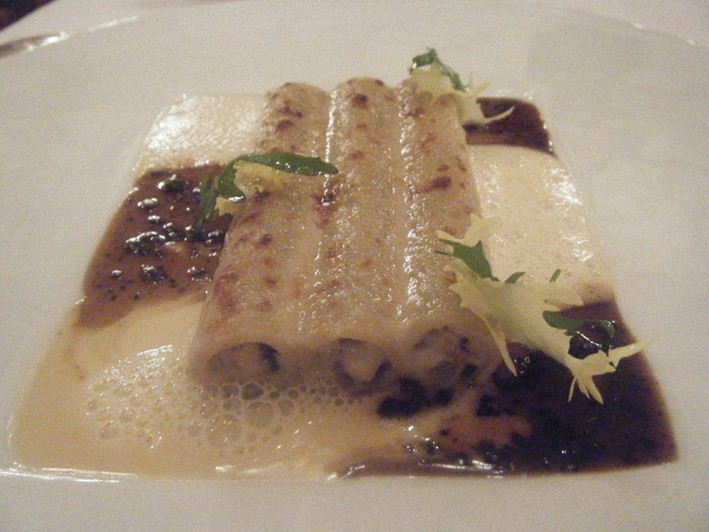
The signature dish of the restaurant was next, macaroni stuffed with a filling of black truffle, artichoke and foie gras, gratinated with mature Parmesan and served with a black truffle jus. The pasta itself was lovely, and the truffle, from Vaucluse in the south of France, had lovely aroma. This dish seems to have evolved slightly since I first had it, when I recall it being overly rich. The version today was presented more attractively and was certainly still a rich dish but the artichoke provided just enough balance to avoid the dish being dominated by Parmesan and the foie gras, which was quite restrained (20/20). A vegetarian alternative was worthy of mention. Celeriac was cooked in a pot then served with roasted hazelnuts, grated Beaufort cheese, butter sauce and black truffle. This was stunning, the celeriac having fabulous texture, its earthy flavour complemented by the richness of the butter sauce and the Beaufort, lifted by the aroma of the truffle and with a textural contrast provided by the hazelnuts. For me this was every bit as good as the macaroni, one of the best vegetarian dishes I can recall eating (20/20).
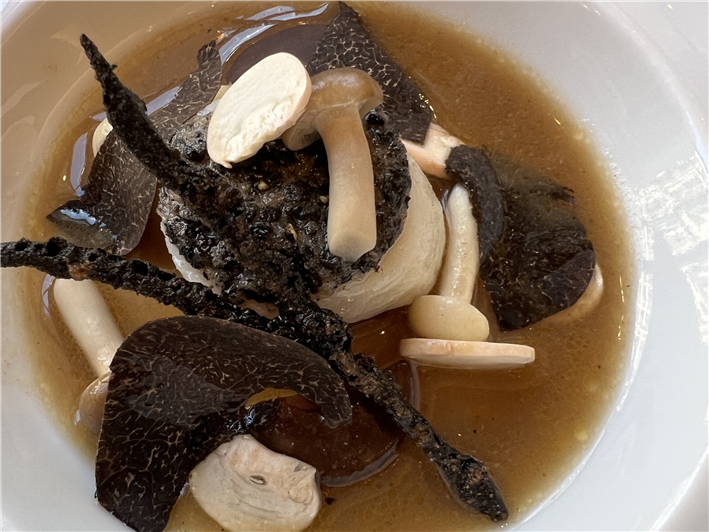
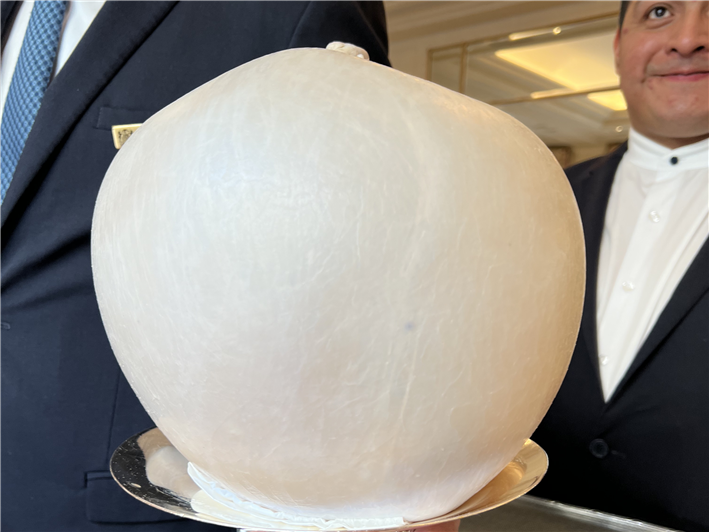
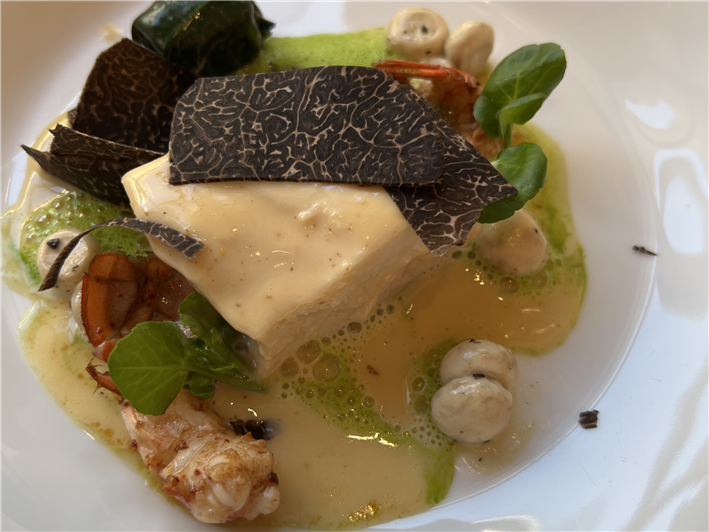
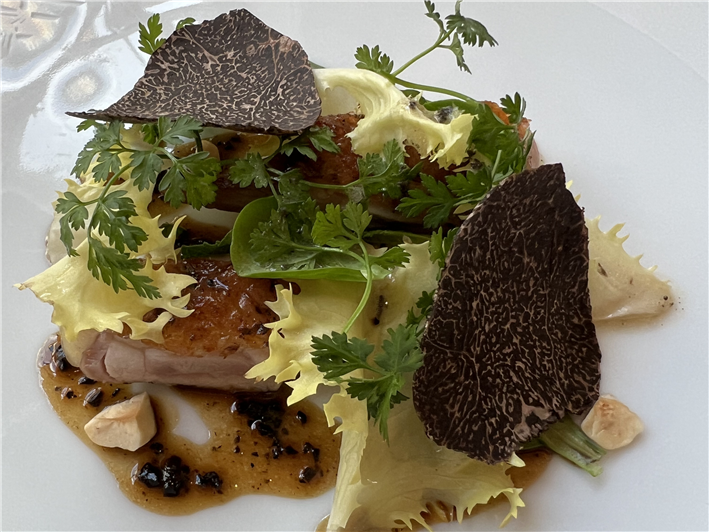
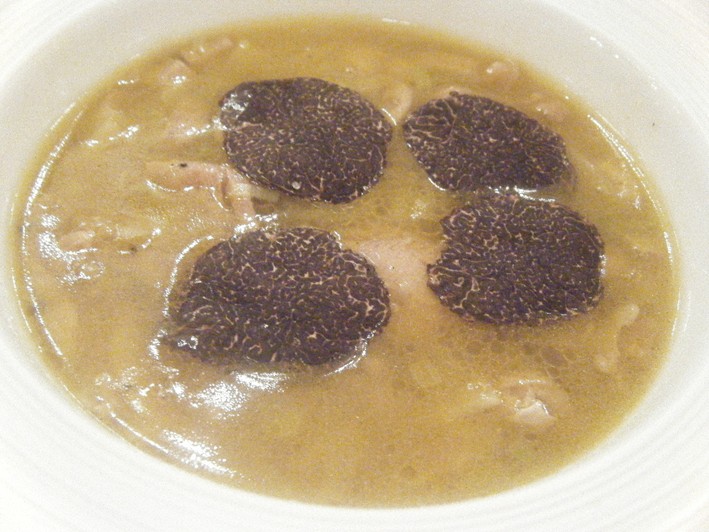
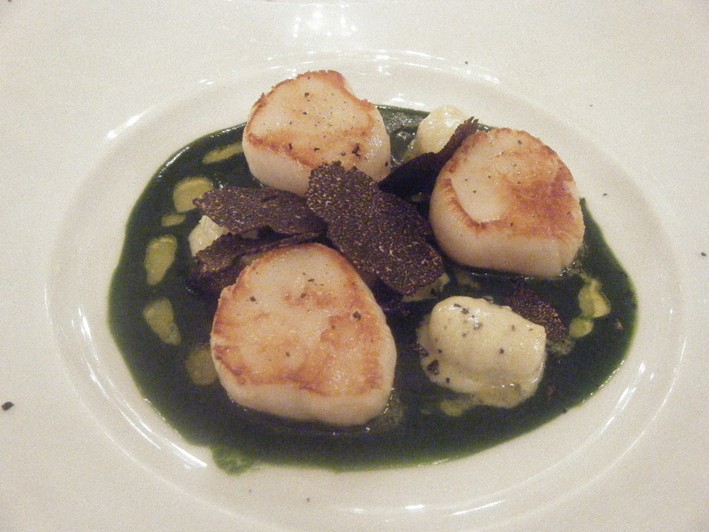
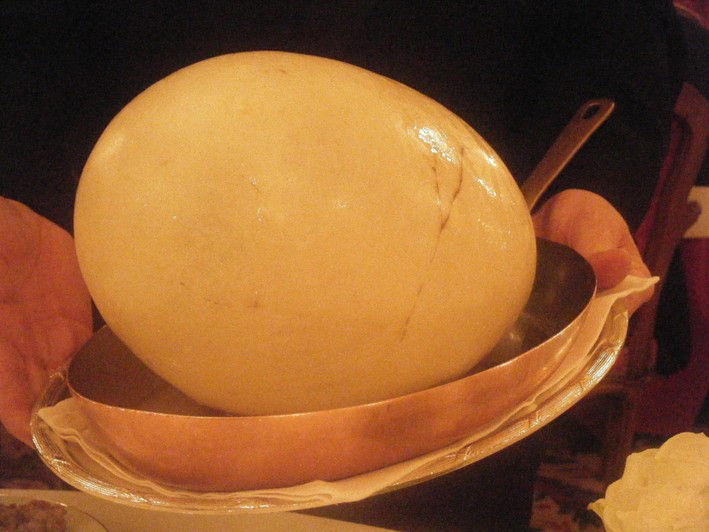
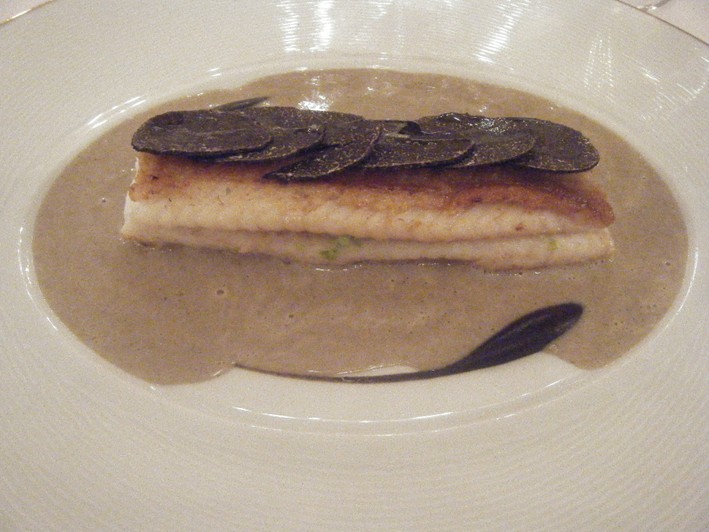
This was followed by sea scallops cooked with black truffle butter, alongside shiitake and shimeji mushrooms infused with vegetal moss. The scallop itself had good natural sweetness, and the mushrooms were fine and worked well with the shellfish and the truffle butter. However, for me this was merely a very good dish, not really in the league of some of the other plates that had already been served (18/20). The final savoury course was Bresse hen presented in a pig bladder at the table (it seems to be actually been cooked previously sous vide) before being served in two stages. First was the breast of chicken cooked in vin jaune wine and served with a crayfish, candied chicken giblets and black truffle. The second serving was chicken leg roasted on a Japanese barbecue and served with mesclun salad and herbs with black truffle. The chicken itself was very nicely cooked and had excellent flavour, with the chicken legs in particular tasting lovely. However, the best thing about the dish for me was the remarkably deeply flavoured sauce that came with the bird, the sauce served on the side in a silver jug and kept warm with a burner. This sauce was a lovely example of old school French sauce making at its best (19/20 overall but the sauce was perfect).
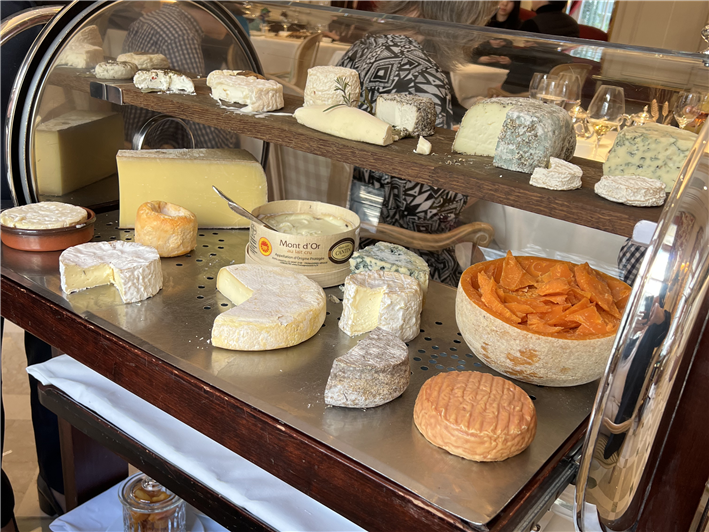
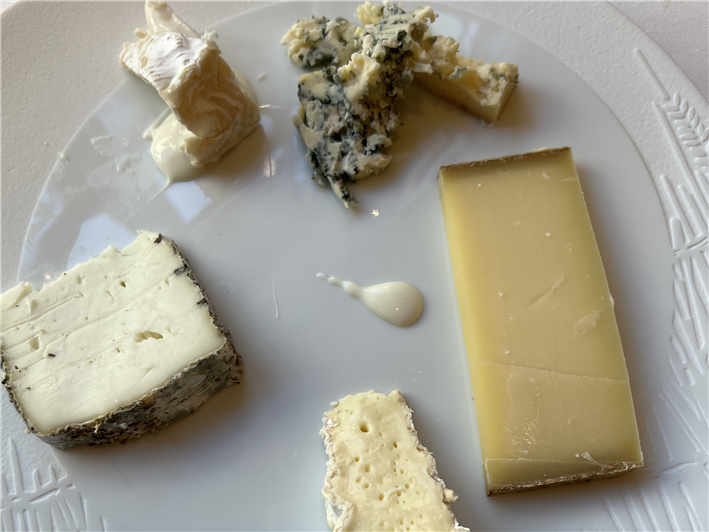
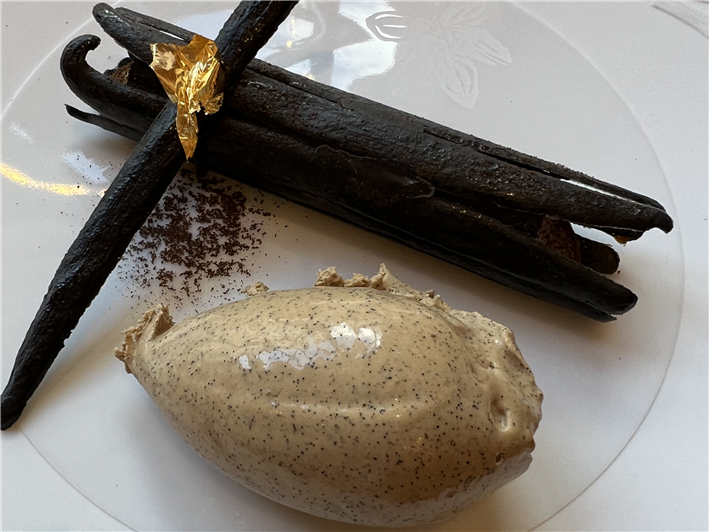
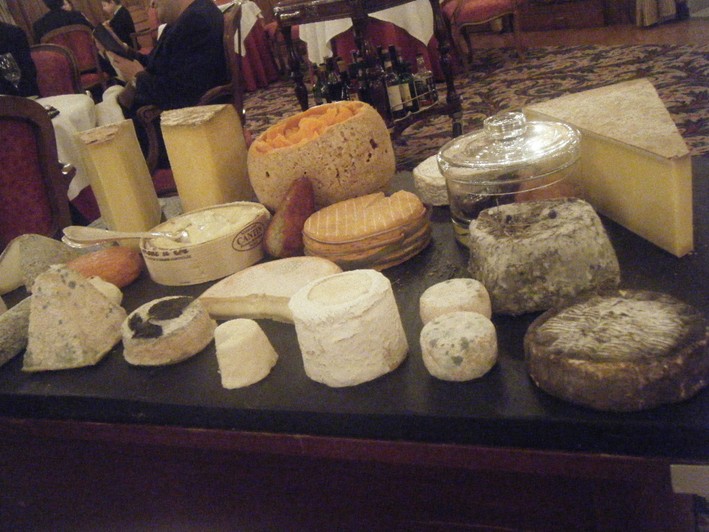
A good selection of cheeses from around France were presented on a large trolley, the cheeses themselves including aged Comte, Camembert and an excellent sheep cheese in ash, being in lovely condition. There were two desserts. The first was a dish themed on vanilla. Madagascar vanilla gavotte biscuits were shaped like large vanilla pods. This little bundle of biscuits was served with vanilla cream with a scoop of vanilla ice cream made with roasted vanilla. The ice cream, churned at the last minute, had remarkable intensity and lovely texture, the high-grade vanilla having deep flavour, while the vanilla biscuits had superbly light, flaky texture (20/20).
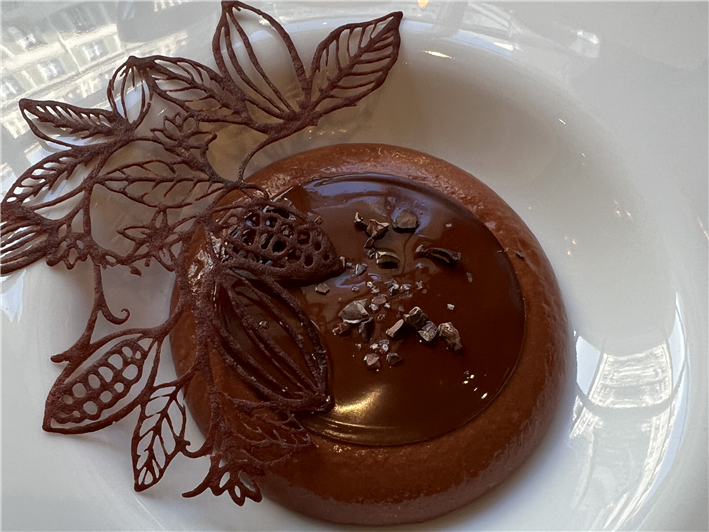
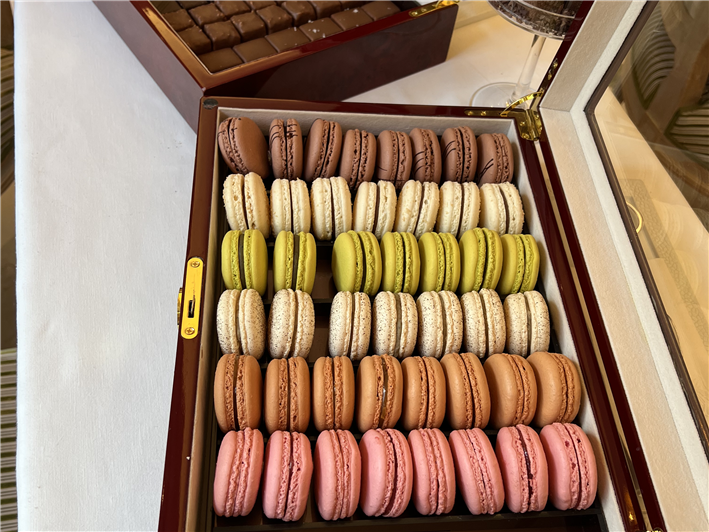
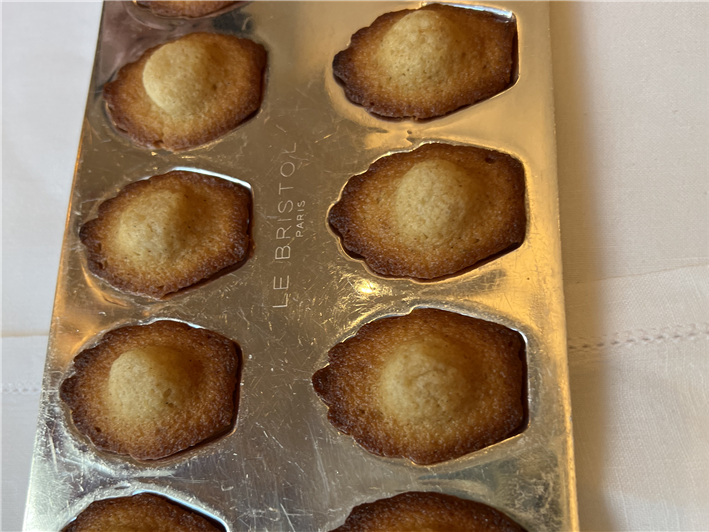
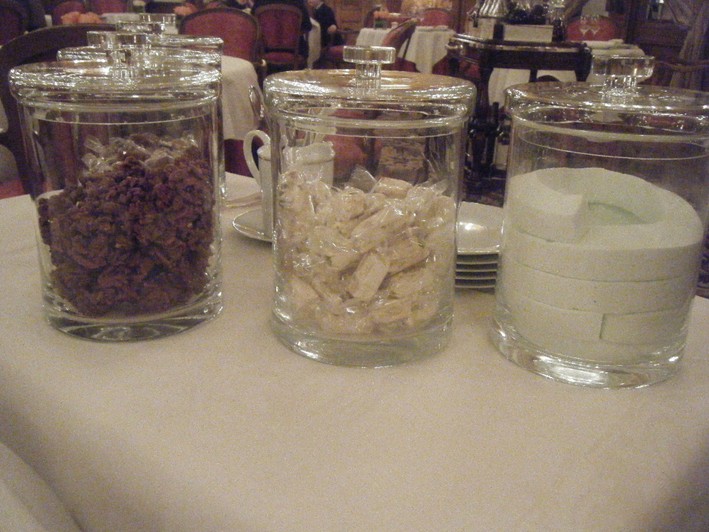
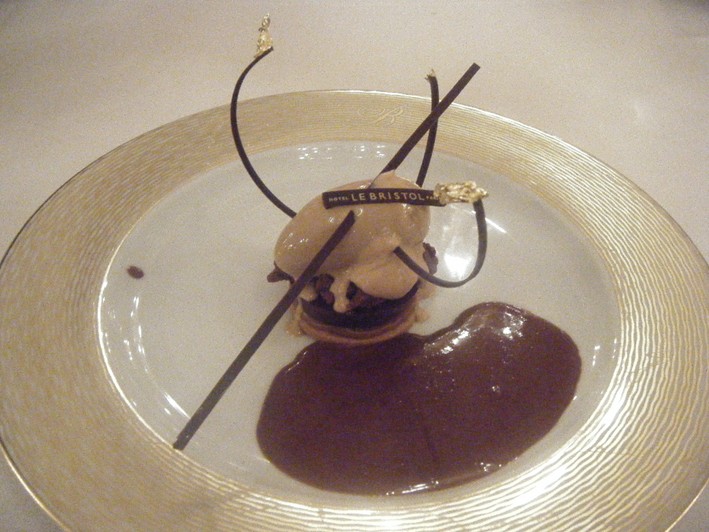
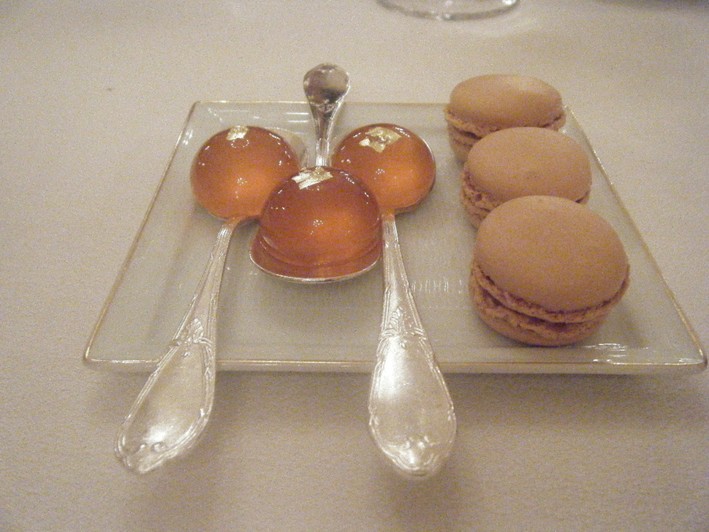
The final dessert was a ring of chocolate shortbread with cocoa nib praline and a centre of hot chocolate espuma, decorated with a pretty chocolate tuile and served with chicory ice cream on the side. The multiple textures and deep chocolate flavour combined well with the hint of coffee flavour from the chicory ice cream; perhaps the texture of the shortbread could have been more delicate, but that was about the only very minor room for improvement (19/20). These were desserts from a very serious pastry section, the kind of thing that France can do so very well. Coffee was from a Paris roaster called Malongo, and it was very pleasant, as well it might be at its eye watering price tag. To be fair, with the coffee came an impressive selection of chocolates and macarons, beautifully presented in handsome wooden boxes. There was even a final flourish of lovely little lemon madeleines as a last bite to finish the meal.
Service was extremely good, the staff being friendly and attentive, and really giving the impression that they cared about the diner experience. There was one trivial slip when a sommelier miscounted the courses and brought a glass of wine with the wrong course, but that was literally the only trivial flaw I noticed in the whole service experience. The bill came to €690 (£607) per person including some good but not crazy wine. The cheapest possible a la carte choices would set you back €229, to which you then have to add drinks. If you chose courses at the mid-point of pricing your food would come to €333, or €372 with cheese. Sharing a modest bottle of wine would add another €40 or more, so bringing a typical cost per person to about €373 (£330), but clearly this would be much higher with the tasting menu and better wine. To me the extras were more troubling than the tasting menu price: a double espresso was €18, and Badoit mineral water was €14. Overall, this was a lovely meal, actually better than my previous meal here, and showcasing high end French cooking at its best. The top dishes here were virtually flawless, and throughout the meal the standard of cooking was very high. There is no restaurant in the UK at this quality level at present. Certainly, all this quality comes at a high price, but then the best things in life often do.
Further reviews: 01st Jan 2008
Alexandre
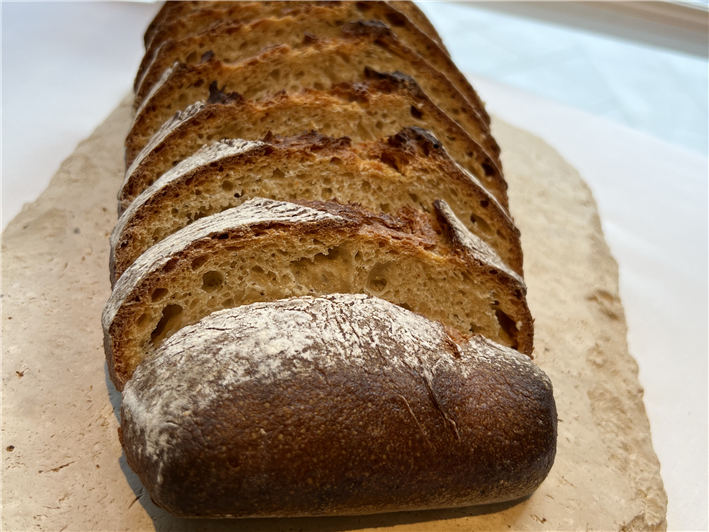
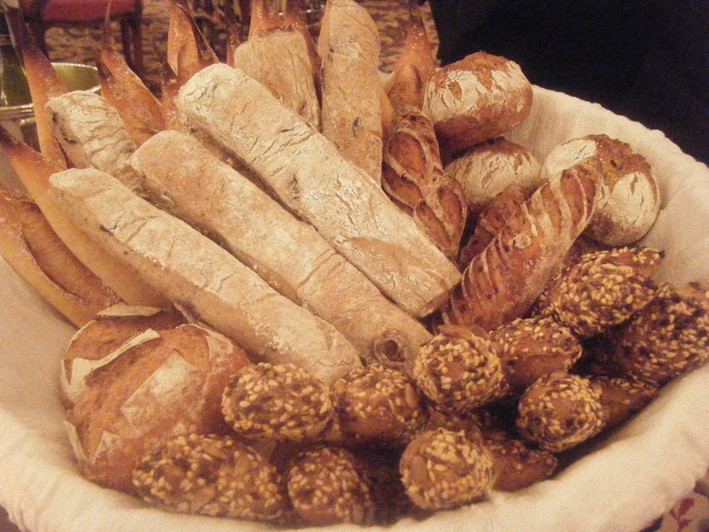
I took my wife and two sons (aged 13 and 8) to dinner at Epicure yesterday evening. After dinner at Guy Savoy 10 days ago, I thought our dinner at Epicure would inevitably present us with a slight drop in quality, but we were all pleasantly surprised. Our dinner at. Epicure proved to be just as enjoyable, and the cuisine just as flawless as the one we had enjoyed at Guy Savoy, albeit very different in many ways. The 8 year old decided to go with the children's menu, which was nicely varied and appropriate for children under the age of 10. My wife, 13 year old son and myself ordered à la carte. My wife started with the young artichoke roasted with anchovies and presented with artichoke chips and pink garlic. She loved the dish as it was very well balanced. My son and I shared two appetizers. First, the large langoustines, which were lightly cooked in a broth their claws, citrus fruit and coriander. Then the caviar from Sologne served on top of potatoes mousseline smocked with haddock. Both dishes were exceptional. I cannot imagine a better mix of acidity and boldness. We also ordered two "Candele" Macaroni, a speciality of the house, that we all shared. The macaroni were fine and contained black truffles, artichoke and duck foie gras, and were topped with finely grated aged parmesean and black truffle juice. This gem of a dish tasted as incredible as it sounds. For her main course, my wife went with the Scottish salmon which was cooked at very low temperature and served with Tandoori spices, fennel and cucumber with mint oil and rice vinegar. I did not try this dish, but my wife loved it. My son and I order the Bresse farm hen slow cooked over 4 hours in its own bladder. We were served the entire bird in two parts. The first part was the breast, which was incredibly tender and tasty, laid on top of foie gras and presented with asparagus and mushrooms. The second par were the legs and thighs were then grilled until the skin was toasty, and served with a mesclun salad with a vinaigrette and black truffle oil dressing. Again, this dish was cooked and seasoned to perfection. For dessert, we were not that adventurous. Three of us ordered the baby strawberries, very creatively served with strawberry confit infused sorbet with leaves of agastache. The mix of the strawberries, confit, sorbet and leaves worked in perfect concert to form a perfect dessert. One of my sons had peach dessert with was served with a peach confit and sorbet, which he thoroughly enjoyed. The amuses bouches and mignardises were excellent, as was the bread. As can be expected, the service was impeccable throughout. They made us feel very much at home and took great care to look after our two boys. I recommend Epicure very highly indeed!
IAN ASSUMPTION
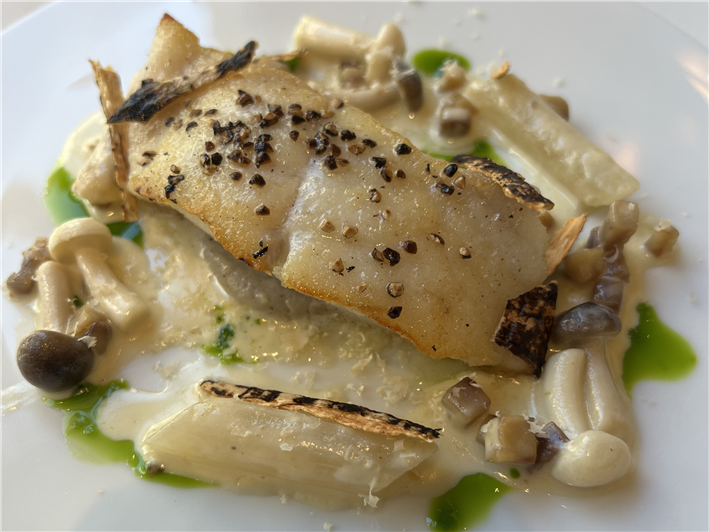
Ate here 2 months ago Solo diner so table not great but food exquisite One mis-step: salt from clams leached into fish sauce rendering this inedible Addressed without fuss Wine mark ups unforgivable
Upnworld
Superb review ! Enjoyed reading it. Particularly your brutally direct, hilarious take on their exasperating wine menu practices.
Piet
Thank you for a fabulous review
IAN ASSUMPTION
We need one of you in every capital city. Erudite Linear Straight shooter I'm dining there this month Thank you for raising the "mark up"issue that no one else talks about and drives me nuts The only meal in a 4 day trip for a medical conference My game plan is Parisian markets and boy other days Keep being the voice of reason Ian
Ian Westcott
We had a very underwhelming experience there some 6 years ago.
Markus Schmidt
Epicure is an institution, and we have extremely fond memories of our dinner there in October 2019. Those stuffed macaroni and the caviar with mashed ratte potatoes!! The Fides Savennieres from E. Morgat was very pleasant.
John williams
Proper 3 star!!!