



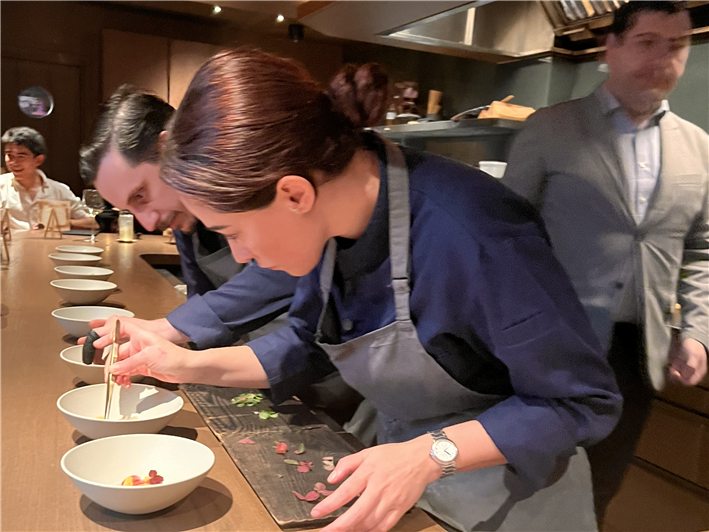
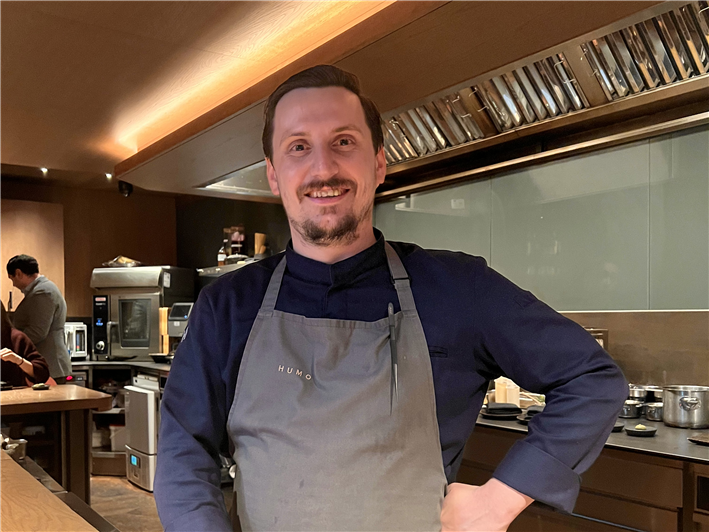

Humo is effectively two restaurants in one. On the ground floor is the main restaurant, based around a long four metre wood-fired grill. In the basement is a small chef table doing an omakase style tasting menu, with eight seats arrayed around a kitchen, and this was where we are tonight. In a previous life this basement was branded separately as Abajo, The restaurant gained a Michelin star in 2024. Robbie Jameson is now the head chef. He was formerly at Martin Wishart at Cameron House, after which he worked in Australia. In the kitchen it was nice to see the female head chef of Endo at the Rotunda, working here for now since Endo was closed by a recent fire. This was a tasting menu, which is £155 per person.
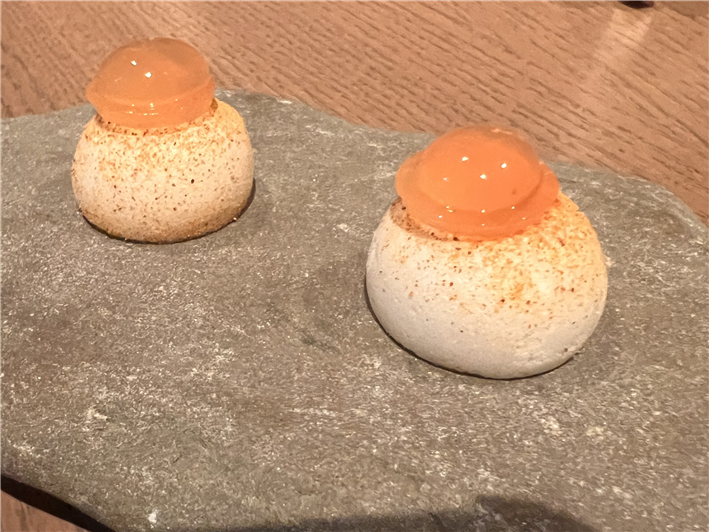
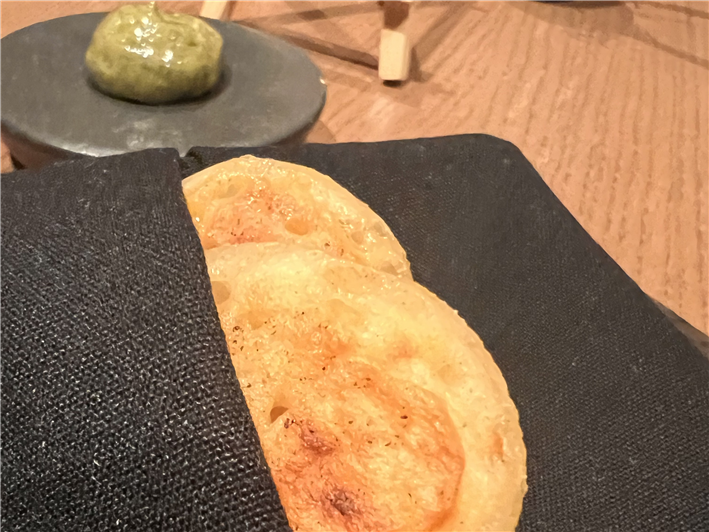
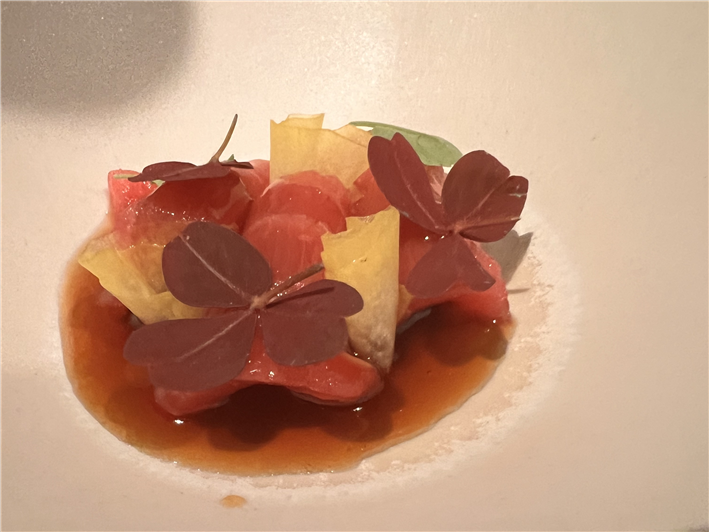
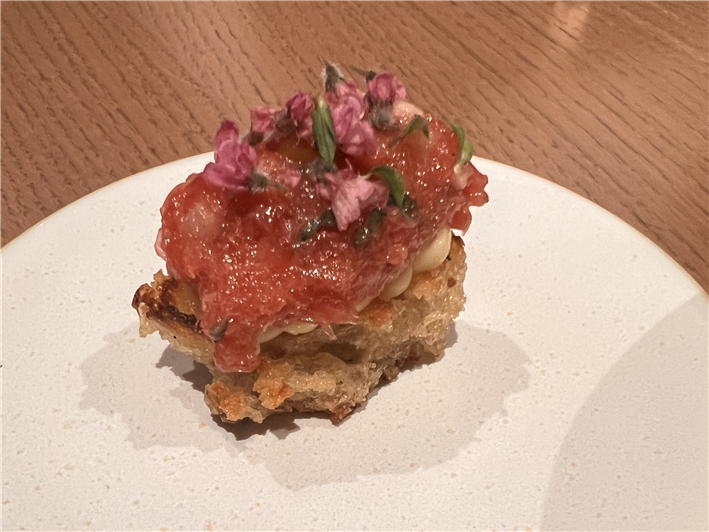
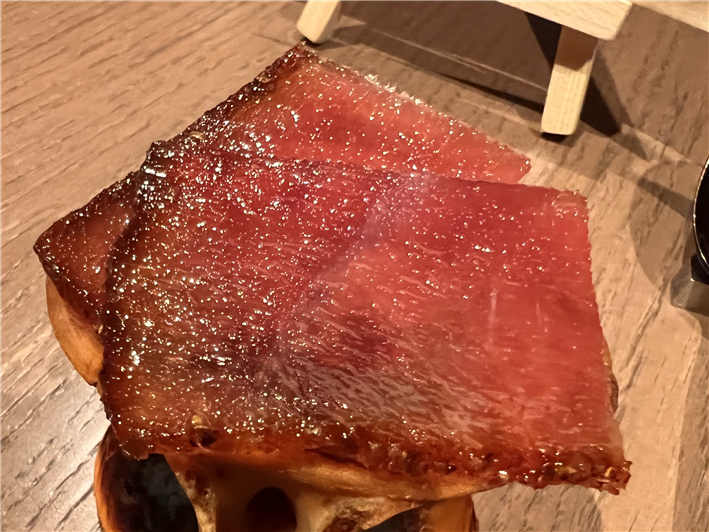
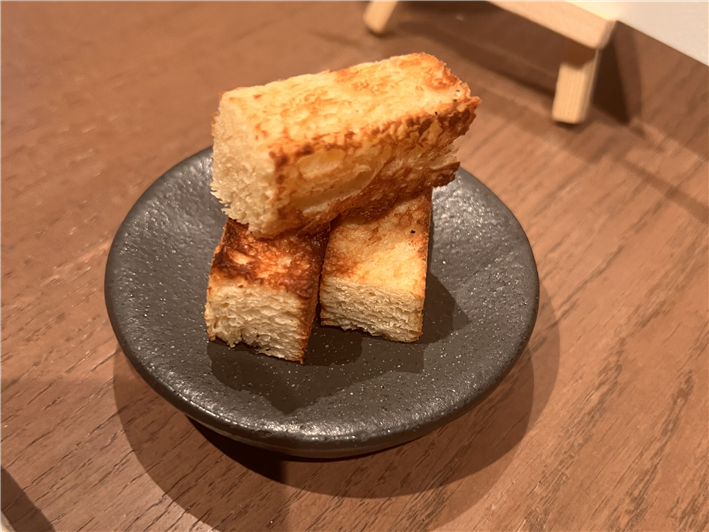
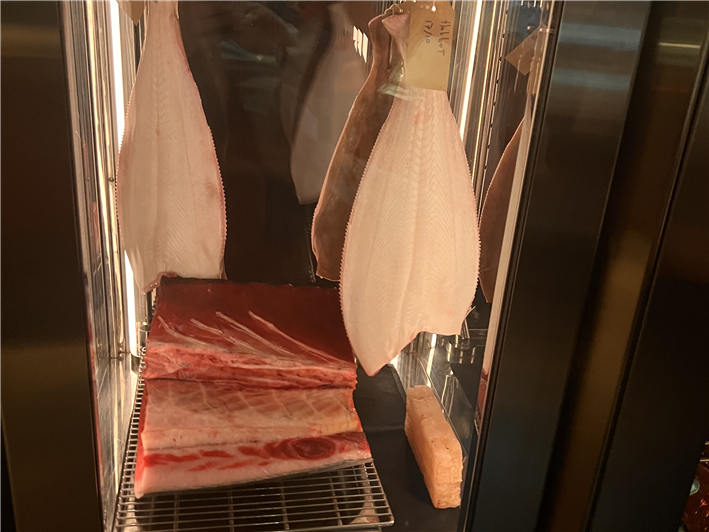
The meal began with some canapés. “Bread and butter” was a toasted crumpet flavoured with nori. The crumpet itself was delicious, warm and welcoming. A tomato meringue served on a stone was less successful, being oddly sweet. Better was an enjoyable brioche doughnut (average 14/20 canapés).Next was a trio of tuna dishes. In a bowl was tuna with shiso leaves, takuan daikon (Japanese radish) pickle, which had a pleasing smoky hint but was also flavoured with burnt Madagascar vanilla, which seemed an odd choice to me. Tuna goes really well with classic accompaniments like soy or a citrus dressing like yuzu, but for me, vanilla belongs in ice cream at dessert, not on savoury dishes. For sure, it is a known pairing, originating in the island of Comoros, which was colonised by the French. This pairing has been picked up on occasion by top restaurants in France (such as sea bass with vanilla and caviar sauce served at Pic in Valence), but personally, I have always struggled with it. The second tuna element was potato and honey sourdough with tuna tartare and sea buckthorn. This was harmless enough, with the searing sharpness of the sea buckthorn reasonably restrained. There was also a tuna “ham”, basically aged tuna charcuterie that was really salty. To me, this series of takes on tuna was just too cheffy (13/20). None of the treatments improved the core ingredient. I would have preferred to have just been served the tuna raw on a plate, possibly with a simple ponzu dressing.
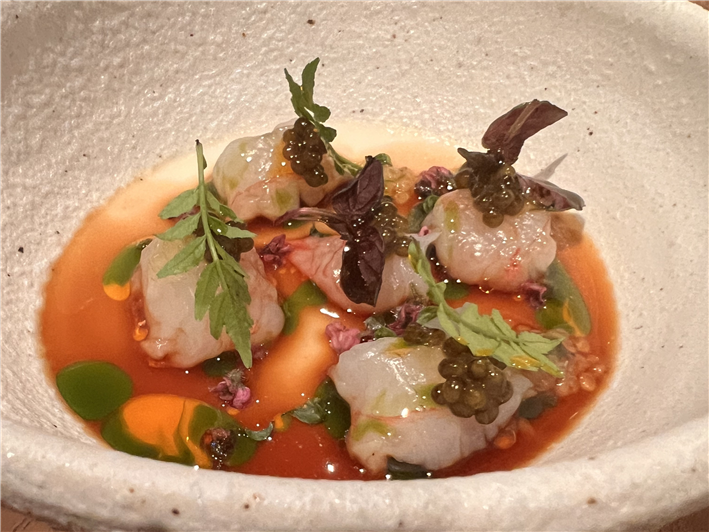
The meal moved up a gear with Scottish langoustine chawanmushi (savoury Japanese custard). The langoustine, supplied by top supplier Keltic Seafare, was itself of high quality, with good natural sweetness, marinated in gin rather than the traditional sake. The chef makes his own dashi and koji (steamed grains inoculated with a mould called aspergillus oryzae) made from Minori rice (a plump, sticky short grain rice originally from Japan but also grown in Spain). The chawanmushi was the base on which the langoustine rested, garnished by N25 caviar that itself had been marinated in seaweed. There was also finger lime, which was a good idea to provide acidity, though it was so subtle as to be almost invisible. The dish also had cedar wood-aged soy sauce and shiso flowers. This was a very good dish (15/20) and would be even better if it had more finger lime for greater balancing acidity.
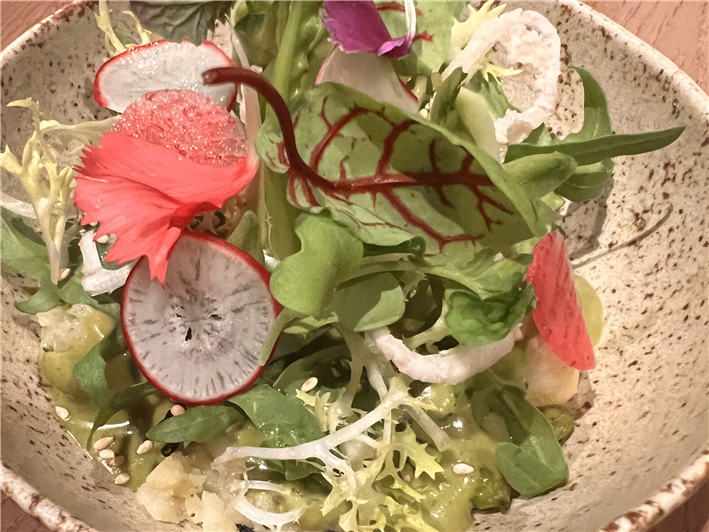
This was followed by a salad, but it was a good one. This had seasonal vegetables including grilled Agria potatoes, with sake, miso and coriander, with ponzu, olive oil and chives. There was frisée lettuce and sesame, and crisp shallot, and the whole thing worked very well indeed. The balance of textures was excellent, and the Japanese dressing worked very well. The overall effect was of layers of interlocking flavours and textures, and was genuinely successful (16/20).
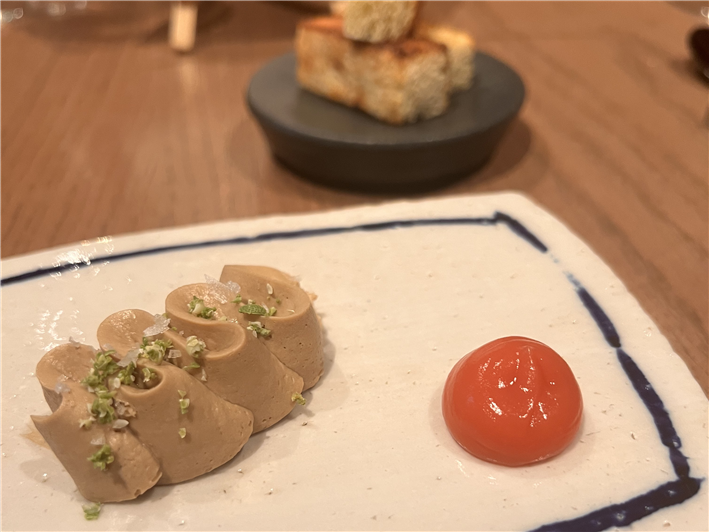
Next was duck liver terrine using foie gras from the Dordogne, which had been cooked sous vide and whipped over ice to give it a light texture. The dish was accompanied by chopped sansho pepper grown in Kent, and fermented smoked opal plum smoked as well as smoked brioche on the side. The foie gras was good, the unusual texture being quite interesting. The fermented plum was very sharp indeed. The idea of using this to provide balancing acidity was good, but this was searingly sharp. There was also the sansho pepper, which is a relative of Sichuan pepper. I have had this mountain pepper in Japan, and its numbing spice is very interesting. This version, grown in the UK, seemed to lack this distinctive bite. Still, overall, this was a good dish (15/20).
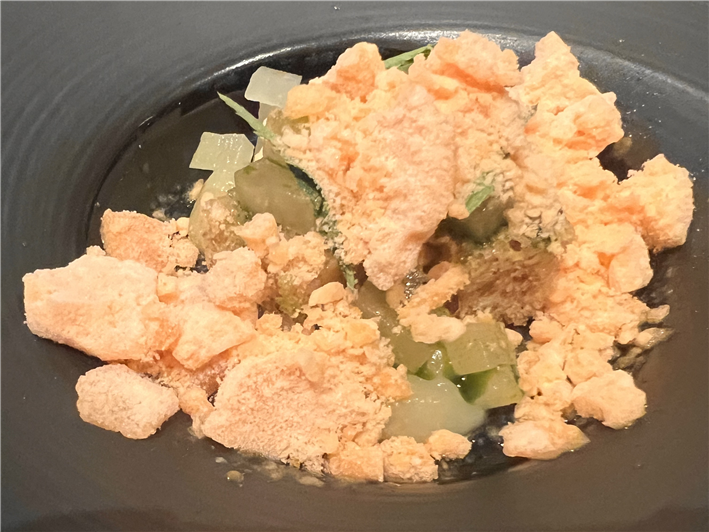
A palate cleanser was next, made of compressed and fermented Granny Smith apple and marigold, olive oil and sobucha sponge, with a carrot and ginger granita. This didn’t work at all for me, especially the olive oil sponge. The dish had a strong herbaceous taste when a palate cleanser should simply be refreshing (12/20). Something like a champagne sorbet would have been preferable.
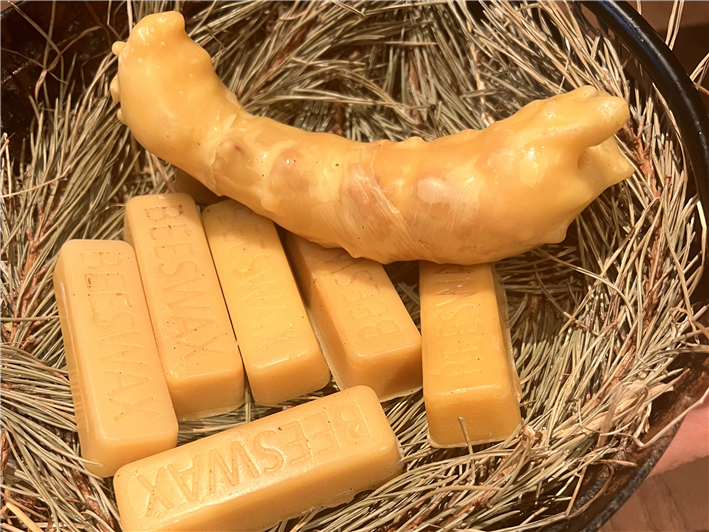
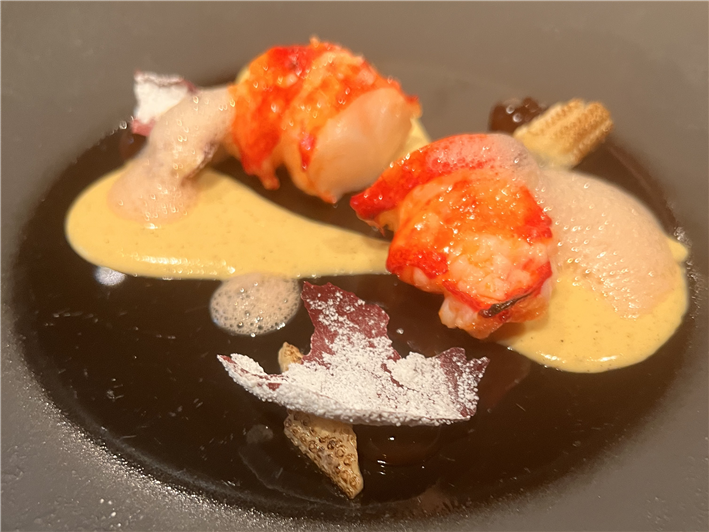
Native Scottish lobster was next, served in two ways. First, there was a lobster consommé made from the heads and legs of the lobster, along with salt from Japan, and burnt Amalfi lemon oil. This was very nice, a simple consommé with good flavour concentration. The lobster tail had been dipped in beeswax from Brockenhurst in the New Forest, aged for a while and then cracked open. This was served with sweetcorn cream and pickled sweetcorn, with a flavouring of rose. This lobster itself was cooked very well, being tender, but again, there was the unwelcome sweetness in the other elements. Lobster has a kind of natural sweetness, so I don’t think it is a good idea to pair this with other things that also have sweetness; better something with acidity to balance (14/20).
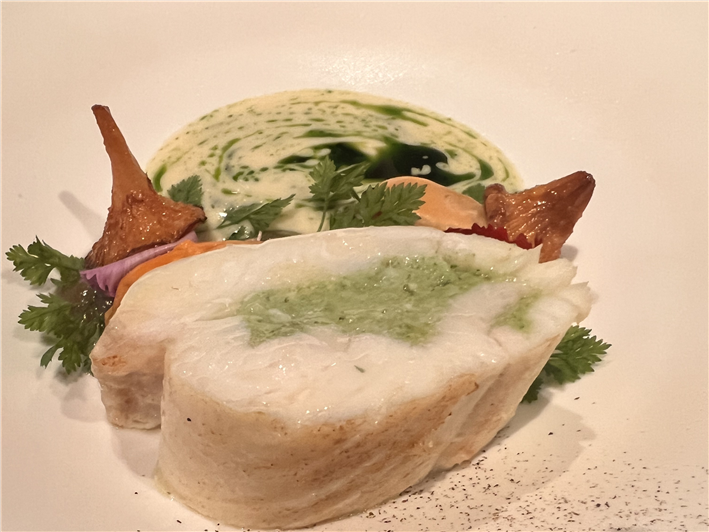
Cullen skink is a traditional Scottish dish, a smoked haddock soup with potatoes and onions. Cullen is a fishing port in north east Scotland, and the local fishermen adapted the plentiful haddock to an old beef shin (“skink”) dish, converting int to a fish soup. The version here was not a traditional Cullen skink, but instead used halibut, served with Shetland mussels and girolles from northern France(the Scottish girolle season having finished a few weeks ago). This was a very pleasant dish (14/20).
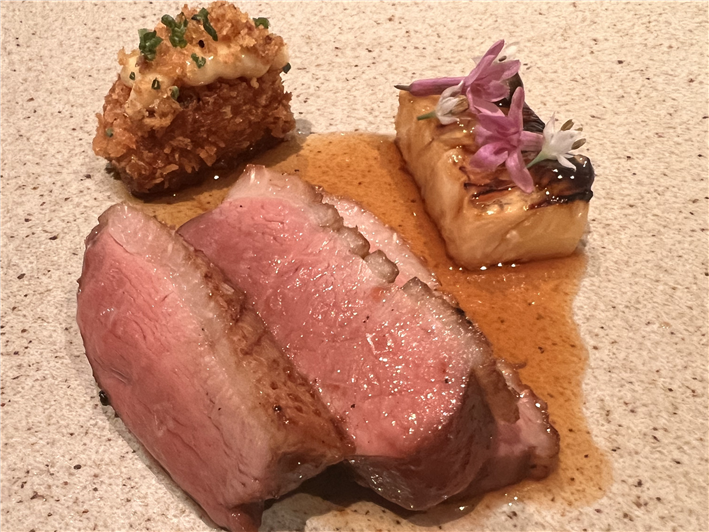
Oak roasted duck breast was from the Dordogne and had been marinated with the Japanese condiment shio koji (a meat tenderiser made from fermented rice that adds umami richness). This came with a soy sauce reduction, the duck having been cooked on a barbecue. The breast, cooked pink, came with confit leg croquettes and a garlic aioli, along with lemongrass and ginger. There was also a salt-baked pineapple and clarified duck jus. This was a good dish, with the acidity of the pineapple a nice foil to the richness of the duck (15/20).
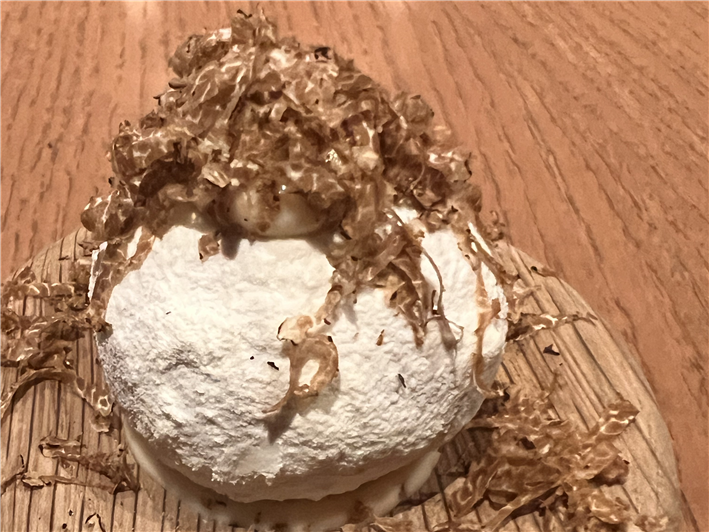
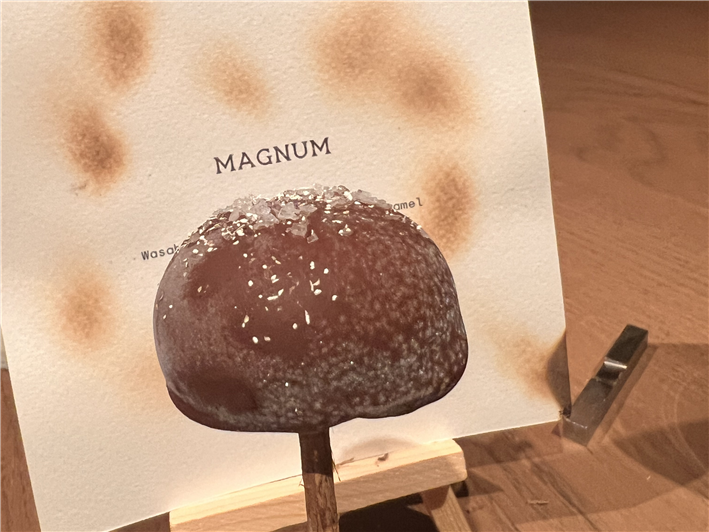
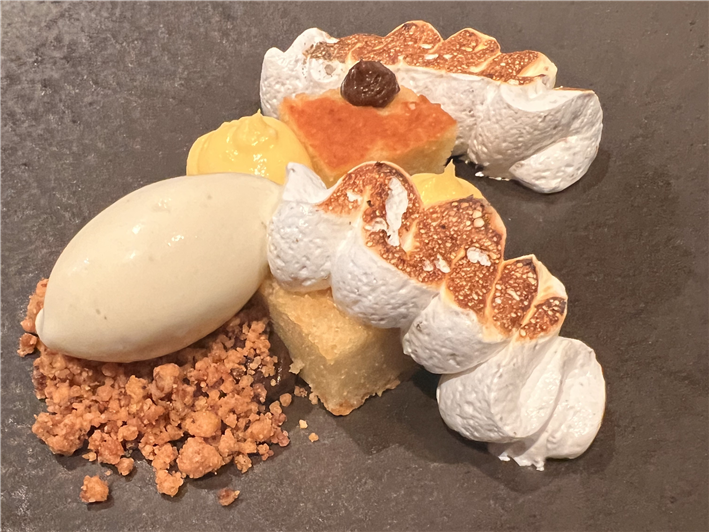
A “Magnum” ice cream with Blackthorn sea salt caramel flavoured with wasabi and girolles was a pre-dessert. The chocolate mercifully covered the girolle flavour (I love girolles, but not in ice cream), and the wasabi brought an undeniable peppery bite. There seemed to me to be just a bit too much saltiness on display, but the chocolate was good (14/20). However, no one in prison on death row ever ordered mushroom ice cream as part of their last meal. The main dessert was prettily presented, based on Amalfi lemon with several elements. There a lemon gel, lemon zest in meringue with Sichuan pepper, lemon pesto with olive oil and lemon verbena ice cream. The meringue was all right, as was the ice cream on a biscuit crumb, but the olive oil was dominant, and what was it doing in a dessert? (12/20).
Coffee was from Kiss the Hippo and was good. Service was charming throughout the evening. This meal was an invitation from a friend, and so I did not see a bill. I believe that the normal tasting menu here may be £135 per person plus drinks, so a typical cost per person might be £190 a head or so if you were careful with wine etc. The menu upstairs is a different affair. There were definitely things to like about Humo. The place is smart, the staff are lovely and the ingredients are of high quality. I enjoyed the dishes where the chef showed his Scottish roots, as in the Cullen skink dish, which gave the dishes a distinct personality. The technical cooking was also good, with carefully cooked lobster and duck, for example. However, for me, too many dishes felt contrived when they didn’t need to be, such as the tuna medley, which was less enjoyable than if the kitchen had just served some tuna sashimi. The other recurring theme was a tendency to mix sweet elements into savoury dishes, and savoury elements into sweet dishes. I think that this blurring hardly ever works. A common theme I have noticed in chefs, especially in the UK, is a desire to complicate and show off clever technique, but who is this really aimed at: the diner or other chefs? It is noticeable that in many top-notch French (and Japanese) kitchens, there is a theme of simplicity, to show off the beauty of top ingredients by letting them speak for themselves. Great chefs like Michel Guerard (RIP) would examine dishes with an eye to simply removing elements rather than adding them, and that was almost always the right choice.
Add a comment
Thank you for submitting your comment, this will be checked and added to the website very soon.
User comments