


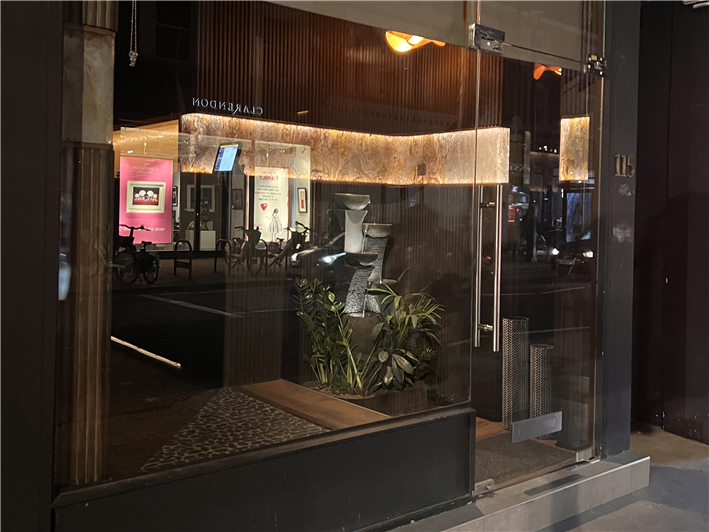


Materia Prima opened in January 2026 in Westbourne Grove, on the site of a short-lived former Asian fusion restaurant called Botwa. It is the latest venture of Victor Garvey, who also runs Sola, and previously ran the Victor Garvey at The Midland Grand before its closure in July 2025. Mt Garvey has lived in Japan and formerly worked at the superb restaurant Ryugin in Tokyo. The restaurant name has several meanings. It is the raw material (“first matter”) of the universe in alchemy, the base material that could (notionally) be purified to turn lead into gold. There is a hint at this in the alchemical symbols in the restaurant logo. However, there is some layered meaning in the name. The phrase means “raw ingredients” in Spanish and Italian, signifying the use of top ingredients here, many imported from Japan. Also “Ma te ri ya” in Japanese means “to stop the darkness”. The head chef here is Kaming Pang, who is from Hong Kong but studied cooking in Osaka and Kyoto and lived in Japan for four years, including working at the legendary Kitcho. The other kitchen staff are from Singapore and Hong Kong along with two Japanese chefs.
As you enter the restaurant, you walk down a corridor lined with cabinets showcasing some of the ingredients being used here, such as Japanese radishes and melons. The dining room seats just sixteen diners, the room having a cosy feel, with dark wood and good lighting. There was actually a DJ in the corner, playing music that was much more fashionable than me. The format is that of a tasting menu, with menus of different lengths at £99 and £189. Wine pairings were £125 or £160, with non-alcoholic pairings at £65 and £85.
The wine list had 182 labels and ranged in price from £42 to £1,230, with a median price of £109 and an average markup to retail price of 3.6 times, which would raise eyebrows even in Mayfair, never mind Westbourne Grove. Sample references were Oppenheimer Guldenmorgen Spätburgunder Weingut Carl Koch 2023 at £49 for a bottle that you can find in the high street for £19, Barbera d’Alba La Martinella Broccardo 2023 at £61 compared to its retail price of £18, and Pouilly-Fuisse Les Crays Domaine Guerrin & Fils 2023 at £94 for a wine that will set you back £29 in the high street. For those with the means there was Trimbach Riesling Cuvée Frédéric Emile 2011 at £201 compared to its retail price of £49, and Patriarche Père & Fils Meursault Les Charmes 2018 at £309 for a wine whose current market value is £80. San Pellegrino mineral water was £7 a bottle. There were ten wines under £50, and 49 under £75. The list was sensible skewed towards white (48%) and sparkling (12%) rather than red (37%) given the preponderance of seafood in the menu. 58% of the wines were French but there was a decent showing from elsewhere, including one wine from Japan. Groweres seemed well chosen e.g. there was the excellent Abtsberg Riesling Kabinett 2023 from the talented Weingut Maximin Grünhaus, albeit at a hefty markup.
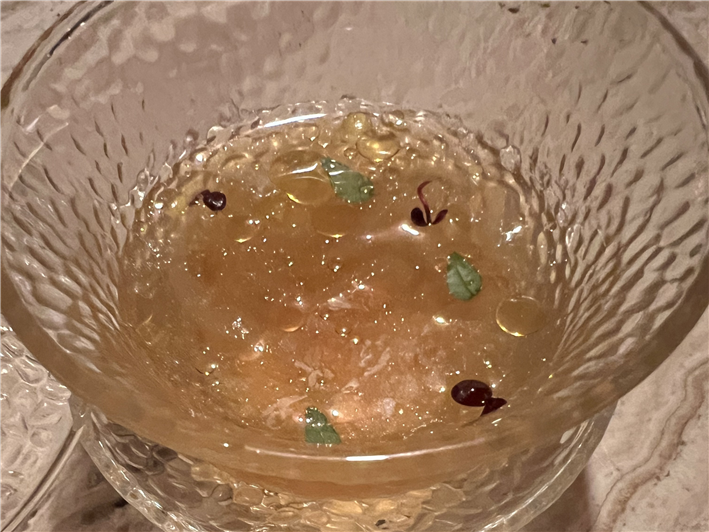
The first dish was Marinda tomato noodles with sakura miso and tosazu, a vinegar condiment made from rice vinegar, soy sauce, mirin and dashi. Marinda tomatoes are a winter-harvested variety from Sicily. Fermented Marinda tomato water was turned into tokoroten noodles (translucent agar jelly noodles made from seaweed), resting in a chilled tomato, saikyo miso, and olive oil consommé. This was an unusual and quite refreshing dish to start the meal, the flavour of the tomatoes coming through, but not being overly intense. This dish was technically clever but I am not sure that it had the flavour impact that it might have done (15/20).
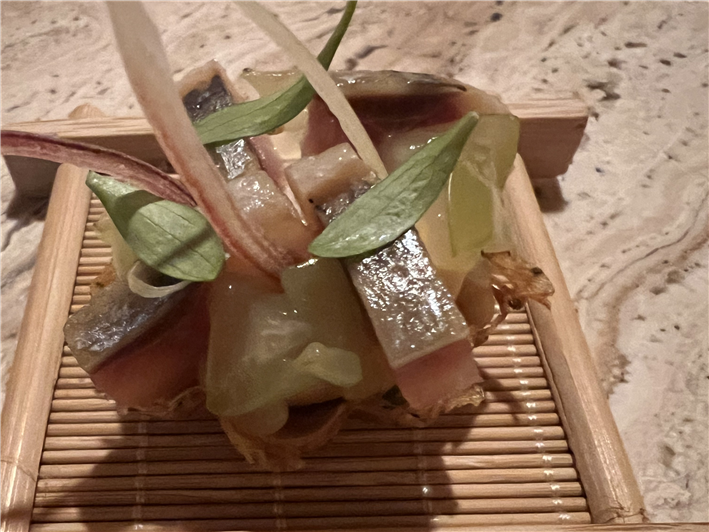
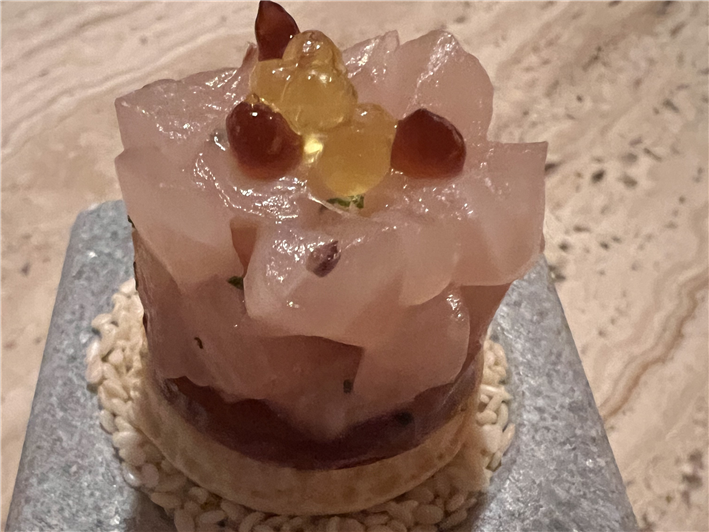
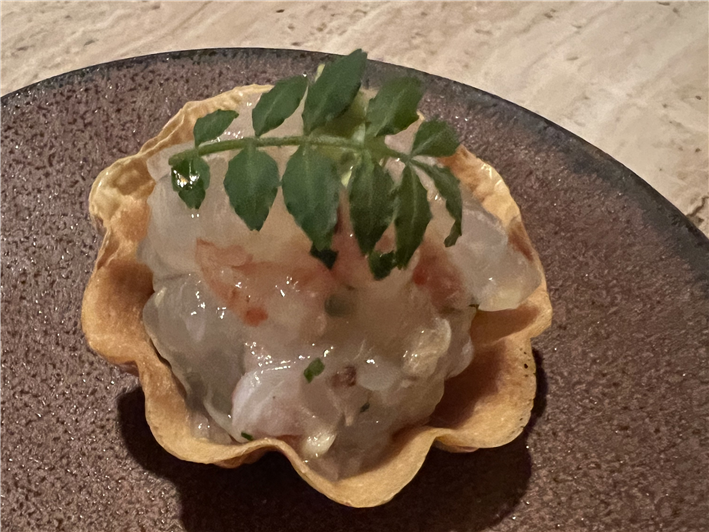
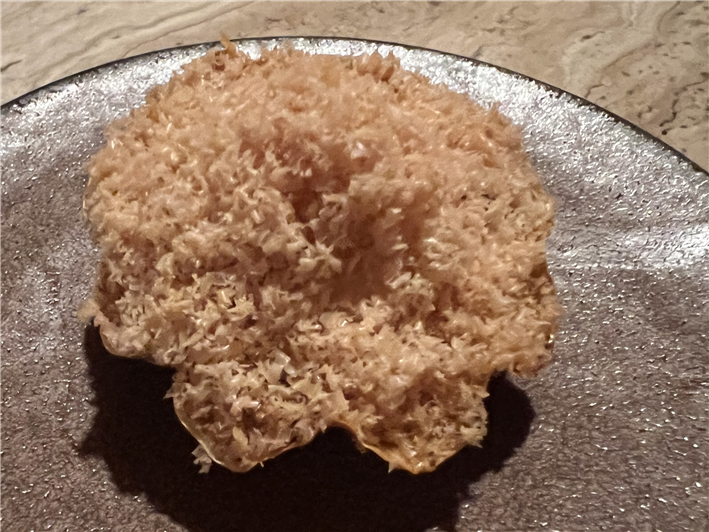
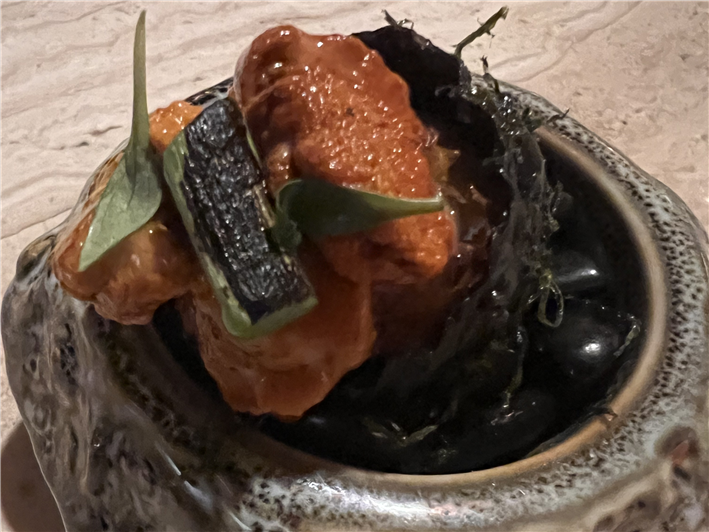
The next dish on the menu was actually a sequence of four canapes. First was sardine tartlet with almond and myoga (Japanese ginger). Cold-smoked sardine (smoked in the kitchen) rested on Marcona salmon bavarois with Shine Muscat grape and myoga. This had very good pastry and sardines that were packed with flavour, with the ginger in particular being a good contrast the natural oiliness of the fish. Next was white (albacore) tuna served with olive oil and Italian meringue with ponzu jelly. There was also vinegar so there was a mix of sweetness from the meringue and sourness from the vinegar, with acidity from the ponzu. Next was a crisp of conger eel, smoked ham, foie gras from the long-established supplier Lafitte in the Landes, who have been operating since 1920. Lafitte foie parfait and snow came in a crispy yuba tart with pickled umeboshi and smoked conger eel jam. The combination of eel and foie gras worked well, with some balance to the richness coming from baby plum. The fourth bite was sea urchin in a crisp seaweed shell. Faroese sea urchin was served in a crispy nori croustade with lobster mousse, roast chicken jelly, and yuzu. This was very good indeed, the textural contrast of the crisp seaweed shell and the soft texture of the sea urchin working well. (average of 16/20 for the canapes, my favourite being the sardine tartlet).
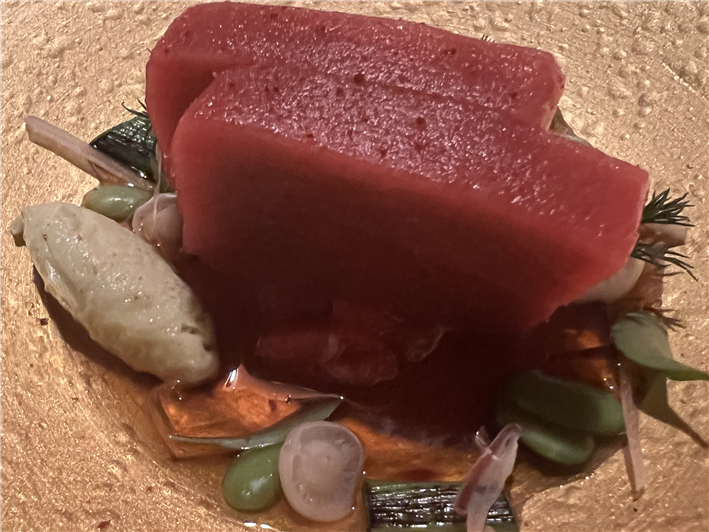
Tuna with leek and elderflower was the next course. The tuna was from Mr Tanake Hajime, a Japanese fisherman based in Shizuoka, who also works in the Algarve region of Portugal. He applies Japanese methods to Atlantic bluefin tuna caught off Fuseta in the Algarve in Portugal, including the Ikejime method of killing the fish (brain spiking and bleeding) to maximise its quality and freshness. The akami (lean) part of the tuna was served with myoga (Japanese ginger), avocado mousse, pickled mousseron mushrooms, toasted leeks and elderflower sauce. Otoro tartare came with fresh edamame, tosazu gel cubes, ponzu pudding and roasted baby leek with toasted leek top dressing.Aged dry crystallised 60-year-old soy was grated at the table. The tuna was lovely, and the sauce was superbly balanced, with just enough vinegar to cut through the richness of the tuna (17/20).
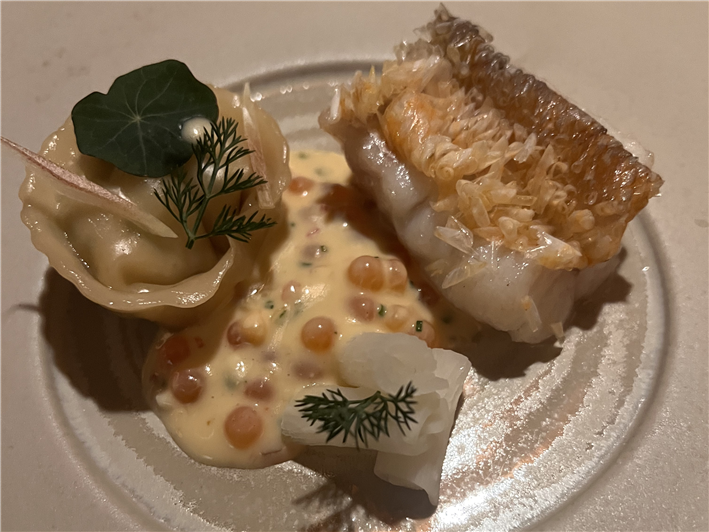
Amadai, imported from Japan, came with ikura (salmon roe) and kabosu (Japanese citrus). Amadai is tilefish, and is highly prized in Japan for its gently sweet, mild flavour and buttery texture. It is at its best in winter, when the fat content is highest. The fish was prepared to have crispy scales, a Japanese technique where the scales are fried until crunchy but leaving the meat moist. This was accompanied by a dumpling made from the belly and kuruma ebi (Japanese tiger prawn), pickled nashi pear, and a sauce of kabosu (a citrus from Oita Prefecture that is a combination of Japanese grapefruit and a Japanese calamansi). This was garnished with Yara Valley salmon roe washed in sake and myoga juice. This was very enjoyable, the fish precisely cooked, the slight sharpness of the kabosu balancing the natural sweetness of the amadai (17/20).
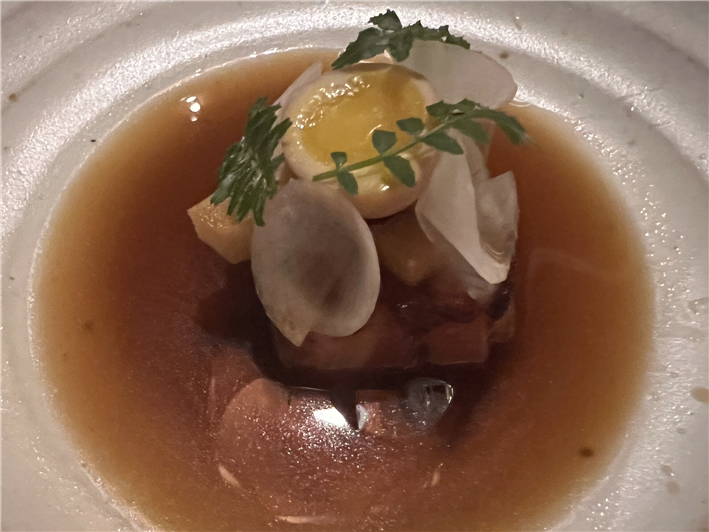
Segovian pork belly oden was next. Oden is a stew, a winter comfort food in Japan that can have many ingredients. This dish uses Segovian pork, a breed raised in Segovia in Spain, and is a suckling pig noted for its excellent flavour. This was braised for 48 hours and served with braised bamboo, onsen quail egg, daikon, and kinome leaves, served with its own braised broth infused with ginger. This was a relatively simple dish, elevated by the sheer quality of the suckling pig used (16/20).
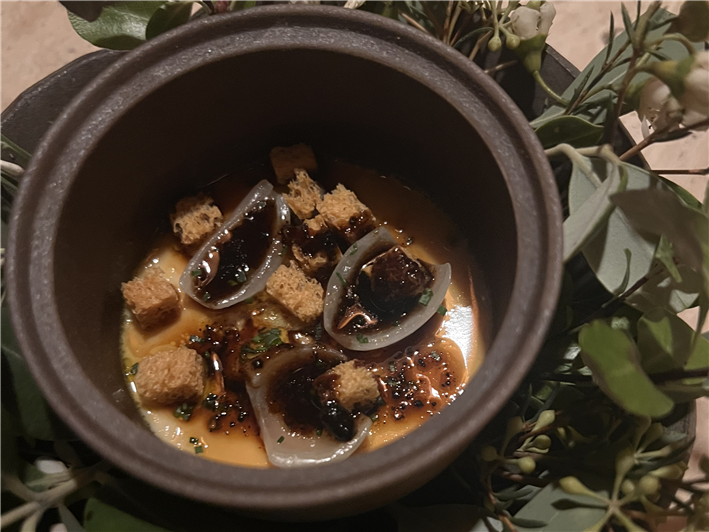
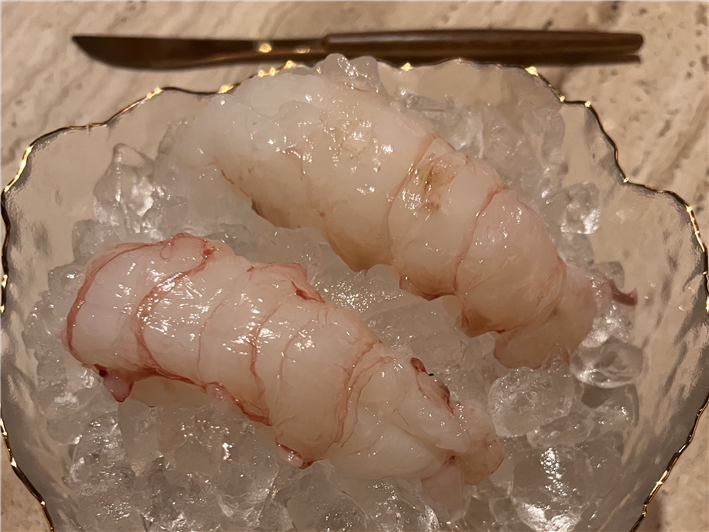
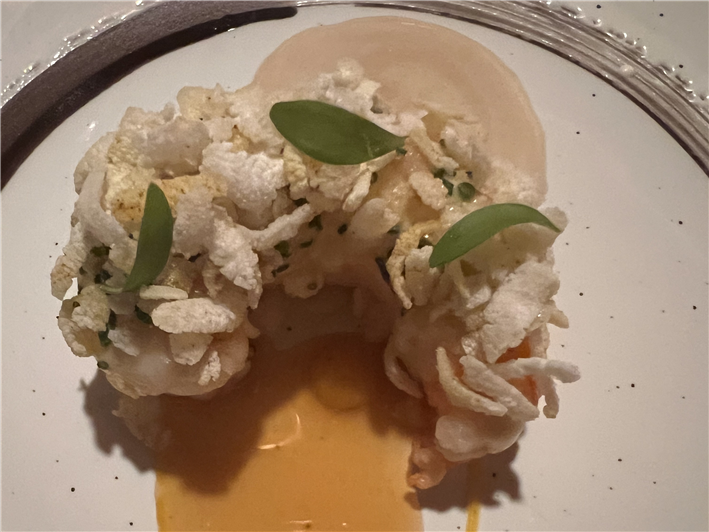
Chawanmushi (savoury custard) with Joselito ham, three-year-aged soy-cured Lafitte foie gras, black truffle sukiyaki sauce and brioche crouton with baby Cevennes onions was a rich and very enjoyable concoction. These elements were all of high quality, but the sweetness of the Cevennes onions (“the poor man’s truffle”) was particularly impressive (16/20). Langoustines (from Froya, a coastal municipality and island off central Norway) were huge creatures (334g), almost the size of a lobster. They were grilled and coated in fresh wasabi and puffed kinmentai rice, served with a fruity yellow curry, passion fruit and coriander stem vinaigrette. The shellfish had lovely natural sweetness, and the mild curry worked very nicely with the shellfish (17/20).
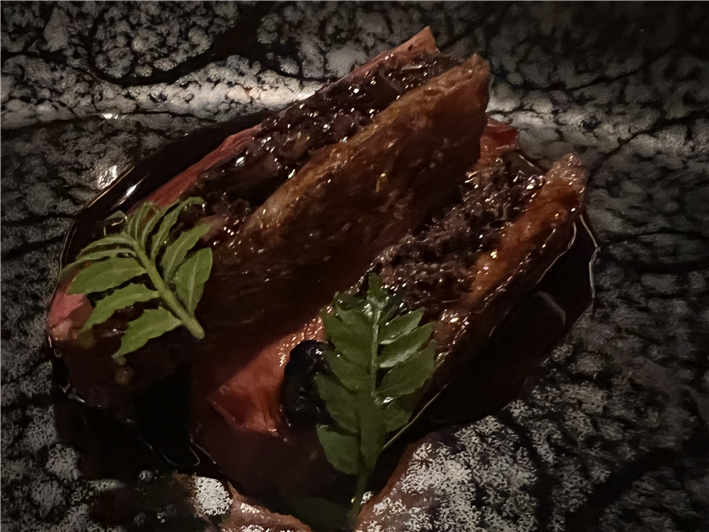
Maison Leon Dupont duck came with cucumber and black olive. Maison Leon Dupont has been running since 1948 near Challans and still uses a dry plucking technique for its barbary ducks, which results in a good duck skin texture. The duck is aged in a fridge in the restaurant and the presentation was quite simple. The duck was stuffed with Christian Parra Boudin noir and dressed with a duck demi-glace with sansho pepper. The cooking was accurate, and the flavour of the duck was really impressive, much better than the quality of duck usually served in UK restaurants (17/20).
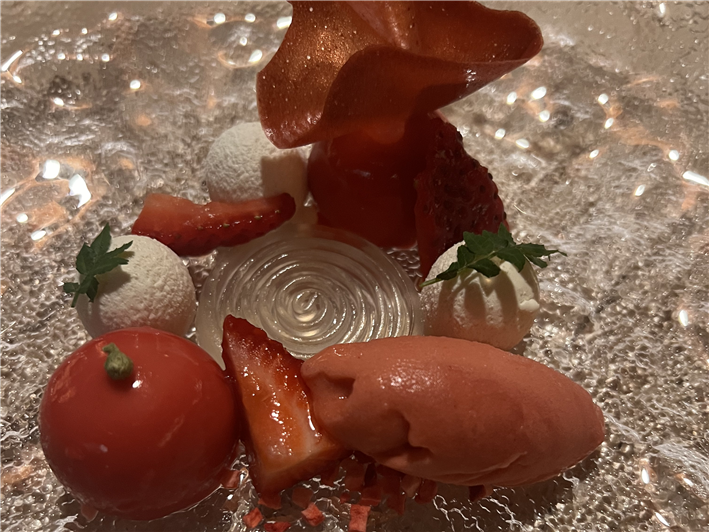
Kyu no shizuku strawberry (a premium strawberry variety grown in Kyoto) came with sake and yuzu. These strawberries are highly prized in Japan, and if you buy a box of them in a shop in London, you will find that they cost around £7.50 per individual strawberry. “Kyoto Teardrop” strawberry served both in its raw, unadulterated form, and as a composed dessert comprising: strawberry and yuzu bavarois, macerated strawberry spears, a strawberry crisp, yuzu pudding, creme “chiboust” of Madagascar Vanilla and fromage frais, a freeze-dried strawberry, a tourbillon of Junmai daiginjo sake jelly infused with fresh yuzu peel and a sauce of fresh sansho pepper, yuzu, and strawberry. This was an attractively presented and delicious dessert, with the superb flavour of these strawberries coming through well (17/20).
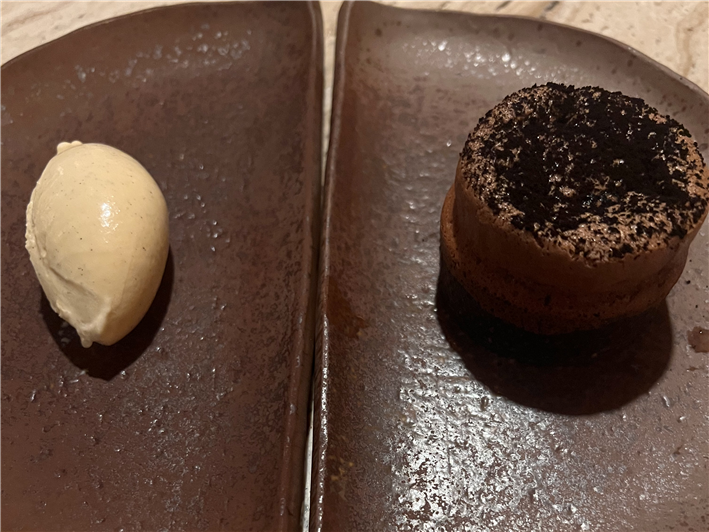
The final dessert was tarte souffle of chocolate infused with torch ginger flower, a variety noted for its delicate favour. The chocolate was 80% Mayan Red, served with torch flower ginger and vanilla ice cream on the side. The vanilla ice cream was lovely, with plenty of vanilla fragrance. The chocolate element was good, but despite the liquid chocolate centre, the overall effect was a touch dry, so I think this dish could be tweaked a little (15/20),
Service was excellent throughout the evening. The bill came to £257 per person in total. Materia Prima is serving some absolutely top-class ingredients, and even at this early stage (their twelfth meal service) the standard of the dishes was high. If you enjoy Japanese style food mixed in with some European touches then this restaurant will appeal to you. Tables were being turned on the night of our visit (admittedly a Saturday night), so it already seems to be proving popular.
Add a comment
Thank you for submitting your comment, this will be checked and added to the website very soon.
User comments