


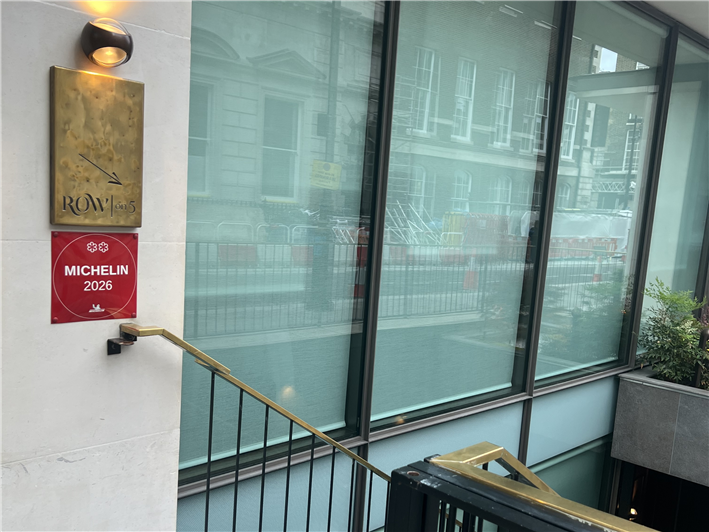

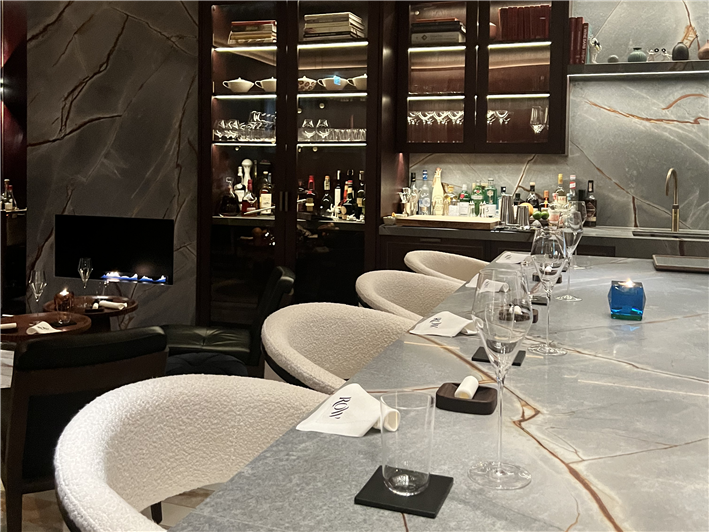
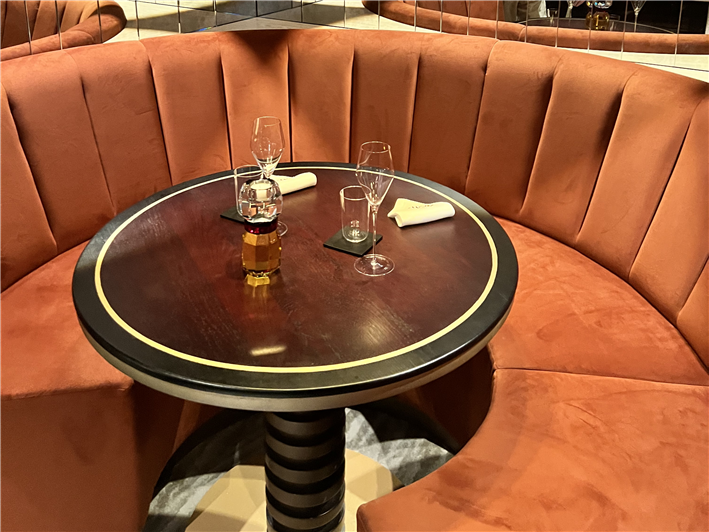
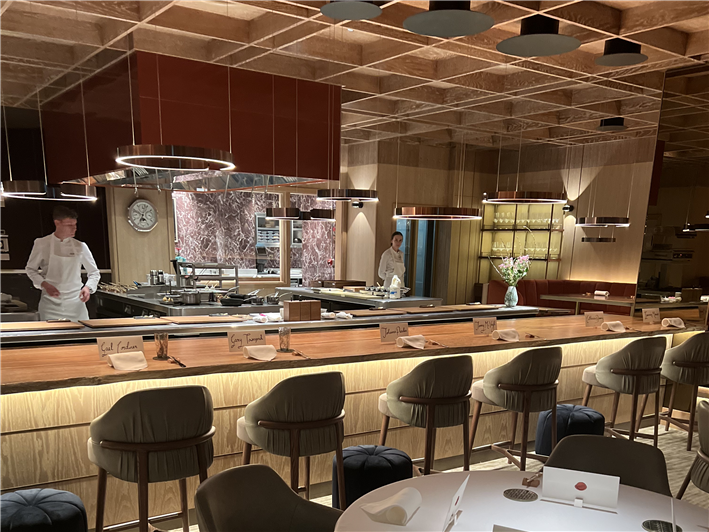
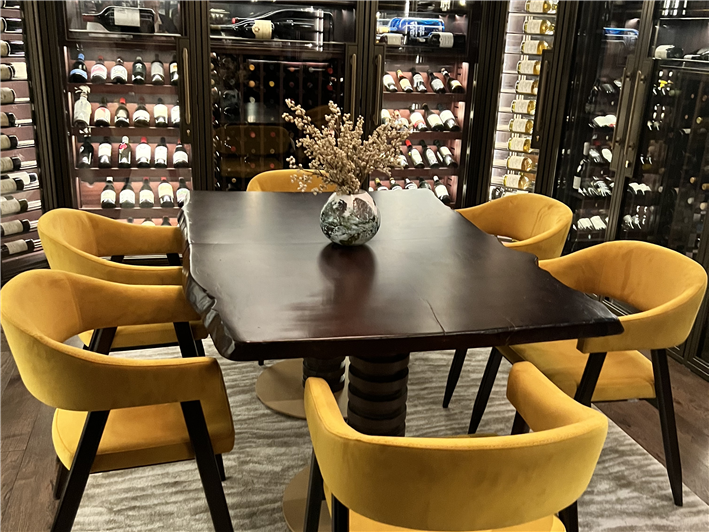
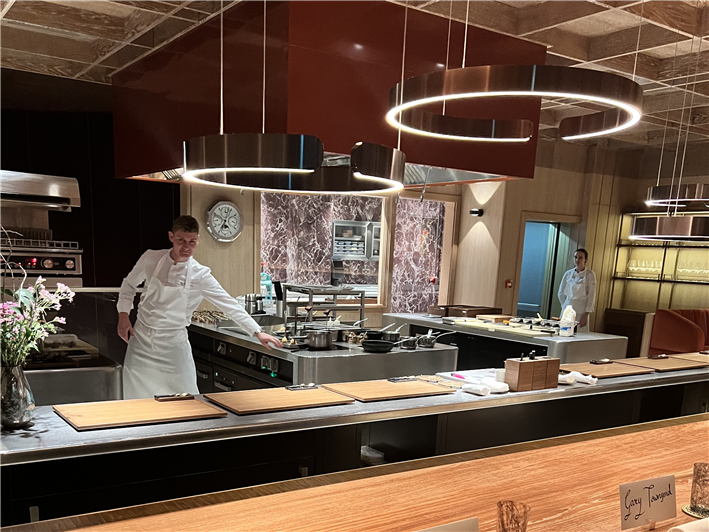
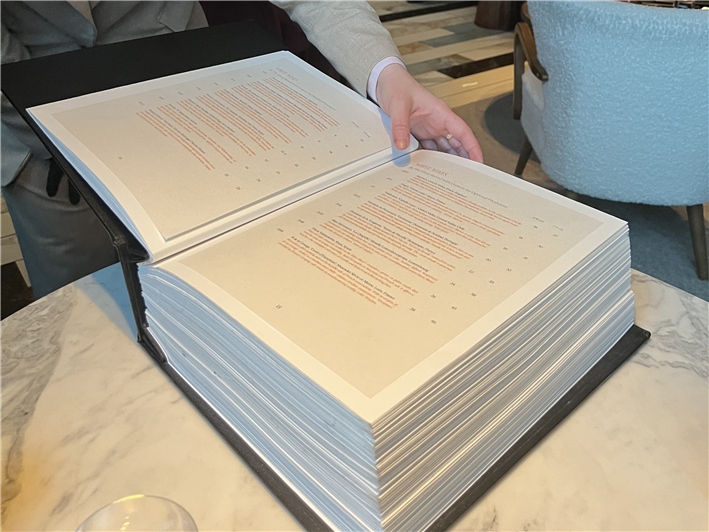
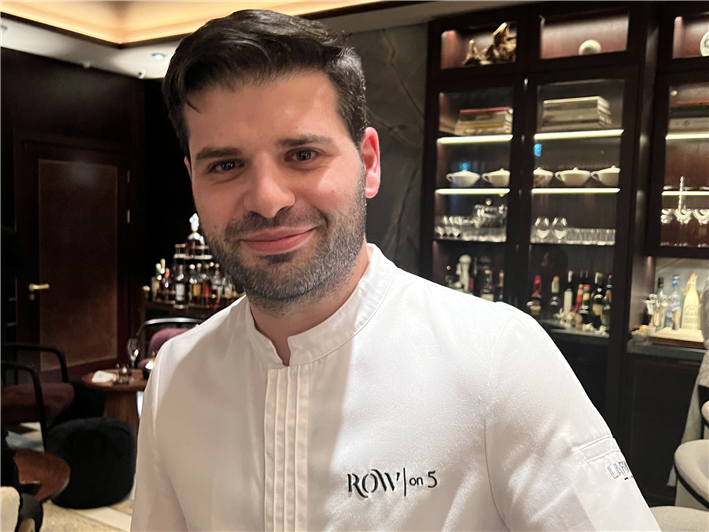

I have written previously about Row on 5, the background of its head chef Spencer Metzger, and also about its extensive wine list, looked after by award-winning sommelier Roxy Dupuy. The tasting menu is £250 at dinner, and there is a shorter version at lunch for £150.
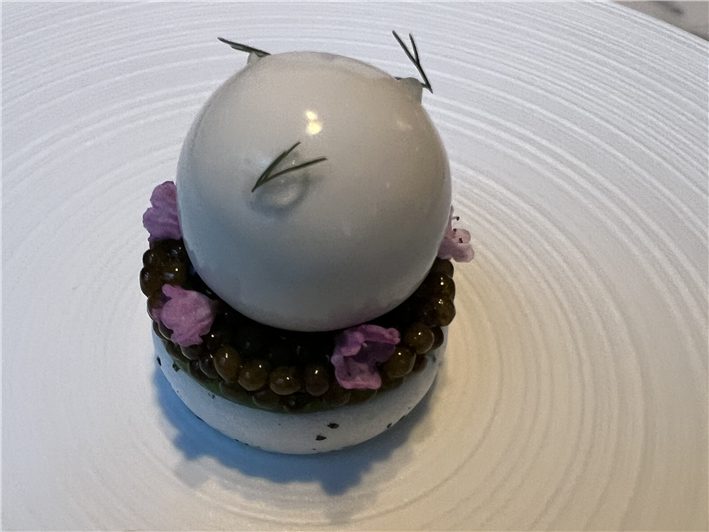
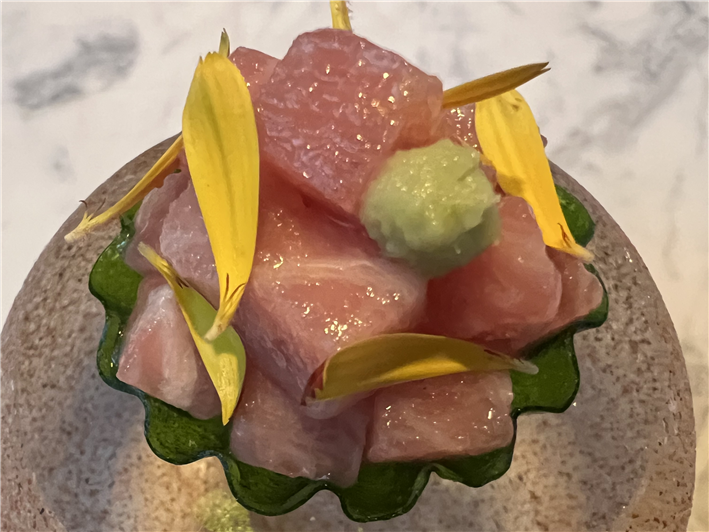
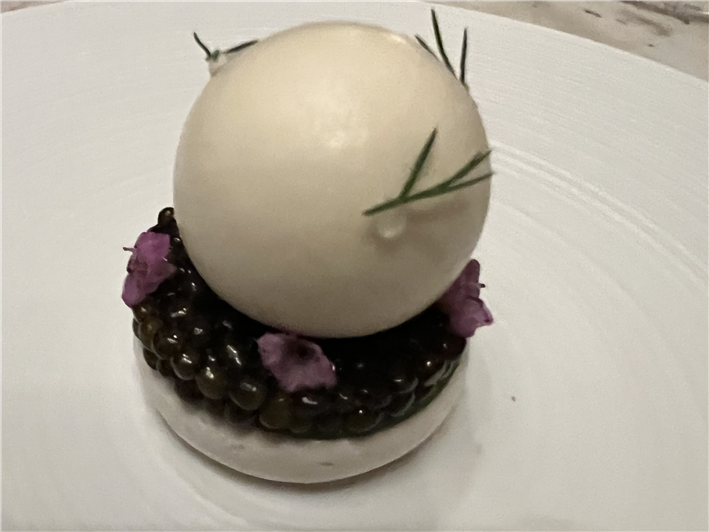
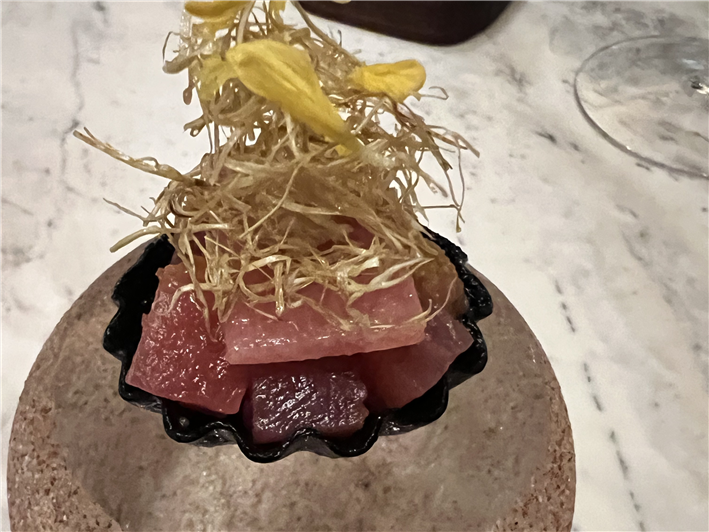
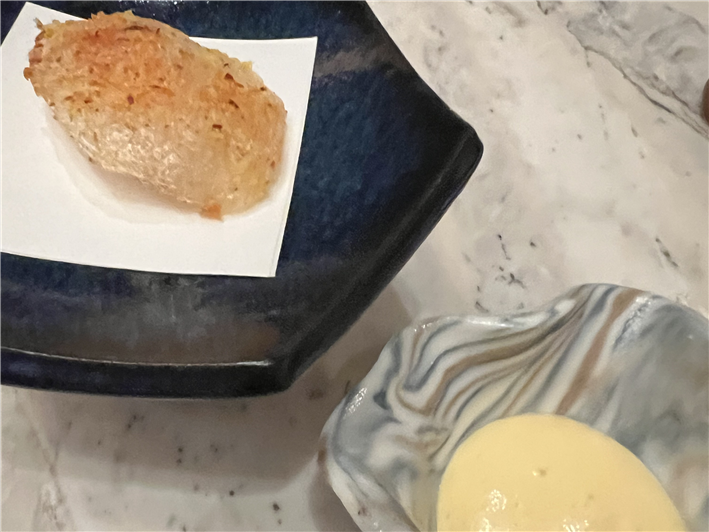
At this latest meal, we began with a sequence of canapés, served in the lounge downstairs. The first was a classy cheese and onion cracker. This used Lincolnshire Poacher cheese, along with onion jam and a preserved Perigord black truffle jelly. This had lovely balance, the hint of truffle working well with the cheese. Next was an oyster canape. This had an oyster macaroon at the base, topped with N25 caviar, itself crowned with a sphere of oyster bavarois in beurre blanc with a garnish of dill. The oysters were from Carlingford Oyster Company in eastern Ireland, the layers separated by cucumber jelly and a bergamot gel. This was a pretty little dish and demonstrated strong technique: the macaroon had delicate texture, and the salinity of the caviar worked well with the oyster. The next canape was otoro (fatty tuna) from Cornwall that had been dry aged for ten days. This was seasoned with yuzu kosho, a Japanese condiment made from citrus, chilli and salt. There was also a touch of English wasabi (from Hampshire), caramelised ponzu cream, all resting in a tartlet made from spinach and sea lettuce. This was particularly good, as the balance of the rich tuna with the citrus condiment was spot on, and the tartlet provided a texture to contrast with the otoro. This was followed by langoustine jelly. The langoustines originated from the waters near Inverness. The langoustine meat is made into a tartare that is seasoned with sudachi, a Japanese lime. Beneath the jelly was a custard made from a stock of the roasted langoustine shells, shiso flowers and tosazu jelly. The latter is a Japanese condiment, a blend of rice vinegar, soy sauce, mirin, bonito and kombu dashi. The custard and jelly had smooth texture and the langoustine tasted great, their delicate flavour nicely enhanced by the condiment and with acidity from the lime. These were high class canapes (18/20).
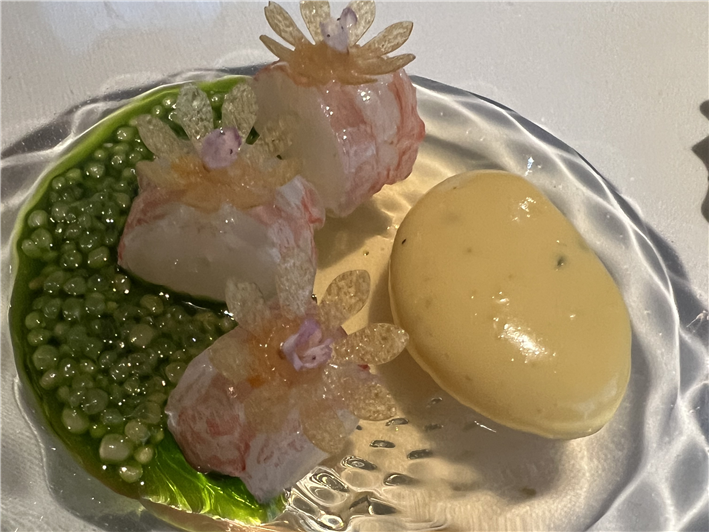
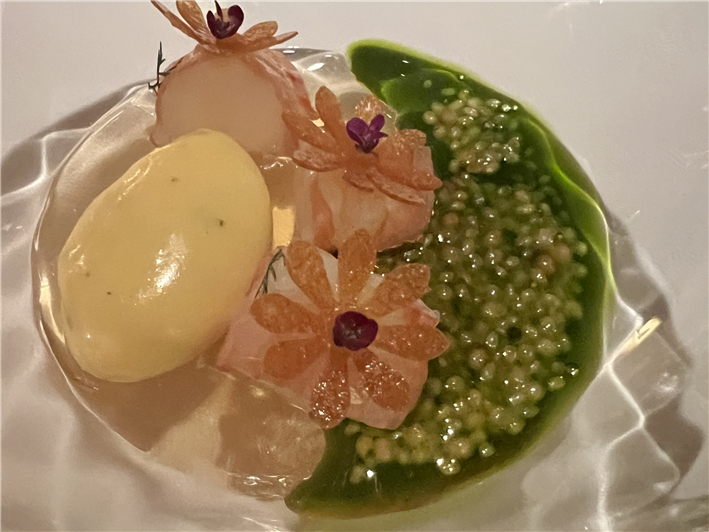
At this point we were led to the main upstairs dining room, where the meal continued. The langoustine tails made an appearance now, blanched briefly and brushed in smoked vinegar, topped with calamansi jelly and potato crisps. The tails rested on a base of jelly made from Amela tomatoes, a premium varietal developed in Japan in 1996 and noted for their sweetness. These tomatoes were originally from Shizuoka, the prefecture in central Japan containing Mount Fuji, but are also grown in southern Spain now. On the side was a duck egg sabayon seasoned with aji amarillo chilli and curry leaf oil, finished with finger lime. The langoustines themselves were topped with tiny potato crisps. This was a beautiful dish to eat, the langoustines having terrific flavour, the tomatoes' sweetness coming through well, the gentle bite of spice and sharpness from the lime in very good balance (19/20).
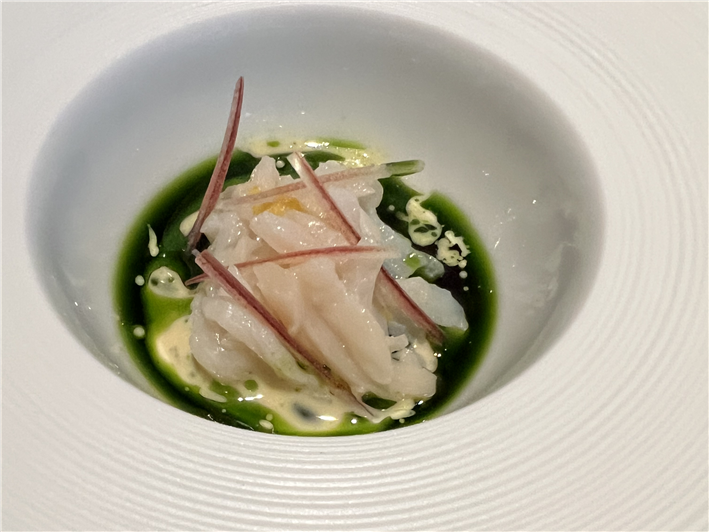
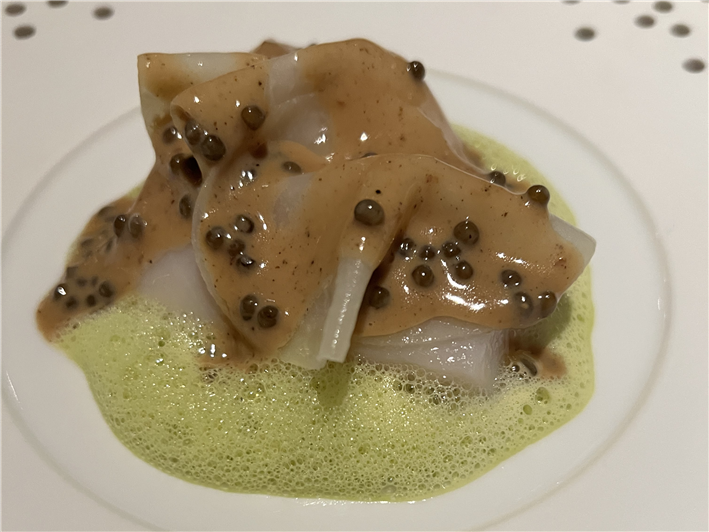
The next course was Orkney scallop cut into strips and seasoned with koji. The scallop strips came with myoga, a Japanese ginger, oil of green shiso and a fermented citrus and sake sauce. The scallop itself is gently steamed over cedar wood. This was very good, though for me the shiso oil was just a touch dominant relative to the delicate sweetness of the scallop. This is but a quibble, as it was certainly a very enjoyable dish (17/20).
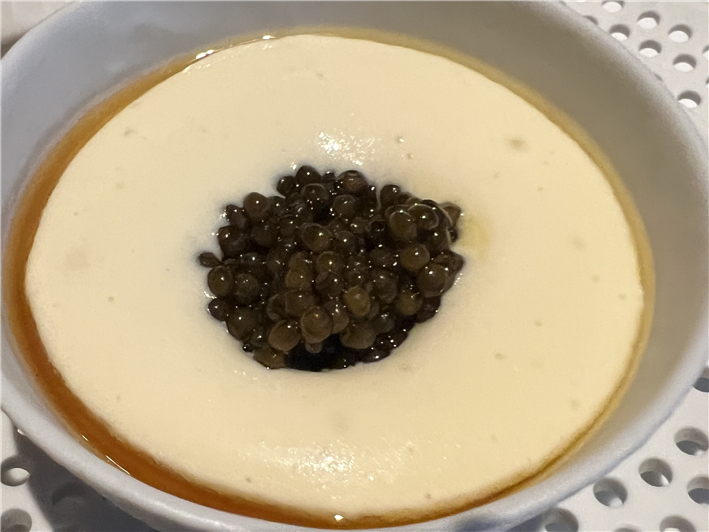
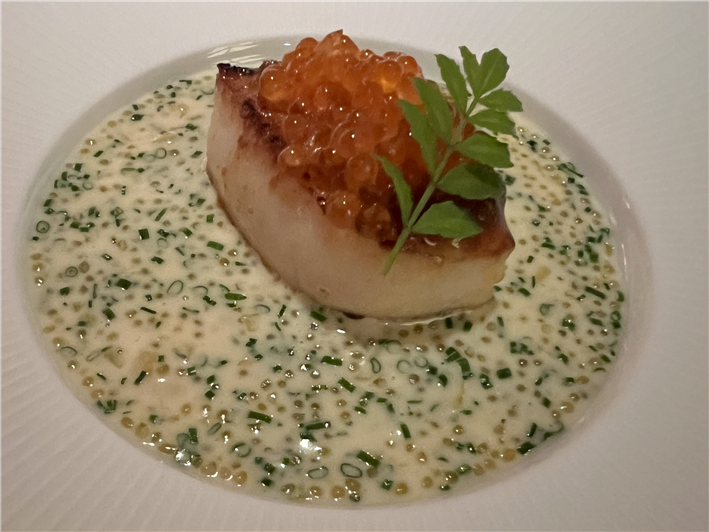
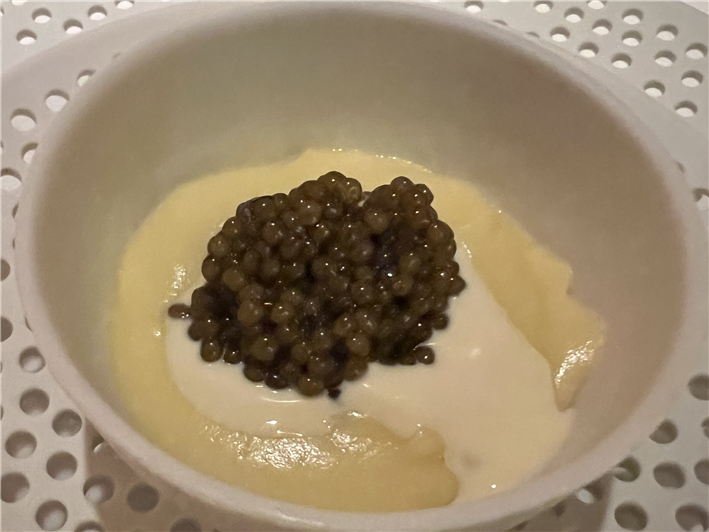
The next dish was a warm bavarois of Lincolnshire potato with a mousseline made from Bourdier cream from Normandy and topped with brown butter. This was topped with N25 Kaluga caviar and there was also a little potato crisp with chive. This was an exceptional dish, warm and comforting, with the humble potato elevated by the luxurious caviar. The texture of the mousseline was lovely and the flavours were in excellent balance (19/20). This was so good we asked for a repeat of it, which felt greedy but rewarding.
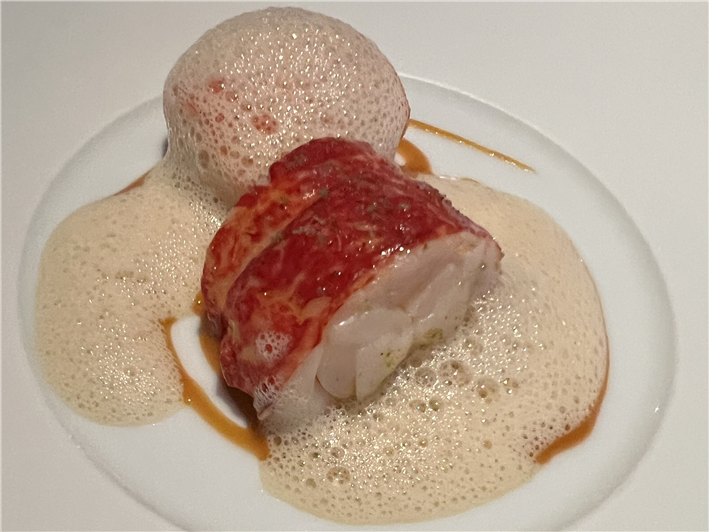
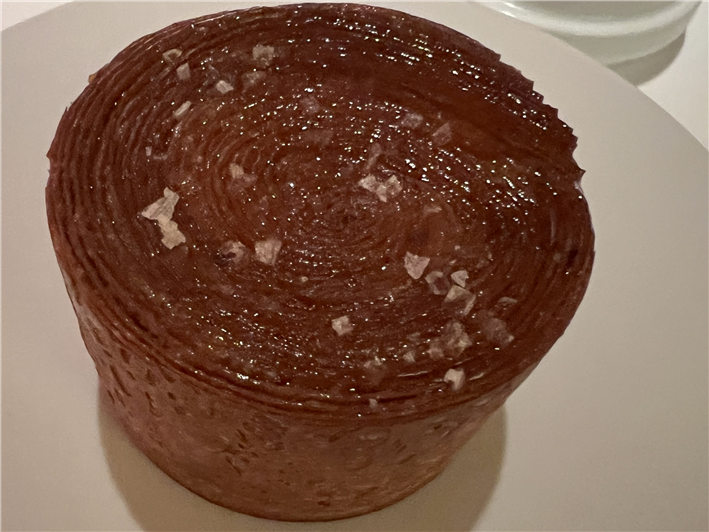
The next course was native lobster in a dish inspired by the popular Singapore chilli crab dish. Here the lobster is grilled over Japanese binchotan white oak charcoal and brushed in an oil made from the roasted lobster heads, seasoned with sansho pepper and kaffir lime. Two sauces accompanied the lobster, a Singapore chilli sauce and a lobster sauce made from the lobster heads along with Kyoto miso. The dish was served with a little milk bread loaf, served with salted Bourdier butter and fermented London honey. The lobster was very tender, precisely cooked and the sauces were both very good. For me the sansho pepper and the level of chilli in the sauce could have been dialled up a touch, but that is somewhat a personal taste issue. This was a very fine dish (18/20).
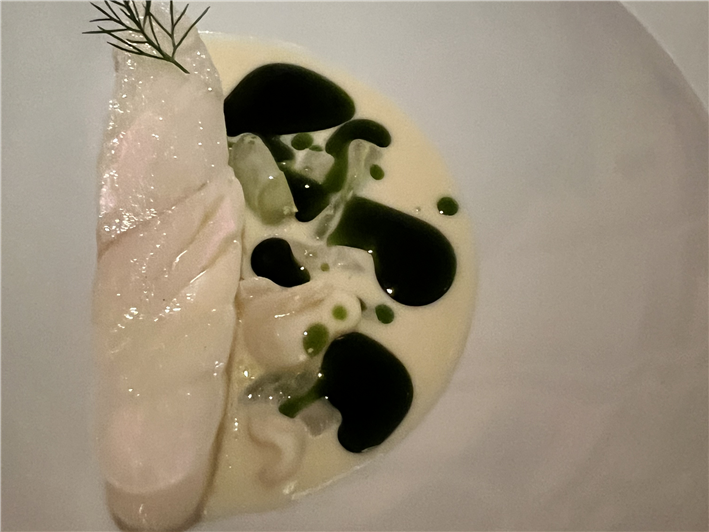
After this was Cornish line-caught John Dory that had been brined in kombu and then steamed gently, brushed with a condiment made from the roasted John Dory bones. This came with salt-baked kohlrabi and a sauce using oscietra caviar and katsuobushi, which is simmered, smoked and fermented tuna, along with Kampot Cambodian pepper. A further sauce was made from mussels and sea cabbage. For me this was the least successful dish of the night, partly because the pepper was quite dominant, and partly as I am not sure the sauce of mussels and sea cabbage really added much. Nonetheless, the dish had interesting textures and the John Dory itself was good. Sometimes, less is more, and maybe this was one of those times (16/20).
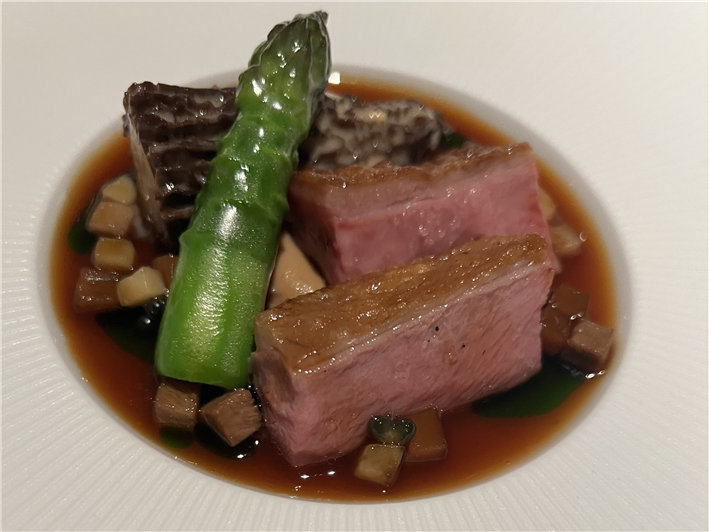
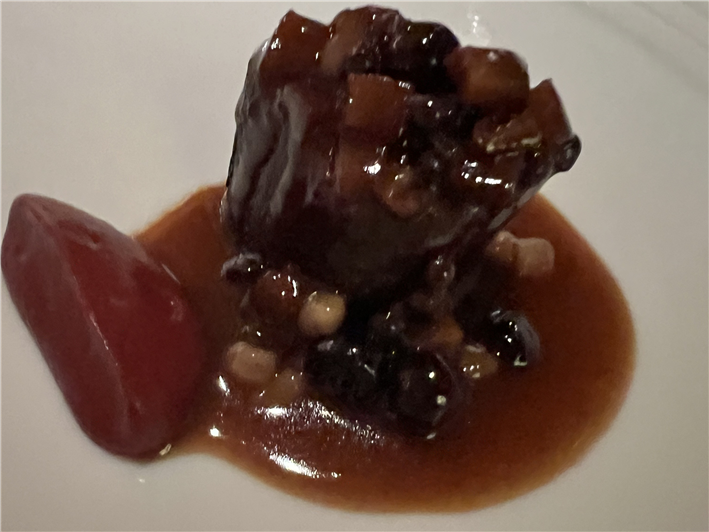
The final savoury course was milk-fed lamb from the Pyrenees. The saddle is aged for ten days, roasted on the bone and then finished by grilling over binchotan charcoal. This was served with morels that had been glazed in vin jaune, along with English asparagus from the New Forest. The sauce was made from the lamb bones, finished with preserved ramson capers, soy braised shiitake mushrooms and pickled artichoke. Finally, there was a drop of mint oil to complete the dish. This was very high-quality lamb, carefully cooked and nicely complemented by the deeply flavoured sauce. The morels were an excellent accompaniment (18/20).
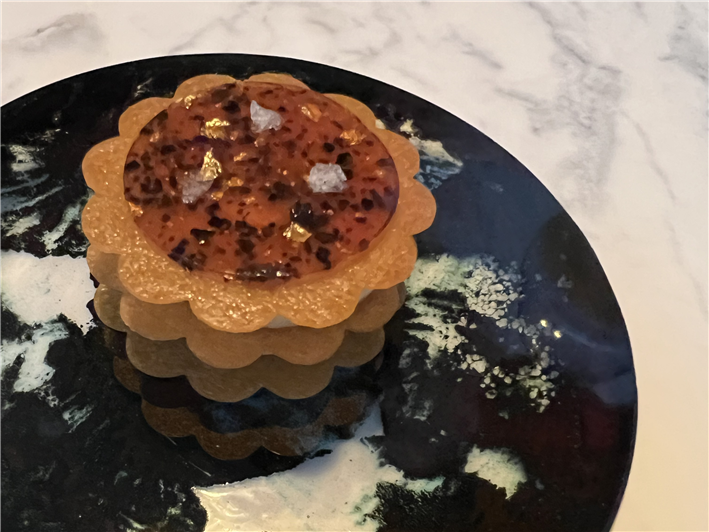
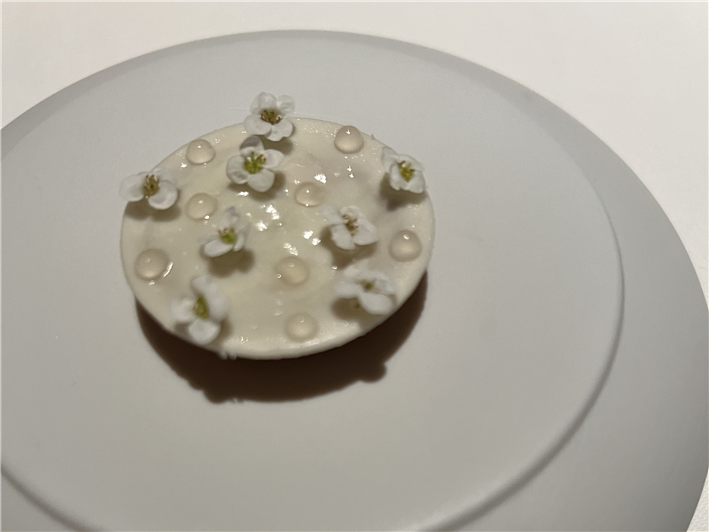
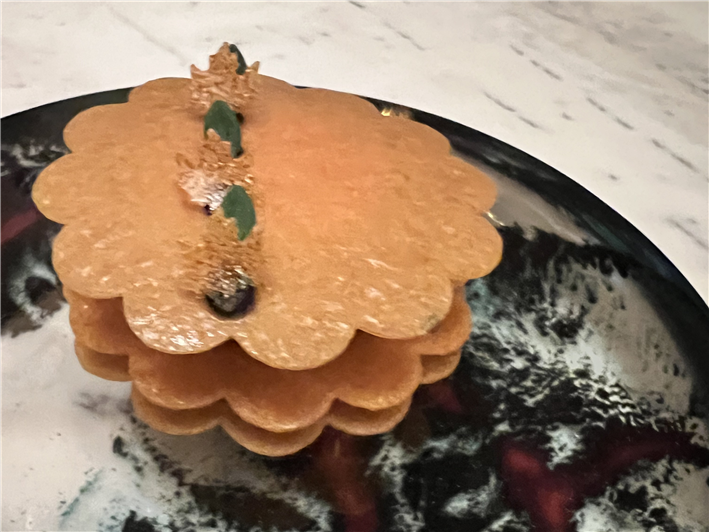
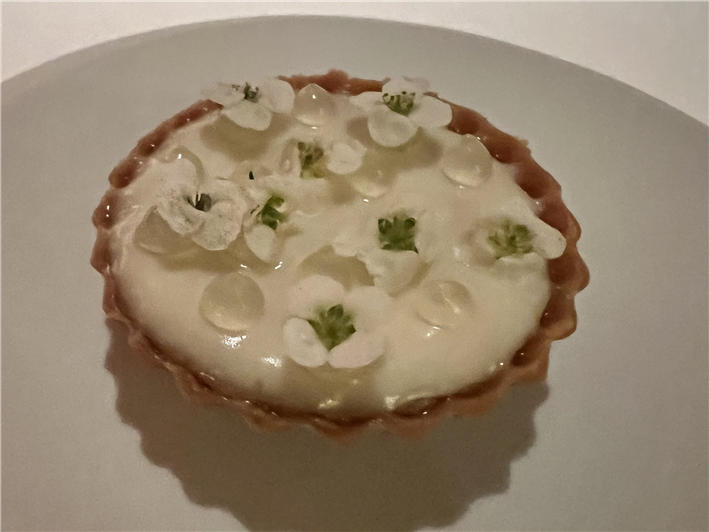
In place of a cheese board was a little Colston Basset Stilton tartlet. Colston Basset is arguably the best Stilton, shown here with a cheese custard, a white chocolate disk and a verjus gel. This was certainly an interesting way of transitioning from savoury to sweet, and the custard worked well with the white chocolate, without distracting from the blue cheese (17/20).
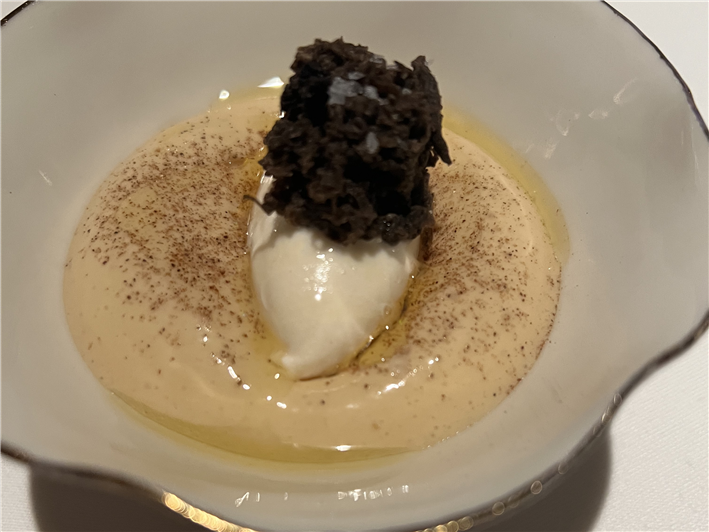
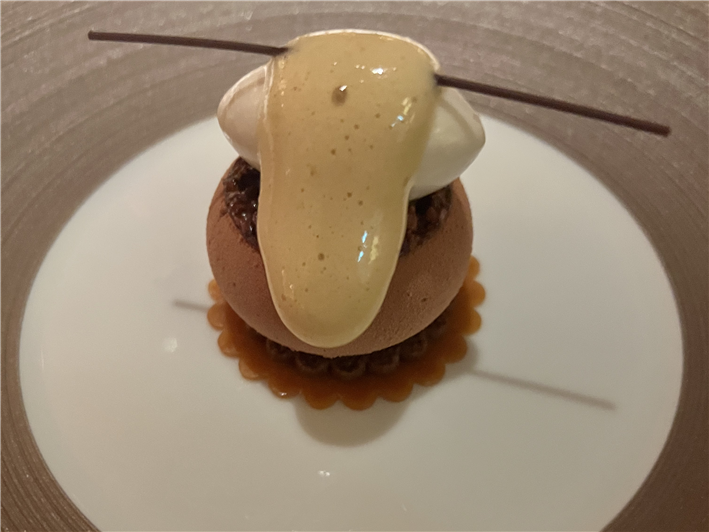
The initial dessert was based on Italian black truffles that were preserved in white port and Madeira. At the base were toasted Marcona almonds, and a mousse made from roasted barley and malt. This was topped with red miso ice cream and oil of almonds, and shavings of truffle. This was enjoyable but I am not entirely sure about the mix of sweet and savoury elements: for me black truffle is best shown in a savoury dish (16/20).
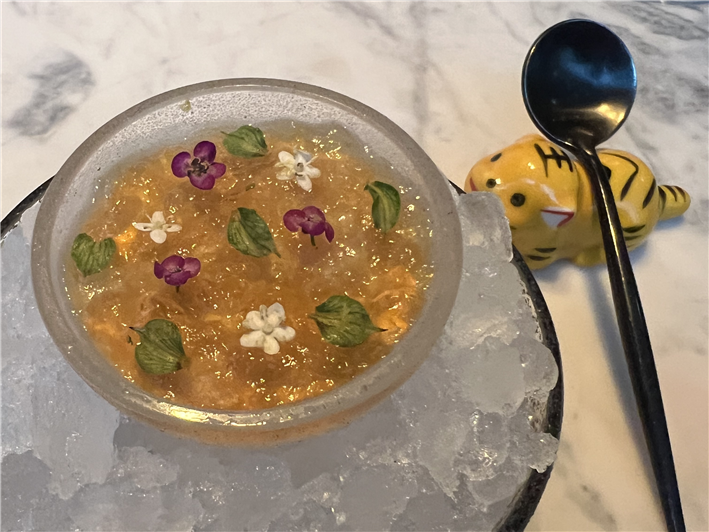
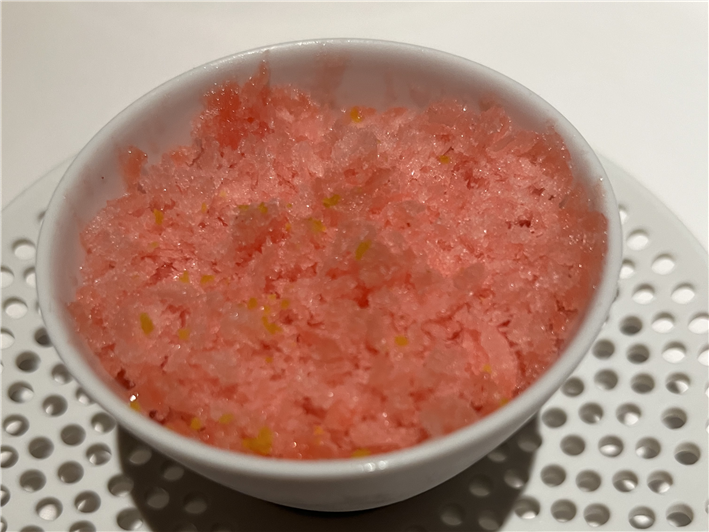
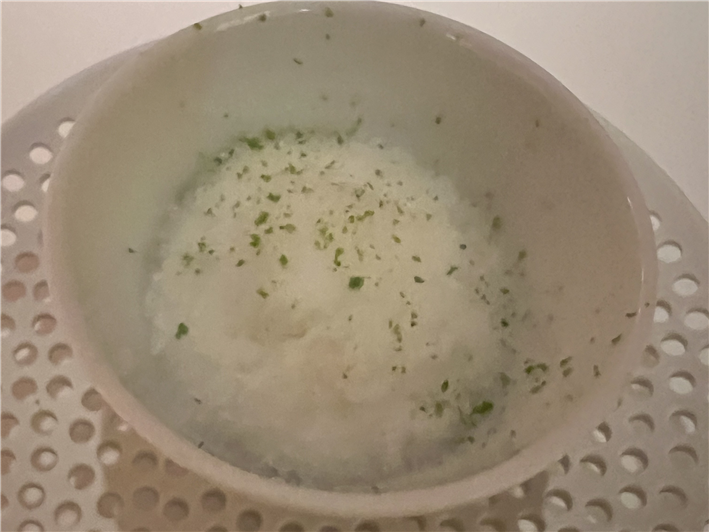
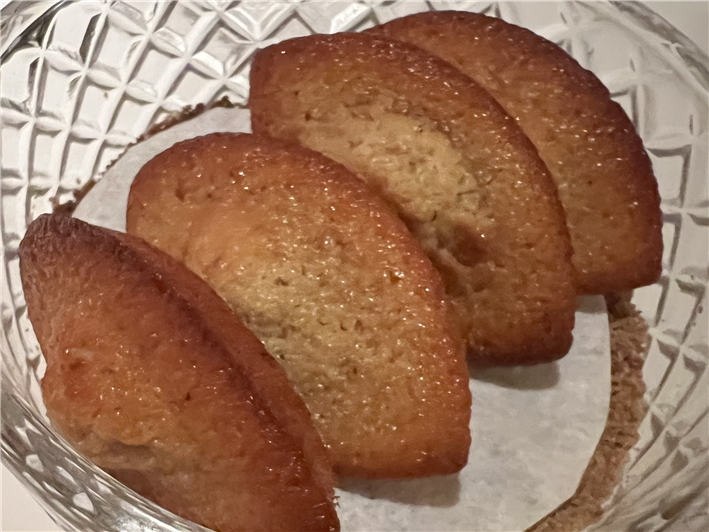
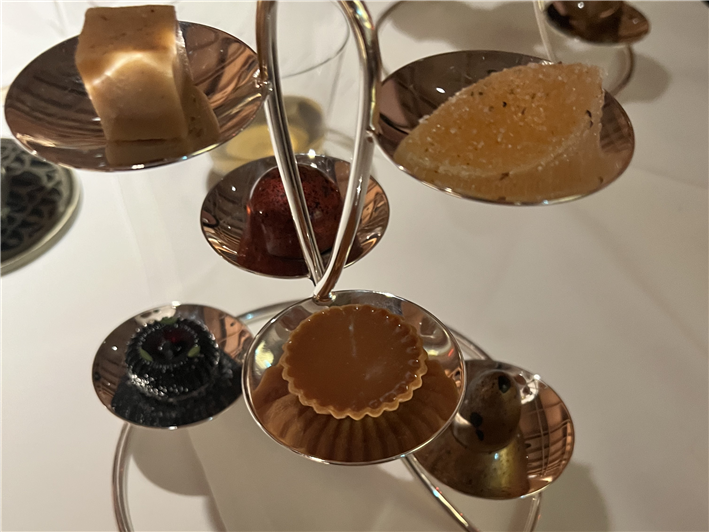
The final dessert used wild Malaga strawberries. The base of the dish was a parfait of Long Lane Dairy sheep's yoghurt, then a compote of gariguette French wild strawberries and the Malaga strawberries. These were enhanced with salted Jersey milk and Tahitian vanilla ice cream and lemon verbena pepper, finished with a strawberry consomme that had been made into kakigori, the Japanese shaved ice. This worked very well, the strawberries being very flavourful, and the shaved ice providing a refreshing finish to the meal (17/20). Coffee was from Difference Coffee, and was served with a selection of elegantly presented petit fours. These included chocolates made from Oswaldo 71% dark chocolate, a Peruvian co-operative.
Service was superb throughout, the pacing of dishes steady and the waiters very attentive. I was being treated to this meal by a kind friend so I did not see the bill, but it was doubtless substantial given that we drank some very good wine, including Domaine Vincent Puligny Montrachet 2023. If you shared a single bottle of wine from the lower end of the list, then a cost per person might be more like £350. This was a really fine meal, showing exemplary technique throughout and featuring lots of extremely high-class ingredients. This is how fine dining should be, and the restaurant fully deserved its second Michelin star. Spencer Metzger is a supremely talented chef, and the overall experience here is the complete package.
Further reviews: 10th Jan 2025
Heather Martin
I was taken here for my birthday in March and I was wowed by everything from start to finish. I believe it was the best meal I have ever had in London. Spencer is a fantastic chef.
Brian mcmillan
Wonderful detailed review as always ?????? I presume the low value for money £ was because you weren’t paying after such a great review ???????