


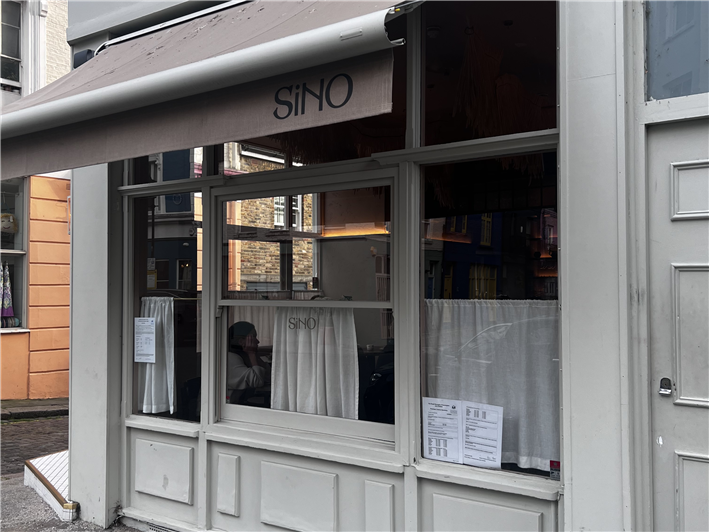

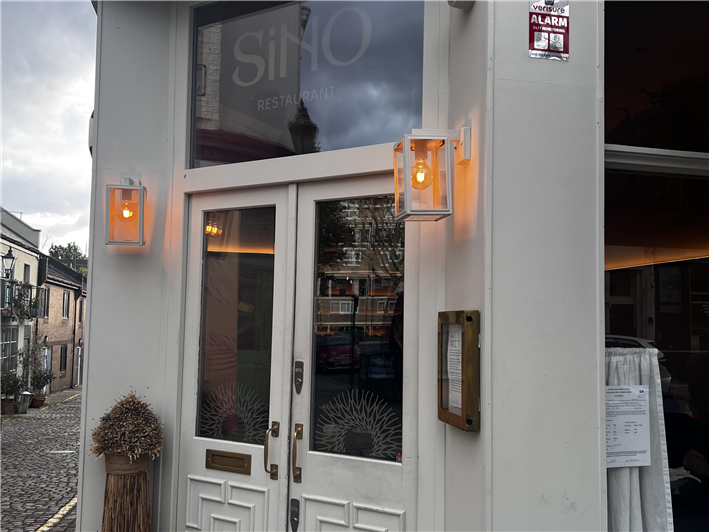
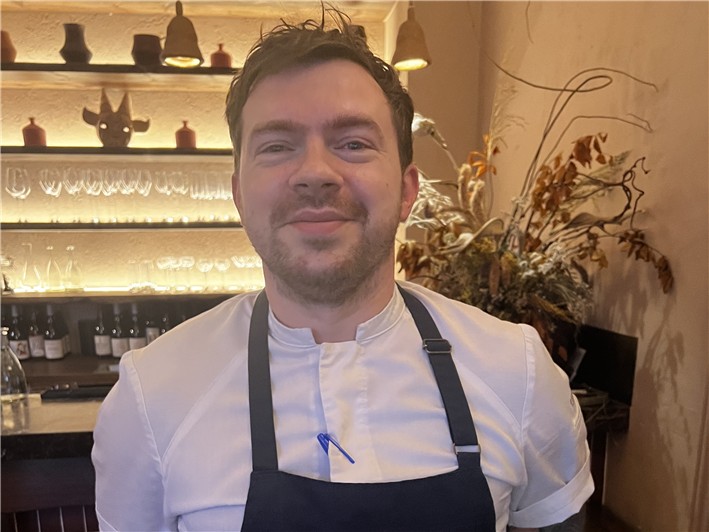

Sino (“hay”) opened in May 2025, offering Ukrainian cuisine. The head chef is Eugene Korolev, who had been a chef before the Russian invasion of Ukraine, fought in the war, and then later moved to London. He had previously worked at Vendome and Benoit in Paris amongst other places, and is president of the Ukraine Bocuse d’or team. The Sino dining room seats up to 26 guests, with a private dining room for up to eight downstairs next to the kitchen. The menu was a la carte, with a tasting menu priced at £90, and a wine pairing at £55.
The short but interesting wine list had 30 labels and ranged in price from £45 to £305, with a median price of £90 and an average markup to retail price of 2.97 times, which is very fair by London standards. Sample references were Kolonist Riesling 2023 from Odessa at £60 for a bottle that you can find in the high street for £32, Tenuta Delle Terre Nere Etna Rosso 2022 at £72 compared to its retail price of £28, and Radikon Sivi Venezia Giulia 2022 at £90 for a wine that will set you back £55 in the high street. For those with the means there was Domaine Horfmann-Jayer Bourgogne Hautes-Cotes de Nuits Rouge Cuvee Rosalie 2021 at £190 compared to its retail price of £59, and Emidio Pepe Montepulciano D'Abruzzo Branella 2021 at £210 for a wine whose current market value is £107. It was interesting to see some wines from Ukraine, as well as from places like Armenia, Georgia and Hungary, along with more familiar sources.
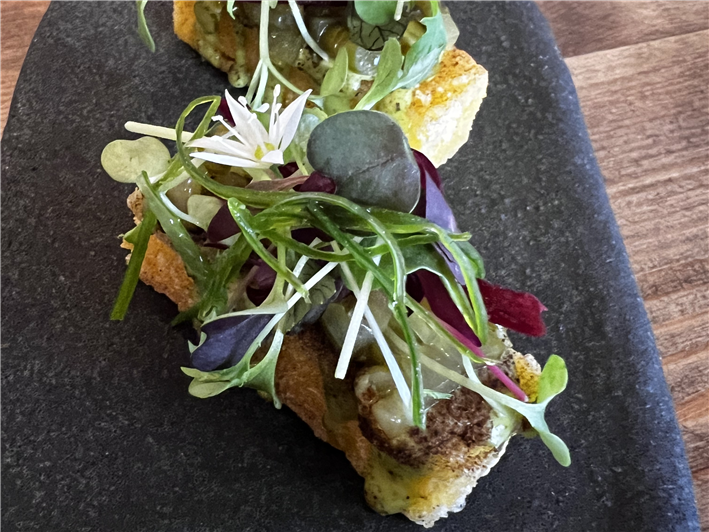
The meal began with banosh with mushrooms and wild garlic aioli, gherkins and pickled garlic stems. Banosh was originally a cornmeal porridge from Carpathia in the western Ukraine, traditionally served with savoury toppings. The cornmeal is first cooked slowly in vegetable stock, then fried until crisp. It is dusted with mushroom powder made from the dried remnants of our mushroom garum production. It is served with wild garlic aioli, a salsa made from wild garlic stems and fermented cucumber, finished with unrefined cold-pressed sunflower oil, fresh herbs, and spring onion. This was prettily presented and worked very well as a snack, the crunchy texture of the cornmeal base excellent and the balance of flavours good, with the sharpness of the pickled elements providing freshness (15/20).
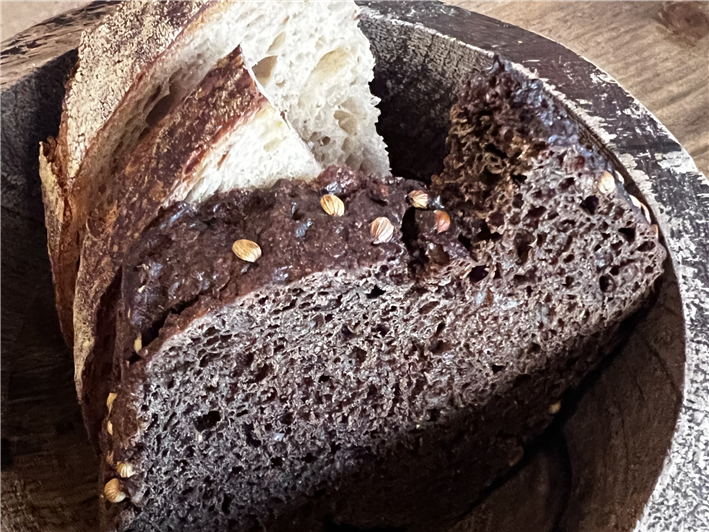
Bread was made in kitchen from scratch. We tried both a very good sourdough bread and rye bread. Dark Borodinskyi Rye was made with molasses and coriander seeds. The breads were served with butter infused with chamomile and wild mountain flowers sourced from Ukraine, alongside a malt vinegar and sugar reduction, finished with bee pollen and dried lemon zest powder.
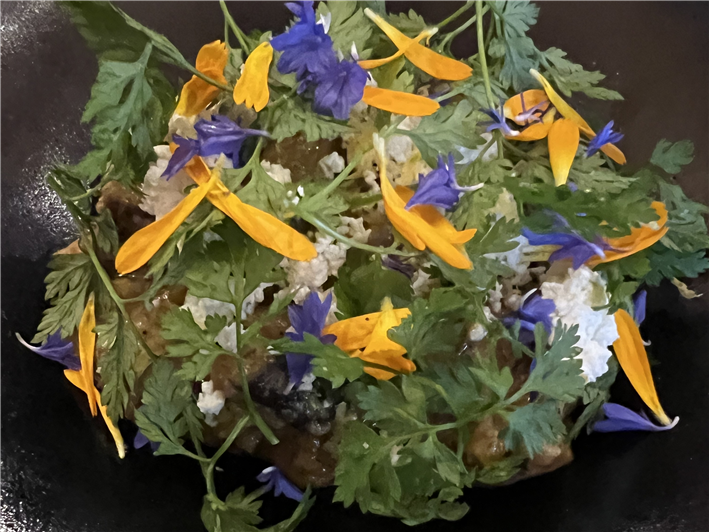
Marinated aubergine topped with herbs (£19) came with Kyrma cheese bread. The marinated aubergine is connected to home cooking and seasonality. The aubergines are first salted, then pan-fried, before being marinated with tomato, garlic, chilli, parsley, and vinegar. In Ukraine, this style of “aubergine caviar” is traditionally prepared during the warmer months and preserved in jars for winter. It is served with smoked cottage cheese and fresh chervil leaves. Kyyrma Bread is inspired by the cuisine of Bessarabia, where variations of baked flatbreads with sour cream and cheese are commonly found. Fermented potato has also long been part of traditional Ukrainian village baking culture, so this version combines these elements together. The bread is made with fermented potato, smoked applewood cheese, and kefir. It is served with an Ajvar dip made from roasted red peppers, onion, and garlic confit, alongside a salsa verde prepared from the stems of parsley, dill, and coriander. This was again prettily presented. The aubergine worked well with the fresh herbs, the seasoning was accurate, and the warm, comforting bread came with a very nice red pepper dip (15/20).
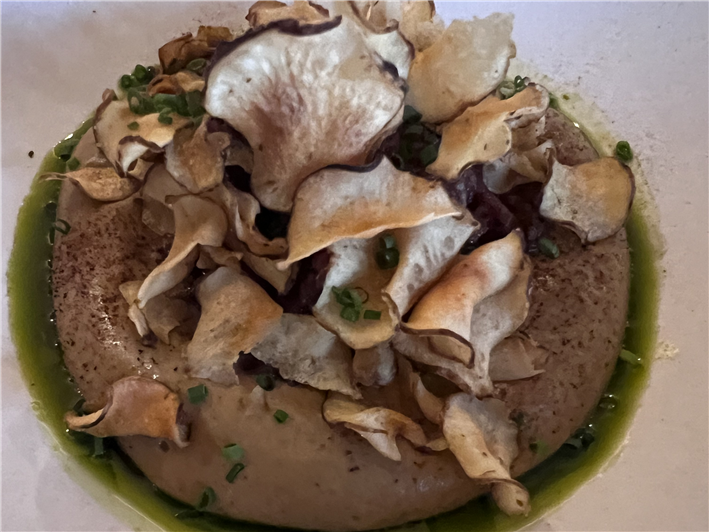
Beef tartare (£24) was served with a mousse made from button mushrooms and dried wild mushrooms sourced from Western Ukraine. It was accompanied by lovage oil, Jerusalem artichoke crisps, and finely chopped chives. The dish was finished with a beef garum powder, produced from the dried remnants of our house-made beef garum. This was very good, the beef not too finely chopped and served with a mushroom mousse plus Jerusalem artichoke crisps which gave a contrasting texture. The seasoning was spot on, with a gentle bite of pepper (16/20).
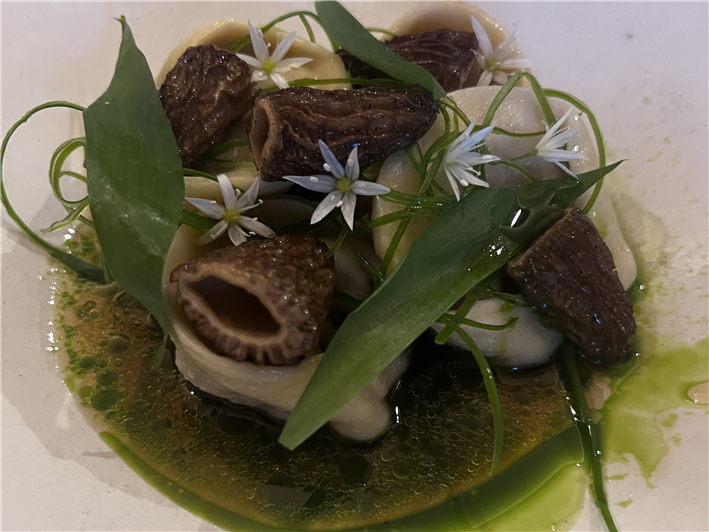
Potato dumplings with wild garlic and morels (£23) was an enjoyable dish. This dish is inspired by comforting home-style cooking found across different regions of Ukraine. The dumplings are made from kefir dough and filled with potato and fried mushrooms. They are served in a broth made from baked potato skins, finished with dill and cep oils. The dish is garnished with fried morel mushrooms, wild garlic leaves, and wild garlic flowers. The dumplings had nice texture, the morels were good and the wild garlic added an extra level of flavour (14/20).
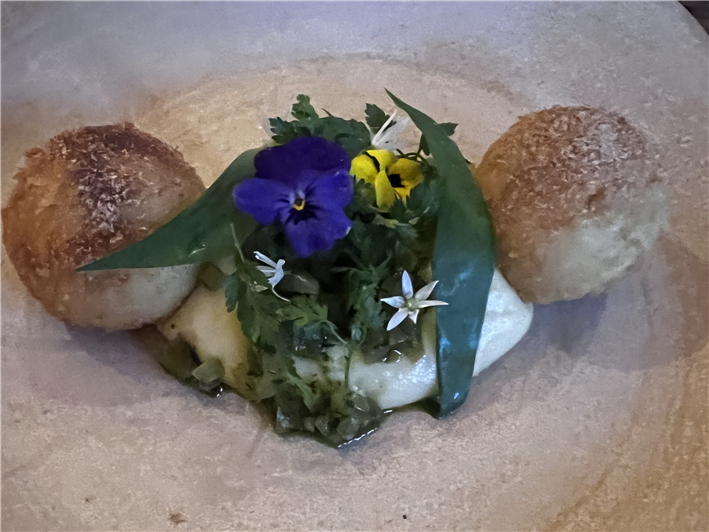
Chicken Kyiv (£30) was an unusual version of the classic dish, with two small spheres of chicken in their breadcrumbed casing. With this was mashed potato flavoured with bison grass, a herb with a floral, sweet scent, along with wild garlic and green tomato. The mash was silky smooth in texture and the flavours were interesting. The Sino version of this dish is a tribute to one of the most iconic Ukrainian dishes, aiming to respect tradition but with a lighter, more refined style. The chicken is carefully prepared to remain delicate and juicy, with a filling of butter with wild garlic, confit garlic, and tarragon. It was served with mashed potato infused with bison grass (zubrowka grass), alongside a green tomato salsa dressed with the same unrefined cold-pressed sunflower oil. The chicken, a Somerset Saxon chicken supplied by Aurox Meat, was cooked carefully, stuffed with some garlic butter. The flavour was quite subtle, and I wondered what this might taste like with a bird that had more inherent flavour, maybe Sutton Hoo or a French chicken like the wonderful ones from Arnaud Tauzin (15/20).
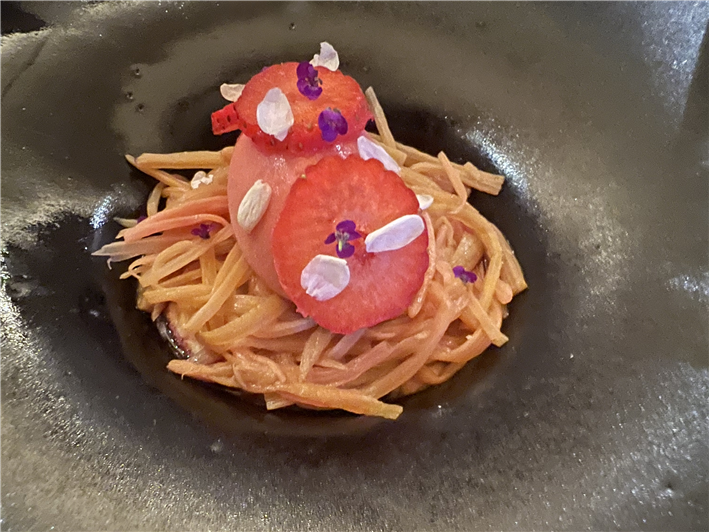
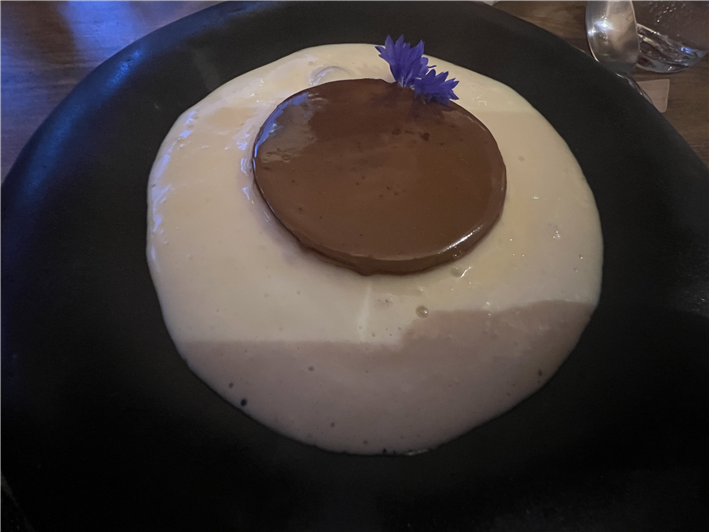
Honey cake with buckwheat chocolate (£12). This is inspired by the traditional “medivnyk”, a dessert deeply rooted in Ukrainian and Eastern European family celebrations. It is prepared with multiple layers of buckwheat honey sponge and light sour cream. The dessert is finished with our house-made buckwheat chocolate, produced using a bean-to-bar approach, but with roasted buckwheat grains instead of cocoa nibs, alongside a sauce made from cream infused with buckwheat tea. This was an unusual take on a dessert but it worked well enough, the cake having very good texture (14/20). My dessert had a base of dulce de leche topped with rhubarb and strawberries (£12). This had a strawberry compote infused with a touch of Timut pepper, a crisp waffle dough disc, dulce de leche cream, poached rhubarb, strawberry sorbet, and fresh strawberries, finished with notes of jasmine flowers. This had excellent balance, the sharpness of the fruit balancing the richness of the dulce de leche, which is a confection made by heating sugar and milk over several hours and has a caramel note (15/20).
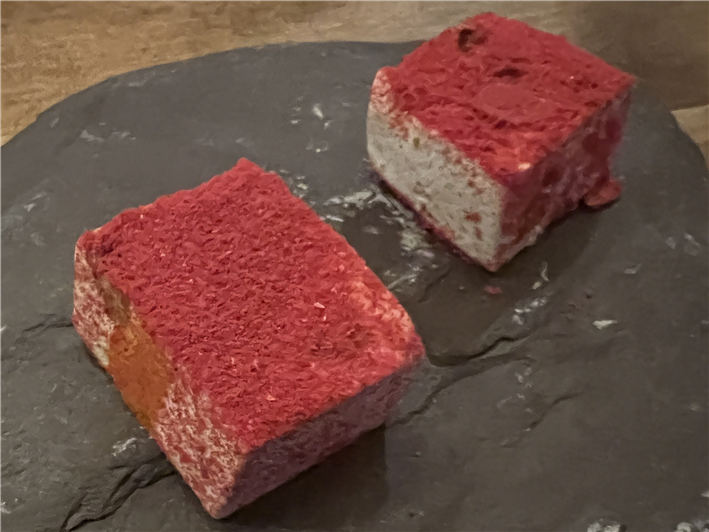
Coffee was from speciality roaster Rave Coffee in Cirencester, and in this case the beans themselves were from Guatemala. This tasted very good to me, a world apart from the industrial coffee from major Italian brands that so many London restaurants lazily use. There was a petit four of nougat with pistachio and dried apricot.
Service was charming and attentive, and the bill came to £147 per person including wine, coffee and mineral water. A typical cost per person, if you shared a modest bottle of wine, might be around £100 or so. The restaurant was completely full on this Wednesday evening, and indeed multiple tables were turned all around us. It is easy to see why Suni is so popular.
Add a comment
Thank you for submitting your comment, this will be checked and added to the website very soon.
User comments