


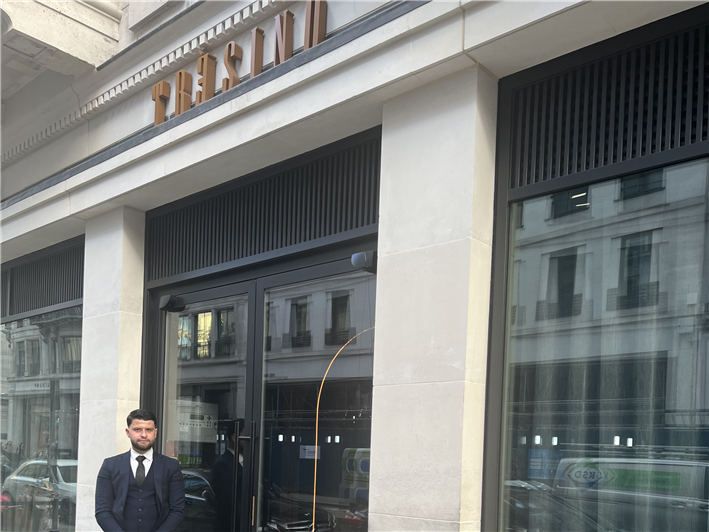

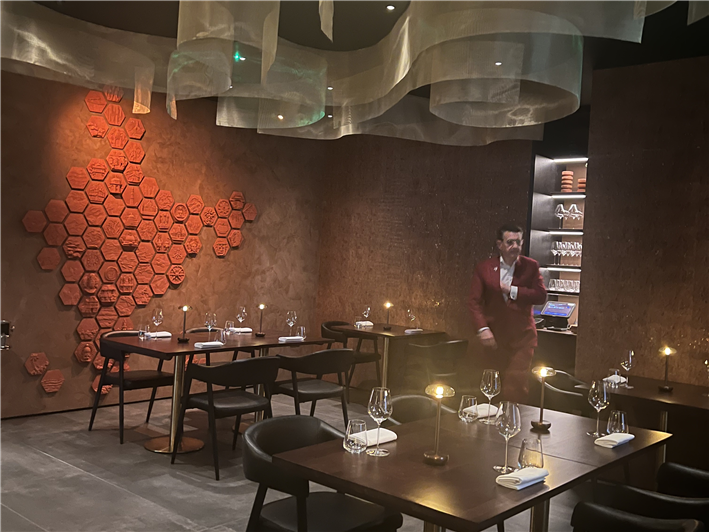
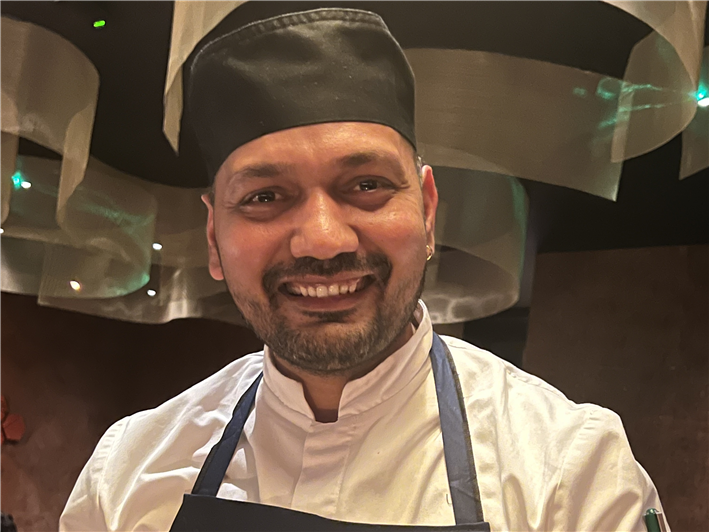

Tresind (“very Indian”) opened on 9th May 2026 in Mayfair. It is the sister restaurant of Tresind Studio in Dubai, which is the only Indian restaurant ever to be awarded three Michelin stars. The kitchen is led by executive Himanshu Saini, who also is in charge of Tresind Studio. The kitchen in London is run by Head Chef Amit Bagyal (previously at Yaatra and prior to that at Kanishka). Himanshu Saini trained in Delhi after studying hotel management and catering there, and worked at the superb Indian Accent under Menish Mehrotra. Fifteen chefs work in the kitchen, cooking for 57 diners at any one time. There is a downstairs bar, and also a private dining room. The dining room was very smart, with well-spaced tables, but it was very dark in the room (hence the matching photos). Some customers resorted to using their phone torches to read the menu, and when that happens you know that things are too gloomy. The hard surfaces everywhere meant that the noise level was quite high, despite the generous spacing of tables.
The format is tasting menu only, priced at £125. The extensive wine list is not available in a form where I can do any analysis, but from the list of just under 200 labels, example wines were a (misspelt) Troupis 'Tomi' Moschofilero 2024 at £55 for a bottle that you can find in the high street for £18, Domaine Chatelain Pouilly-Fume Les Chailloux Silex 2024 at £75 compared to its retail price of £25, and Marques de Riscal Reserva 2021 at £90 for a wine that will set you back £23 in the high street. For those with the means there was Antinori Tignanello 2020 at £360 compared to its retail price of £155, and Vega Sicilia Valbuena 5 2019 at £395 for a wine whose current market value is £164.
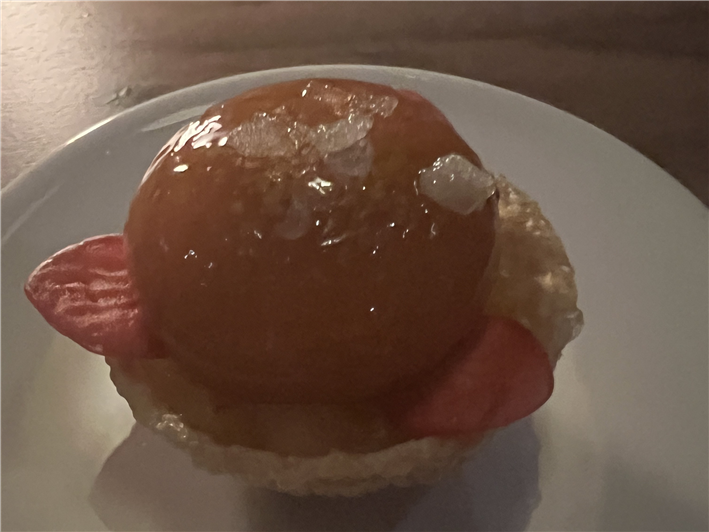
The meal began with a modern take on pani puri. Here the pani puri’s semolina shell contained pickled pineapple and a sphere of fermented carrot juice and mustard, to be consumed all in one bite. The combined flavours burst in your mouth and combined beautifully, with the crisp, delicate outside shell and a vibrant mix of flavours as you bite into the puri (16/20).
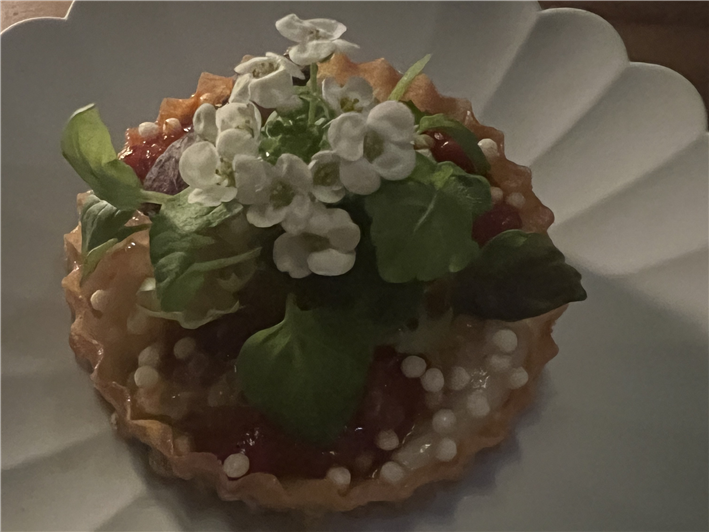
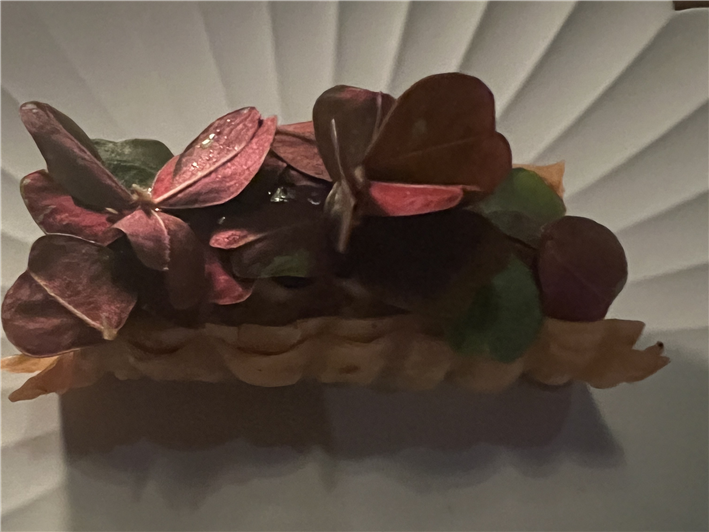
Watermelon tartlet had tapioca rice tartlet with a base of coriander butter. This was topped with baked watermelon that had been sliced thinly and marinated in Guntur chilli, finished with lychee, frisée and shiso leaf. This was superb, with a well-judged level of spice, and the tartlet having delicate texture (16/20).
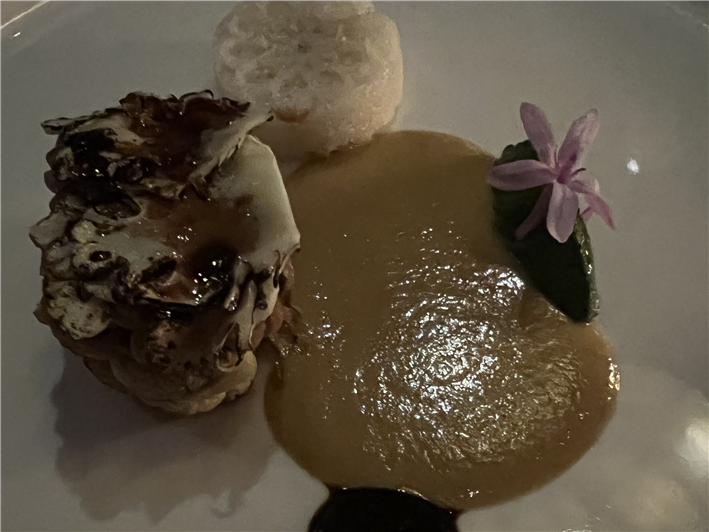
Next was artichoke shawarma, the Middle eastern street food that is traditionally thin cut slices of meat stacked on a cone and roasted on a spit. Here the main element was artichoke. This dish had an excellent pastry base. The Jerusalem artichoke came with spices, served on a crisp zaatar saj (flatbread) base with aioli and hot sauce. The spices were a little more subdued on this dish. Apparently, it was a nod to the Dubai origins of the original Tresind restaurant, though it seemed somewhat contrived to me in an Indian meal. Still, it tasted fine (15/20).
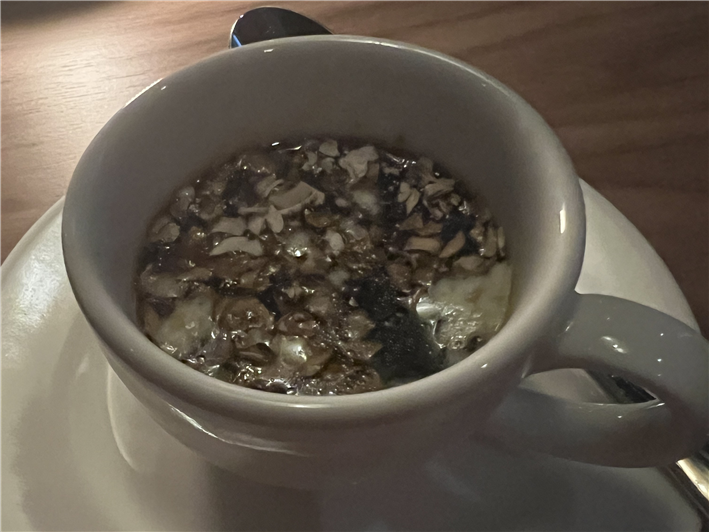
This was followed by mushroom chai (tea). A teacup contained mushrooms and truffle dust, over which was poured a tea made with Kashmiri morels. Essentially this dish was a warm morel broth, and it tasted great, with deep flavour of morels, which are one of the finest mushrooms of all: a condensed taste of the forest (16/20).
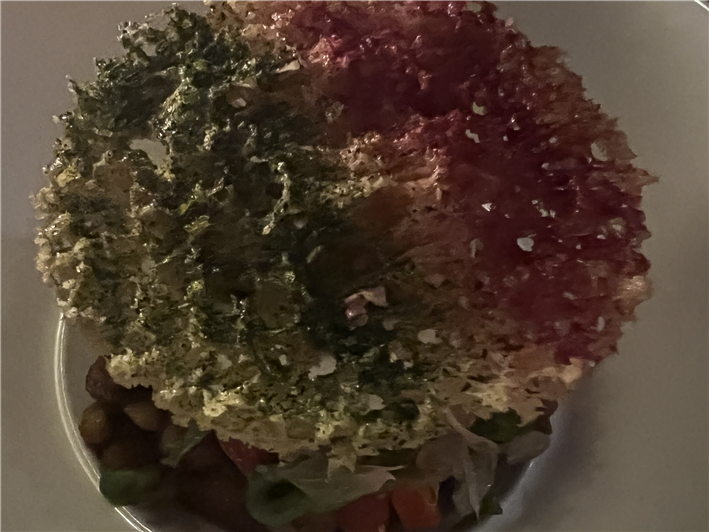
Ghewar chaat was a take on a Rajasthani sweet called ghewar that had been reimagined as a chaat, a fried dough snack. The version here had chickpeas, tamarind chutney, potato, avocado, strawberry and pomelo beneath a quenelle of yogurt ice cream, crowned with a crisp honeycomb ghewar flavoured with beetroot. I have eaten a great many versions of chaat over the years and this one was perhaps the best. The contrast of textures was enjoyable, and the flavour balance was superb. The chickpeas were tender, the tamarind chutney brought sweetness and there was plenty of lively spicy heat (16/20).
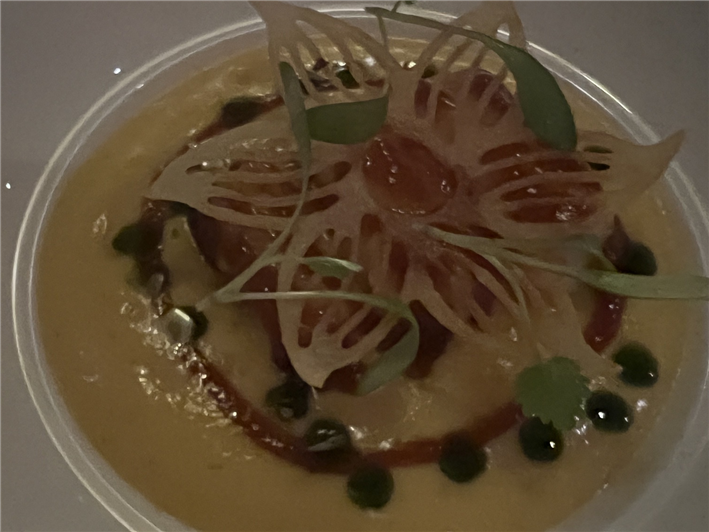
Prawns and green asparagus were topped with a pretty dosa shaped into a flower. Sous vide prawns with green asparagus came with a jeera aloo espuma, a light cumin potato foam. On the side was a cup of tomato rasam, a South Indian peppery broth. The rasam was gloriously intense in flavour and quite spicy, the tomatoes laced with tamarind and peppercorns. The prawns were tender and the asparagus was fine but the star for me was the tomato broth (16/20).
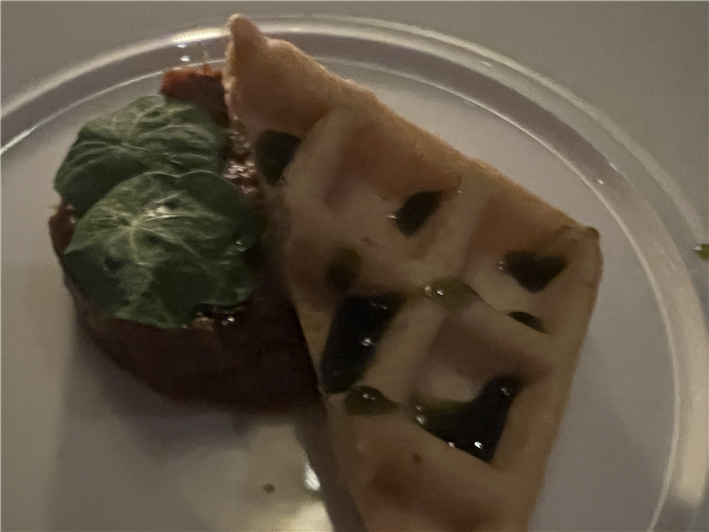
Crab came with a waffle. The crab itself was lovely, and quite spicy. Fresh crab was accompanied by a Mangalorean ghee roast masala, rich and deeply spiced, served on a crisp dal vada waffle with curry leaf honey to finish. The waffle could have been improved, as its texture was a little chewier than ideal (15/20).
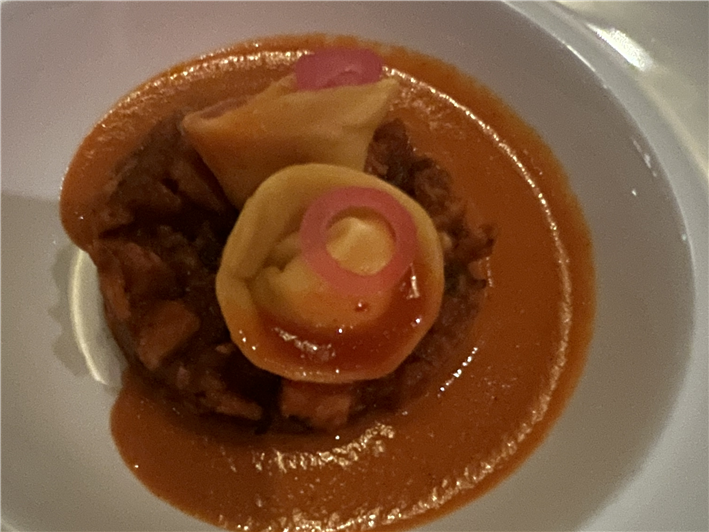
A fusion dish came next, a modern take on butter chicken. Here, instead of bread, was tortellini pasta. Fresh tortellini was filled with Gorgonzola dolce, served in a smoked chicken makhani, with pickled onions providing acidity, and chilli jam adding warmth. The pasta had very good texture but the star was the chicken and its buttery, spicy sauce, which was superb (16/20).
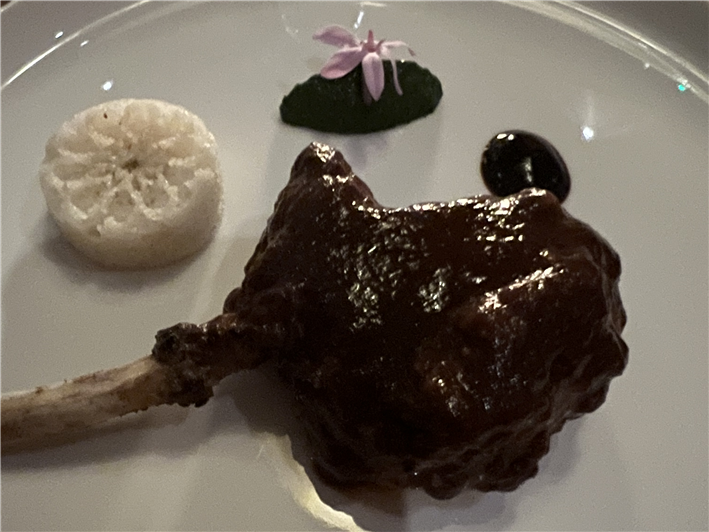
Lamb chop was dry-aged for a month and cooked in the tandoor, served with rosemary vindaloo sauce and chimichurri, the garlic flavoured uncooked herb condiment from Argentina. There was also a soft Goan steamed sanna rice cake. The lamb was very tender and the accompanying elements worked really with the meat, the vinegar of the vindaloo balancing the richness of the lamb (16/20).
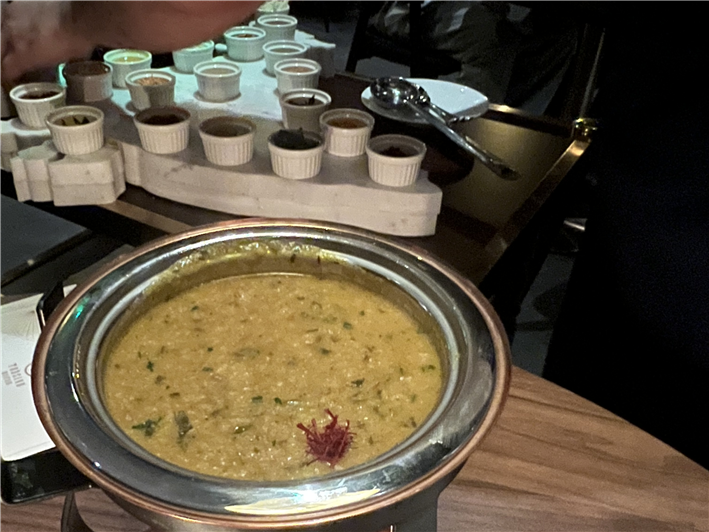
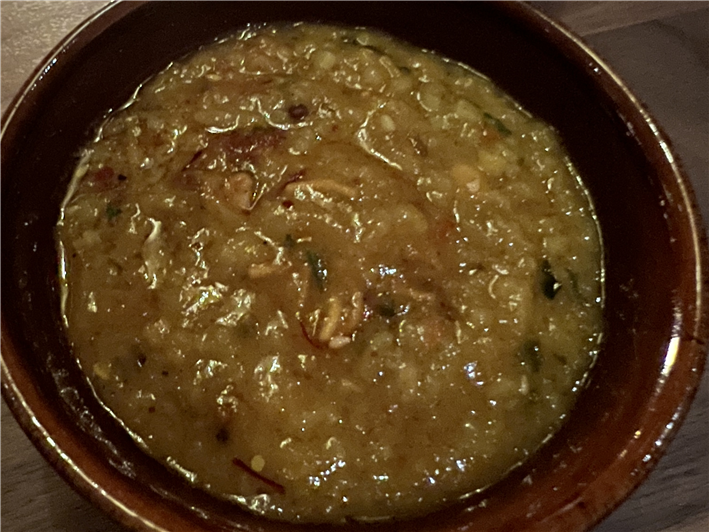
Khichdi is a simple rice and lentil dish made all over India. A theatrical take on it here was to start with a basic khichdi and then to add, tableside, little ingredient elements from every Indian state. For example, there was a garlic chutney from Maharashtra, curry leaves from Karnataka, etc. This was a fun idea and the end result was a. A very good khichdi, with plenty of interesting flavours and a good rice lentil base (15/20).
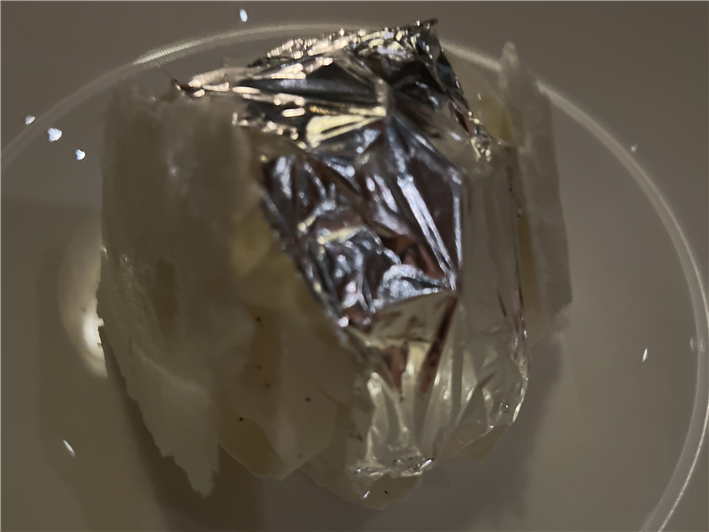
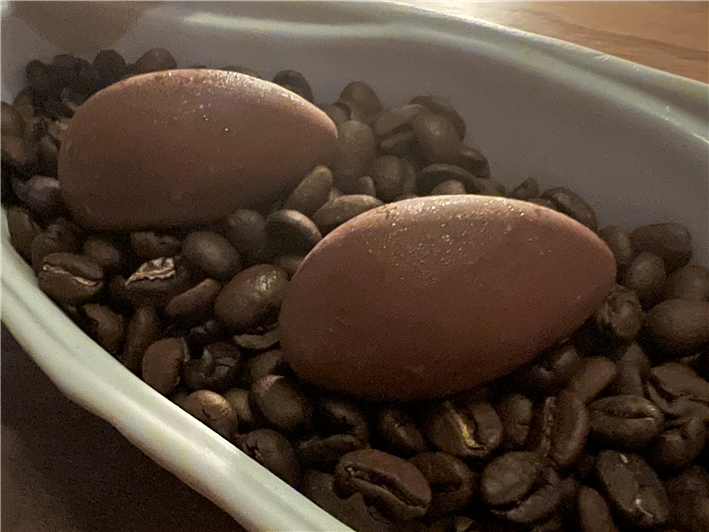
Dessert was a take on traditional Bengali rice pudding, but here made with no rice. There was a pandan-infused cream at the base, sour milk ice cream, vanilla yogurt foam and a milk crisp made from dehydrated milk froth, finished with edible silver leaf. This was good and quite refreshing (14/20). Petit fours comprised a Belgian chocolate with a liquid filling flavoured with coffee. The coffee on offer to drink with it was Brazilian, from a company called Dimello Coffee.This was fine.
Service was excellent all evening, the dishes arriving at a steady pace. Our Latvian waiter (Paul) was great. The bill notionally came to £352.48 for two, so £176.24 each. However, we unexpectedly received a large discount and so actually only paid £102, plus some additional cash tip to make up on the service. A typical cost per head might be around £170 each. Overall, Tresind was very impressive, and all the more so since it had open been open just over a week. The food here is inventive and modern but still rooted in Indian tradition and flavour. The technical skill on display was very high, and it was a lovely overall experience. This restaurant is a great addition to the London dining scene.
Add a comment
Thank you for submitting your comment, this will be checked and added to the website very soon.
User comments