




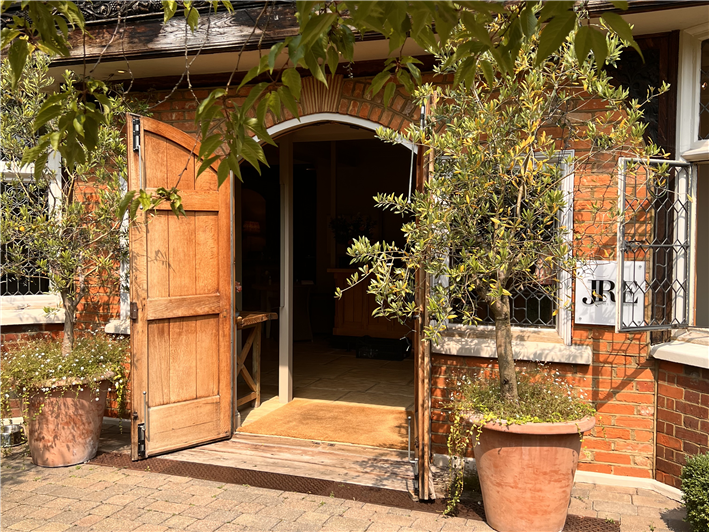

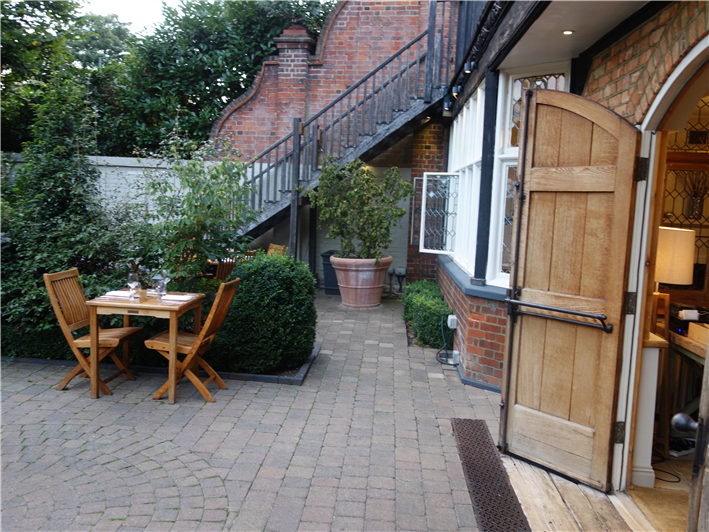
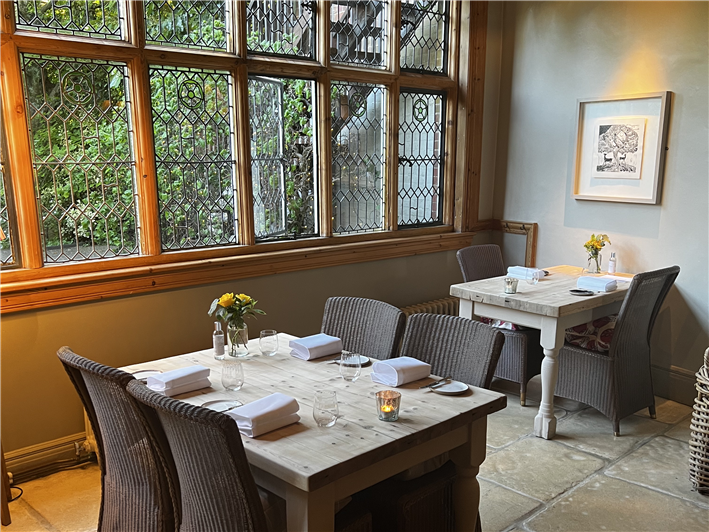
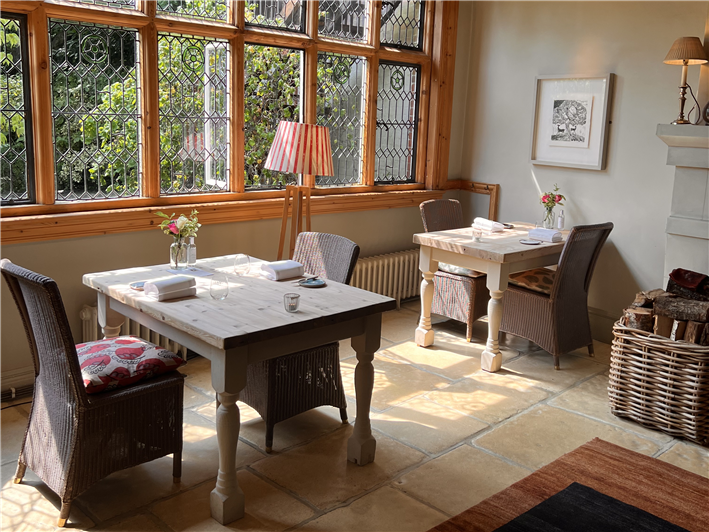
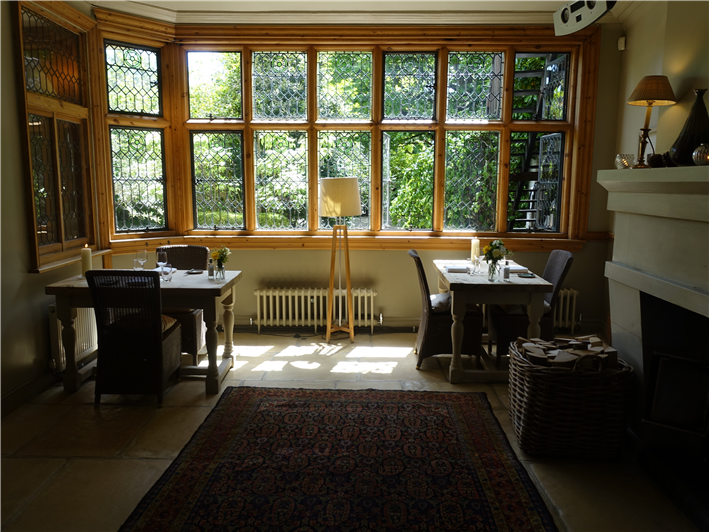
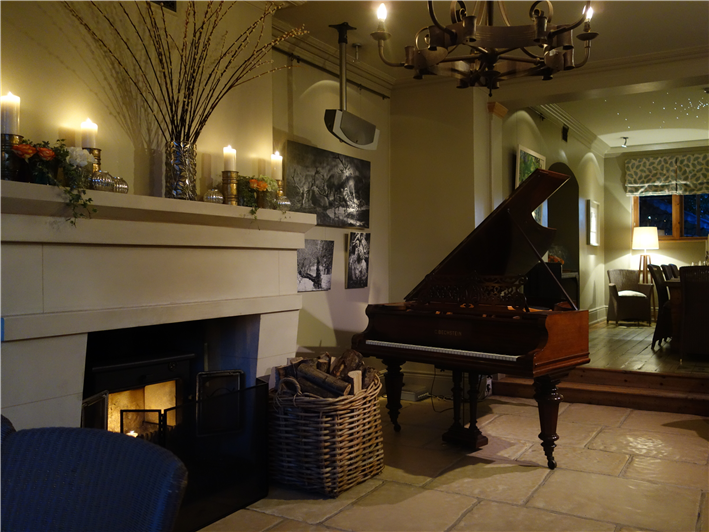
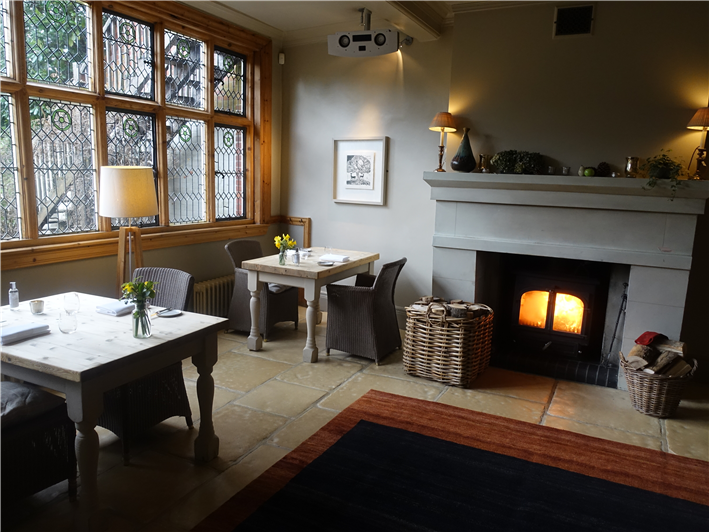
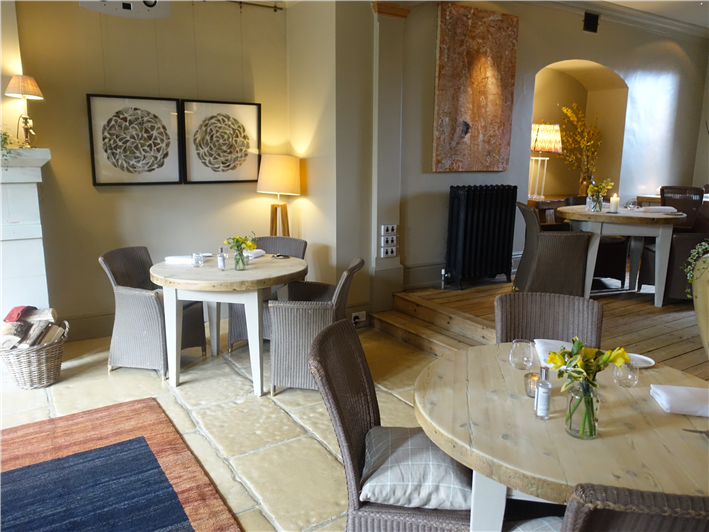
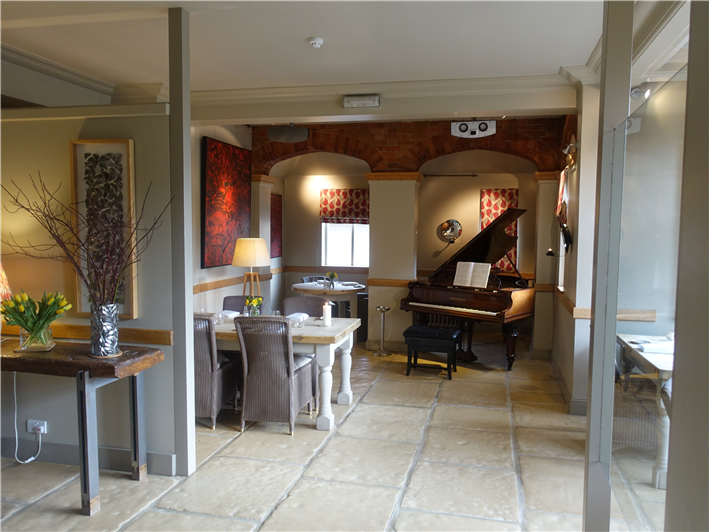
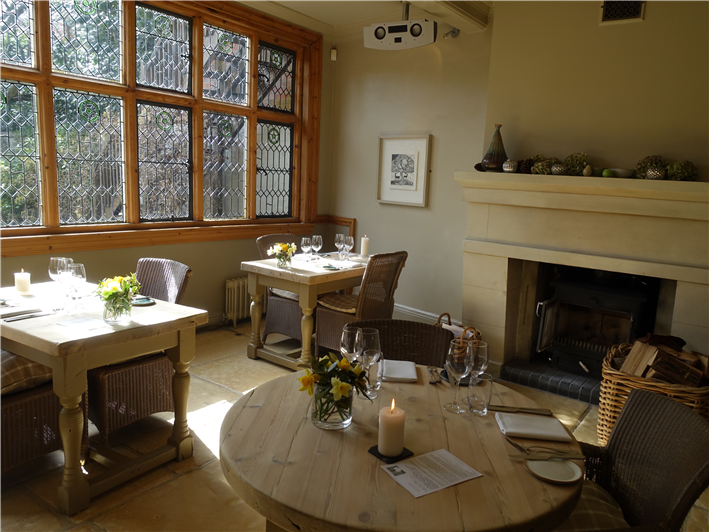
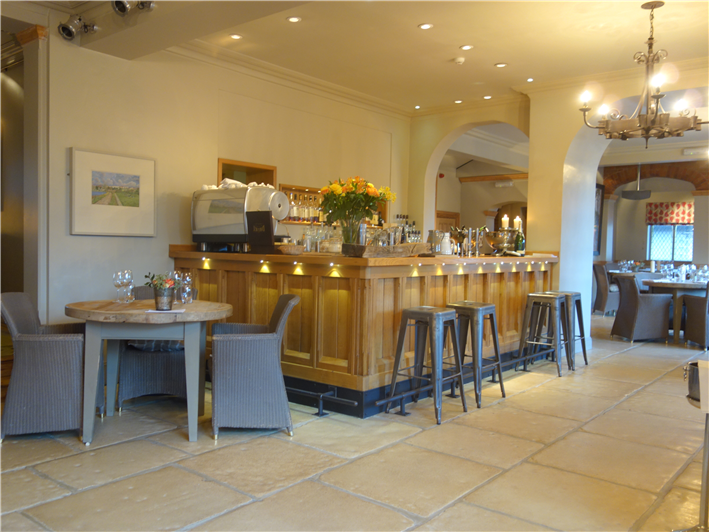

I have written previously about the background of the Dysart and its chef. It seats up to thirty diners in a large space, with generously spaced tables. The three-course set lunch was £75 per person (£85 for four courses), with the tasting menu, which is what we opted for, at £155 per person.
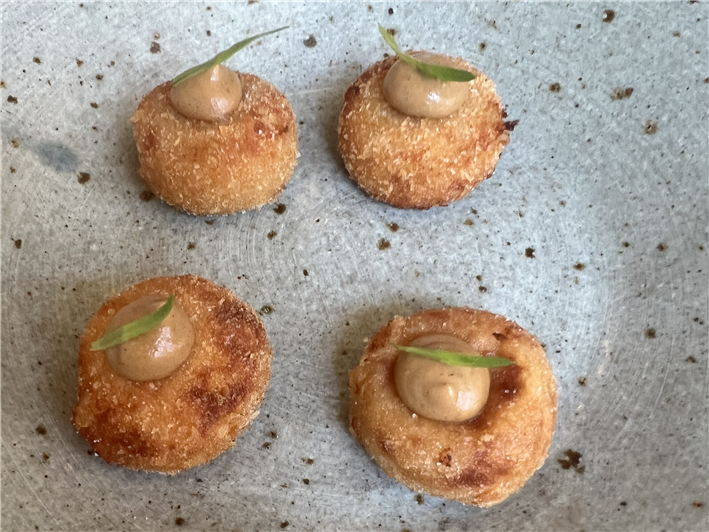
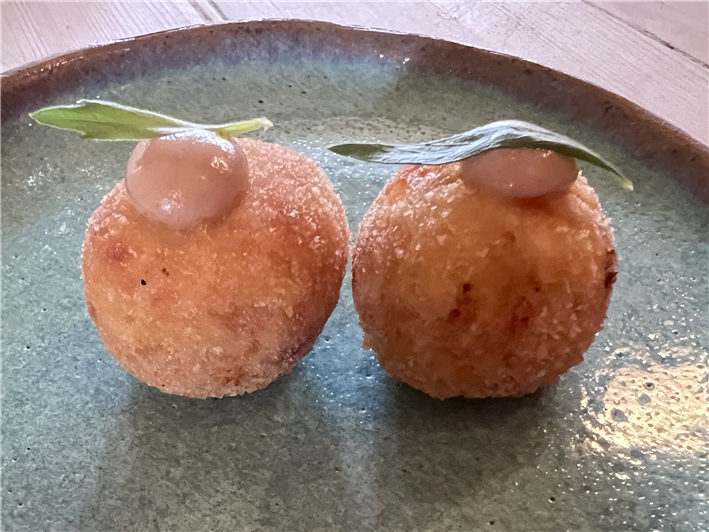
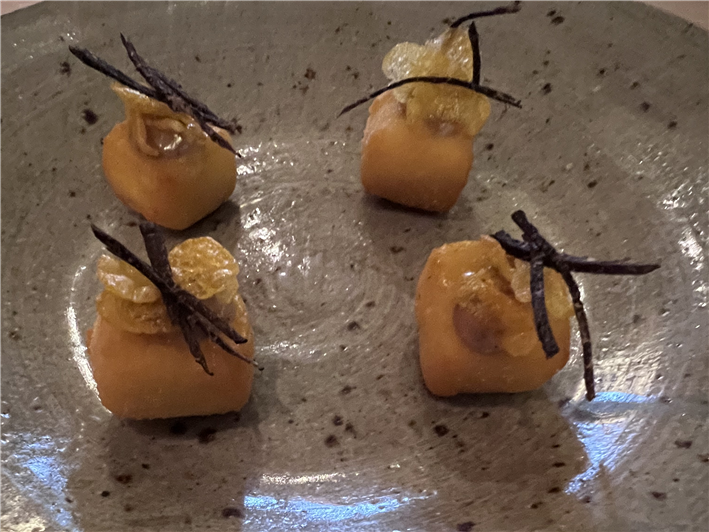
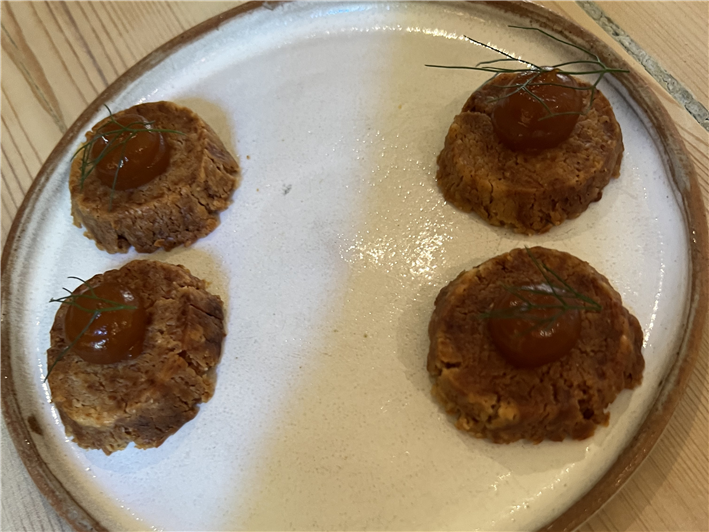
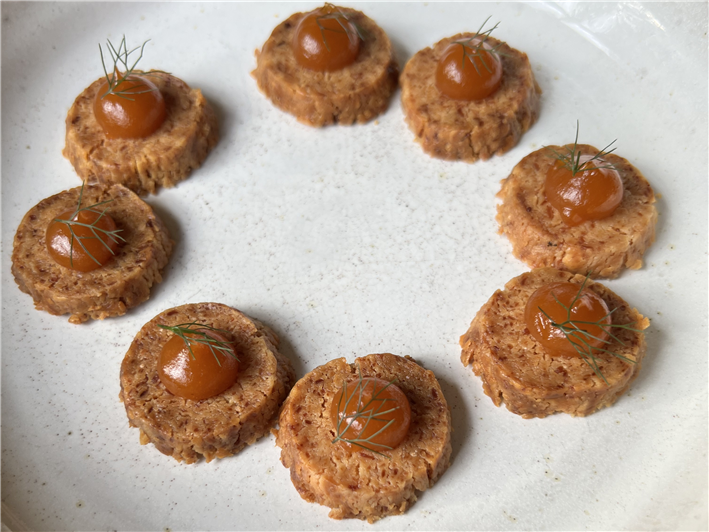
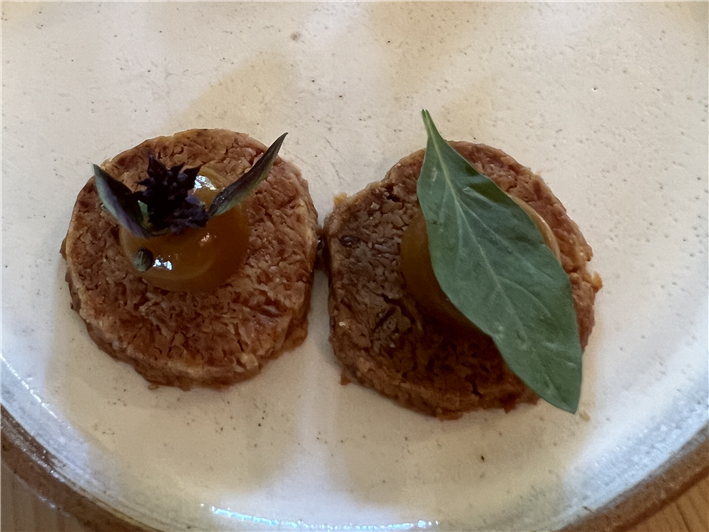
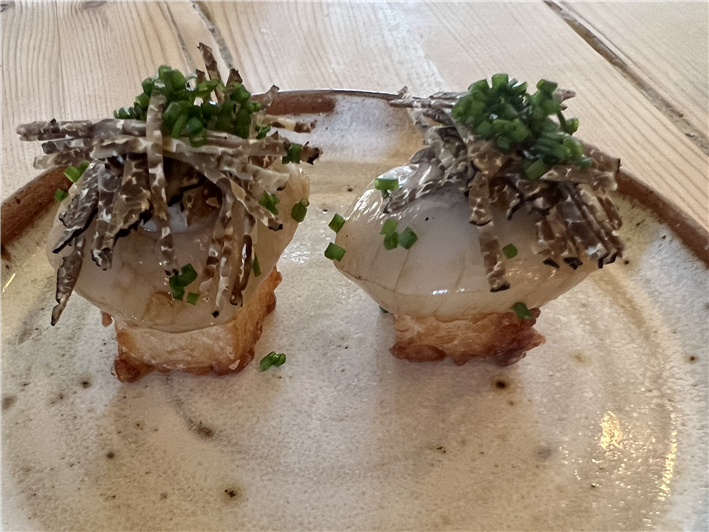
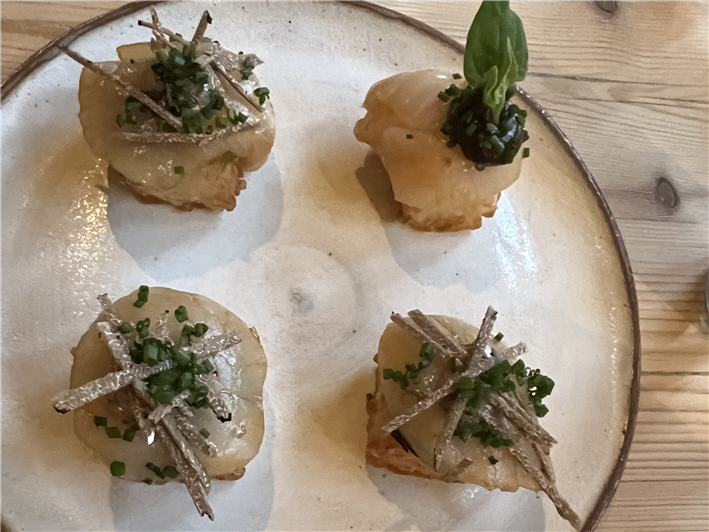
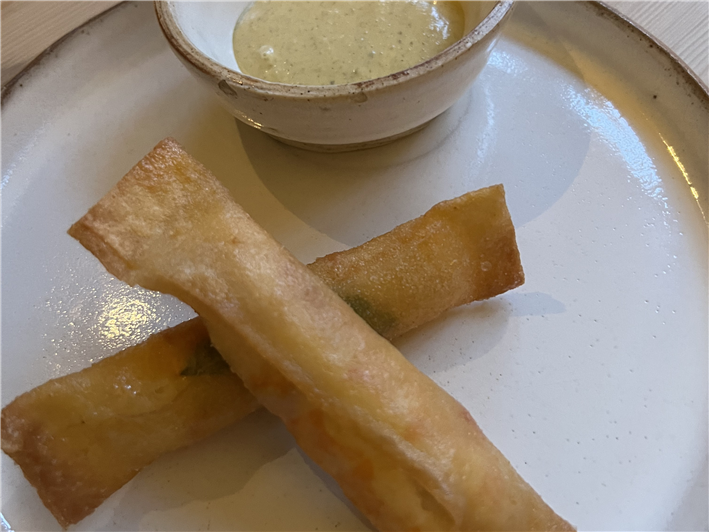
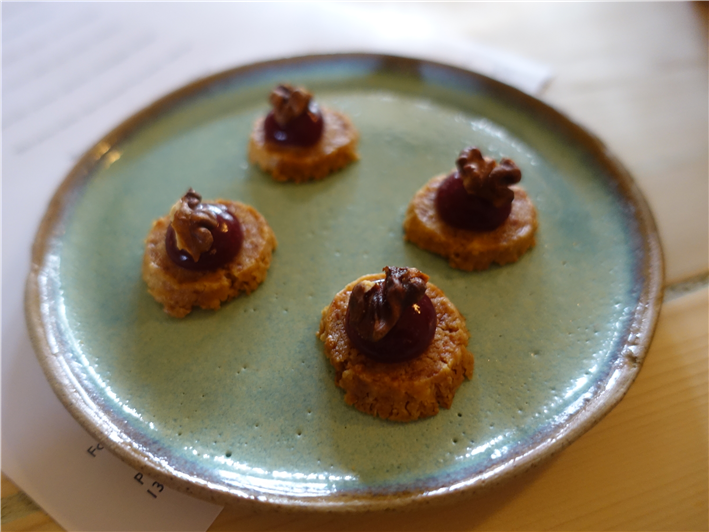
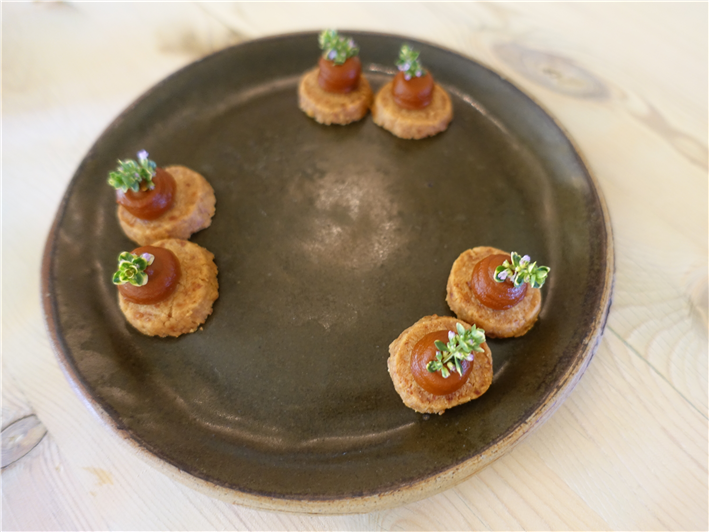
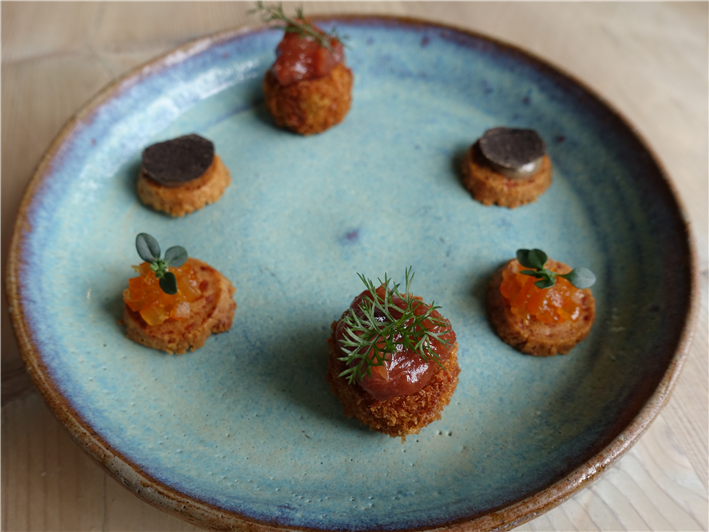
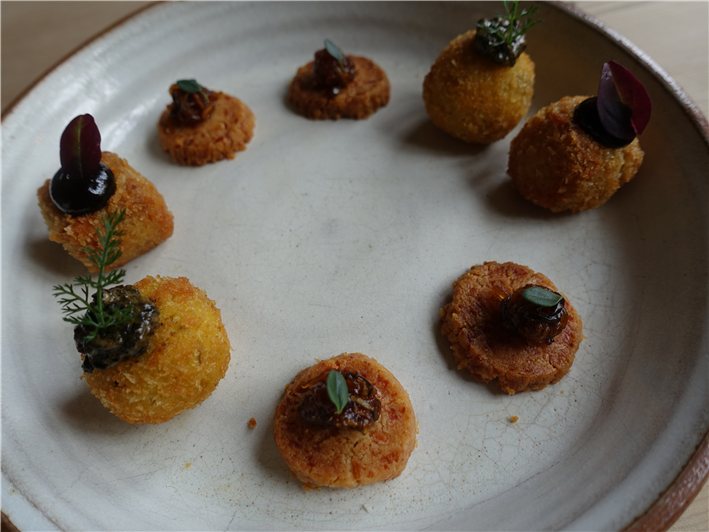
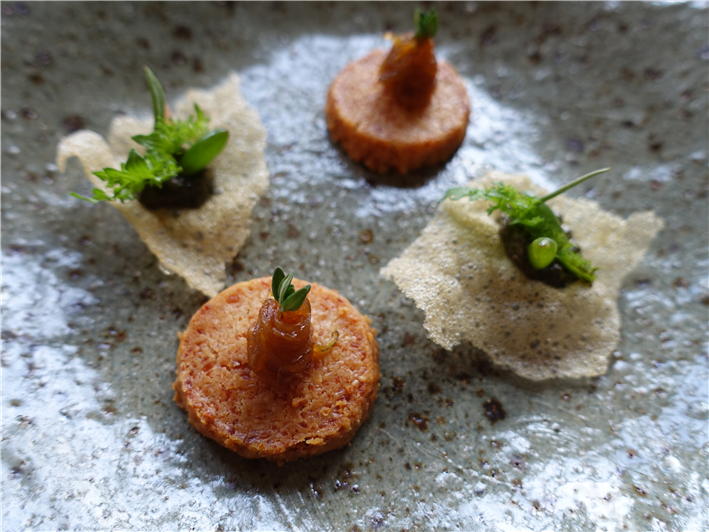
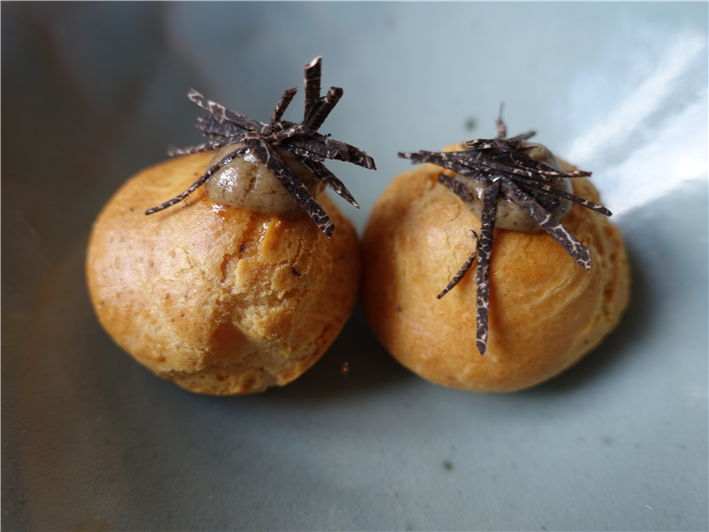
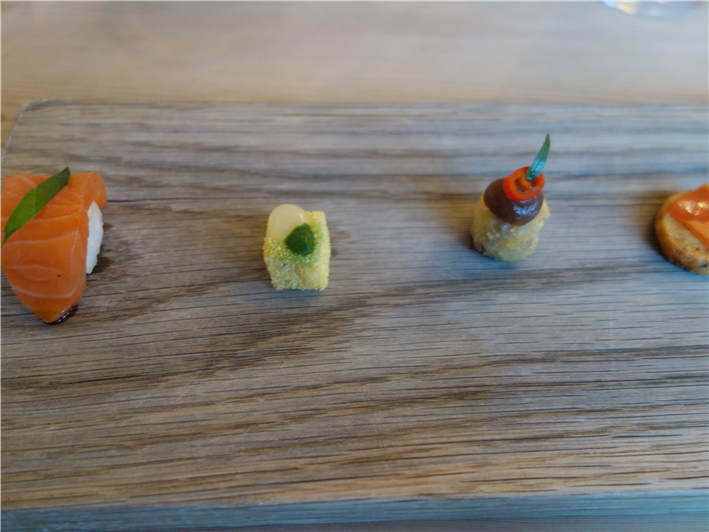
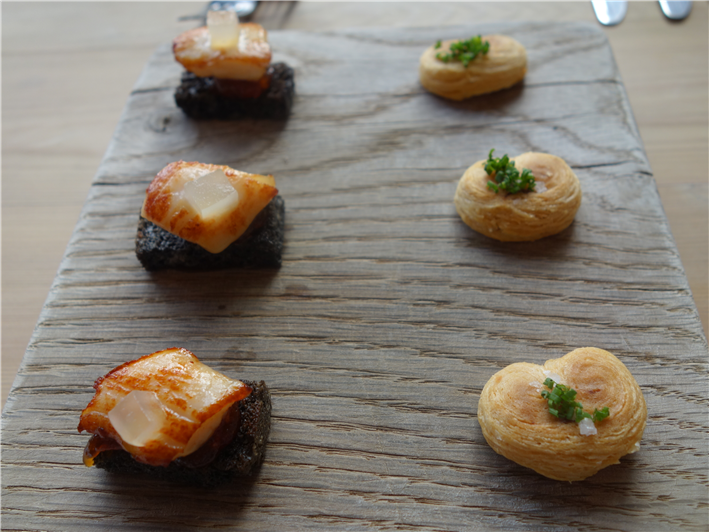
The meal began with some canapes. The first was a corn cromesquis (savoury morsel) with confit cornflakes and black truffle. It is a vegetarian version of a dish from Marc Menau’s famous restaurant Esperance in Vezelay, using corn instead of foie gras. The corn is shucked and the kernels removed from the cobs. The cobs are placed in a pan, covered with water, and simmered over a medium-low heat until the liquid has reduced by two-thirds and the flavour is concentrated. The stock is then strained and reserved. Butter is melted in a large saucepan and the corn kernels are added, along with some of the stock and the cream.This is cooked over a low heat, stirring occasionally, until the corn has broken down and the starchy flavour has cooked out. The mixture is removed from the heat, puréed in a blender until smooth, then strained. It is seasoned to taste with local chilli and salt, and returned to a low heat. A small amount of gelatine is whisked into the corn base until melted. The mixture is poured into a tray to a depth of ¾ inch and chilled in the refrigerator until completely set. The edges of the set base are trimmed and cut into small cubes using a hot knife. The cubes are chilled overnight and then breaded twice with panko. Once fried, each cube is topped with a little black truffle purée, some confit organic cornflakes cooked in Manni olive oil for texture, and finished with a julienne of fresh truffle. The end result was crisp on the outside. The sweetness of the corn suggested to me that the dish needed slightly greater acidity to provide better balance (15/20).
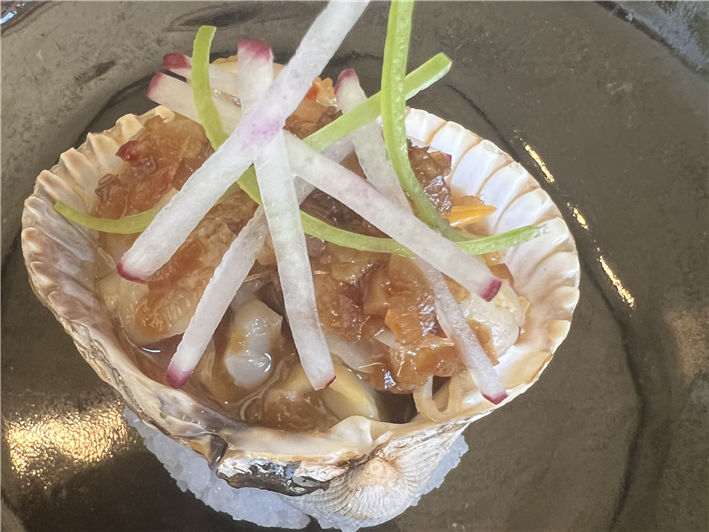
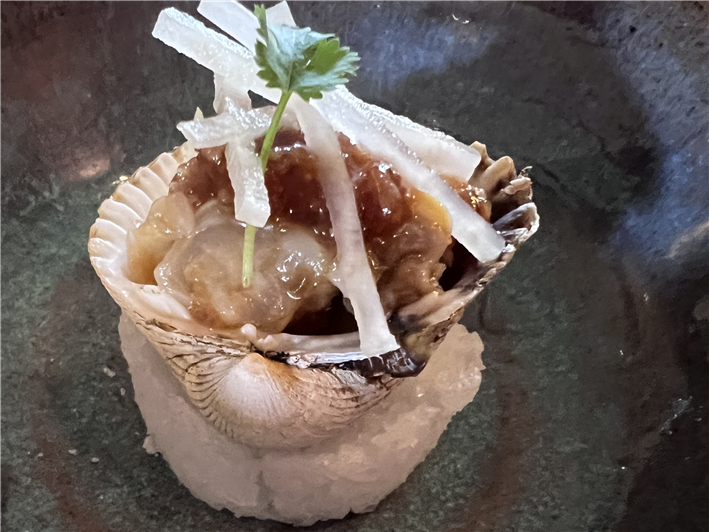
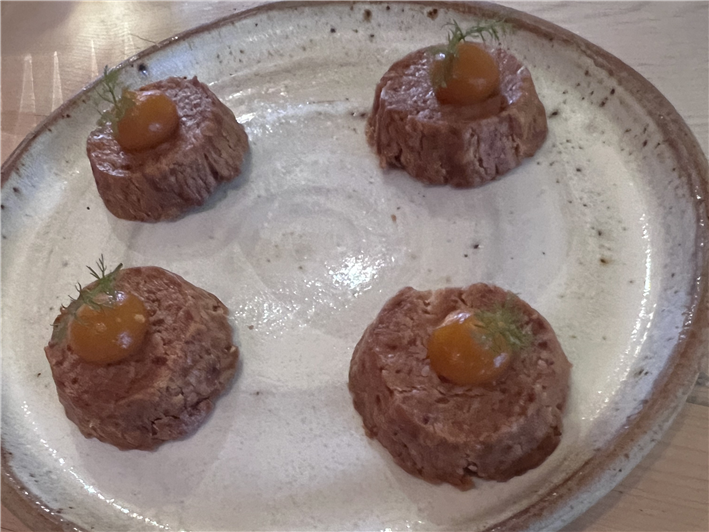
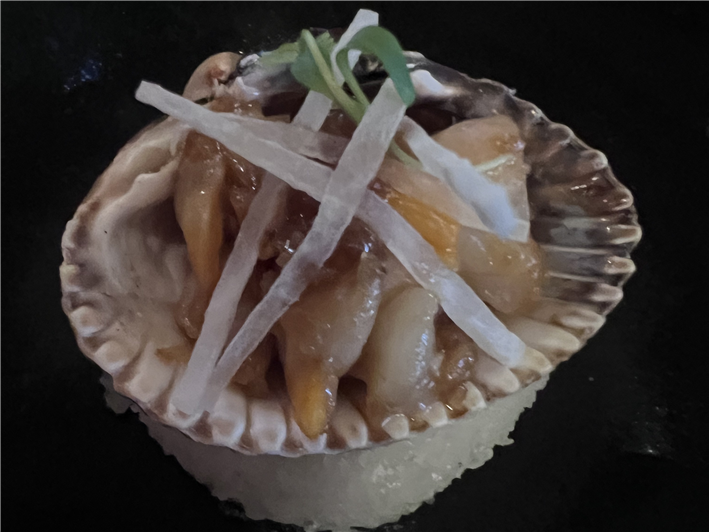
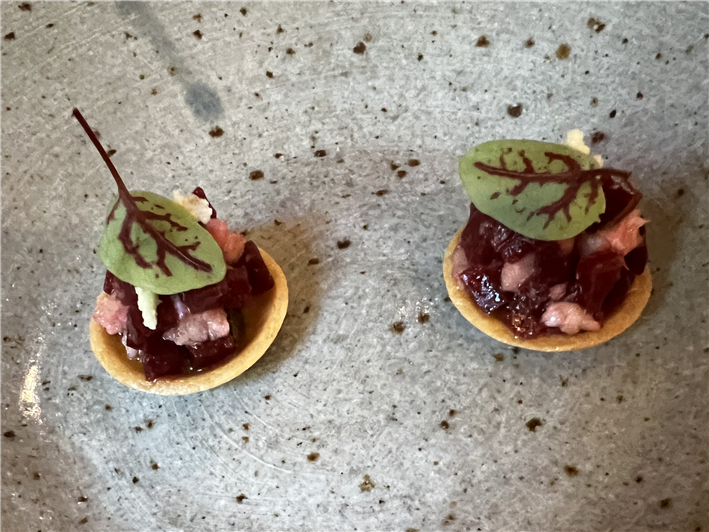
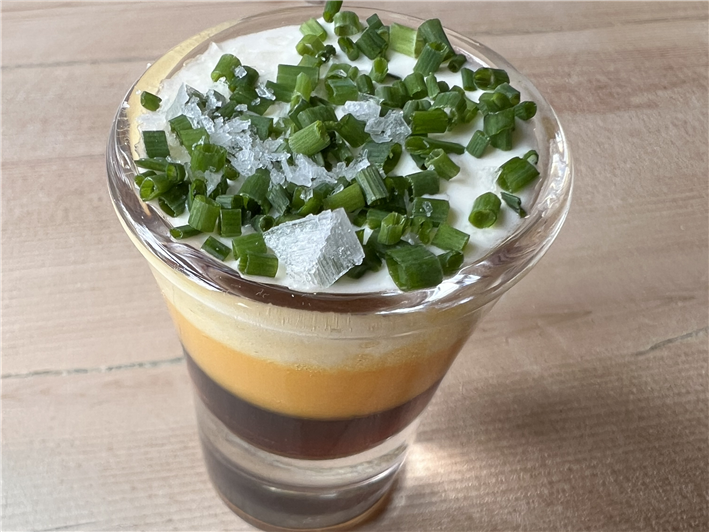
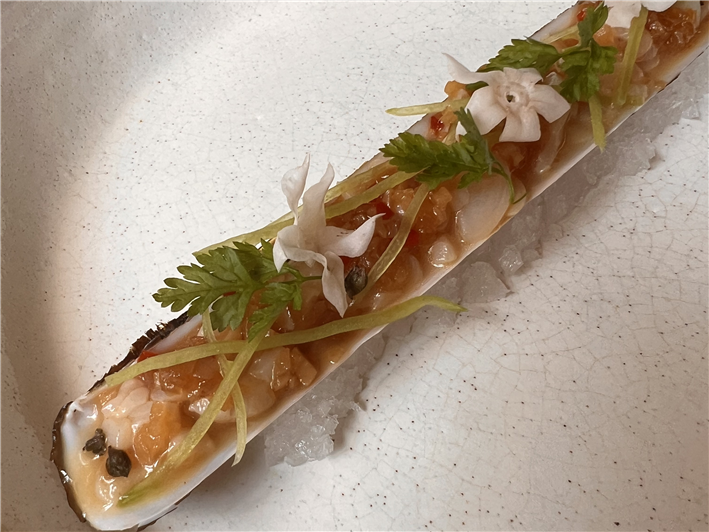
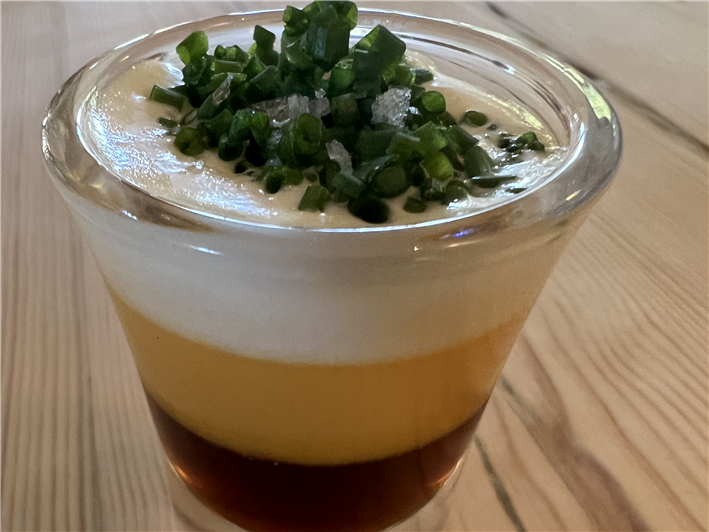
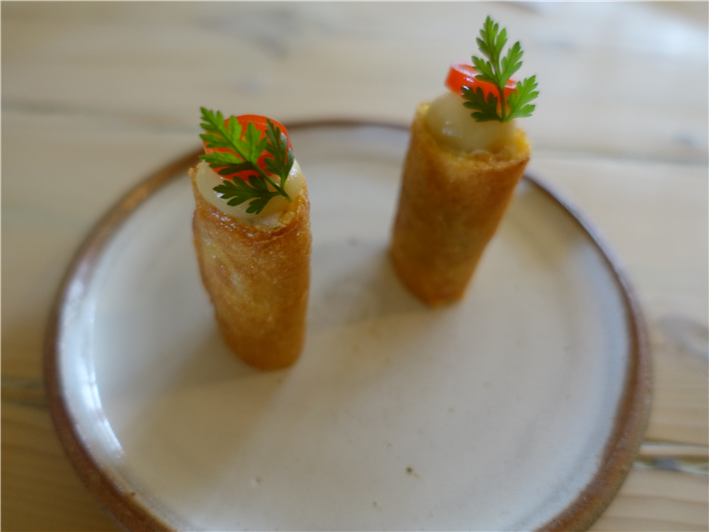
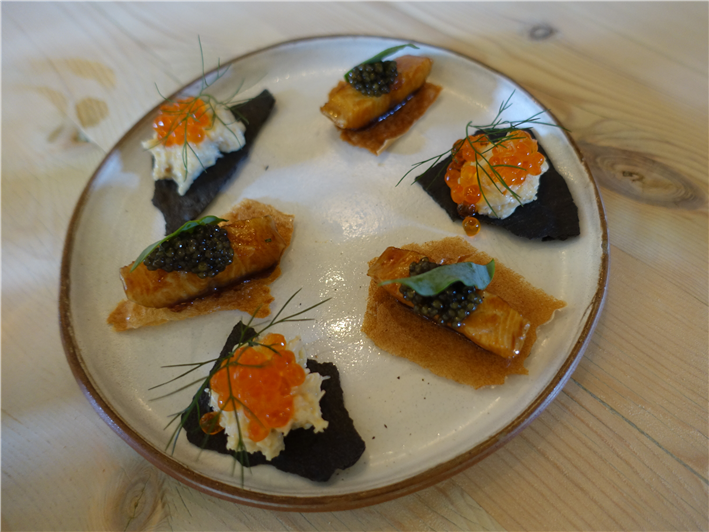
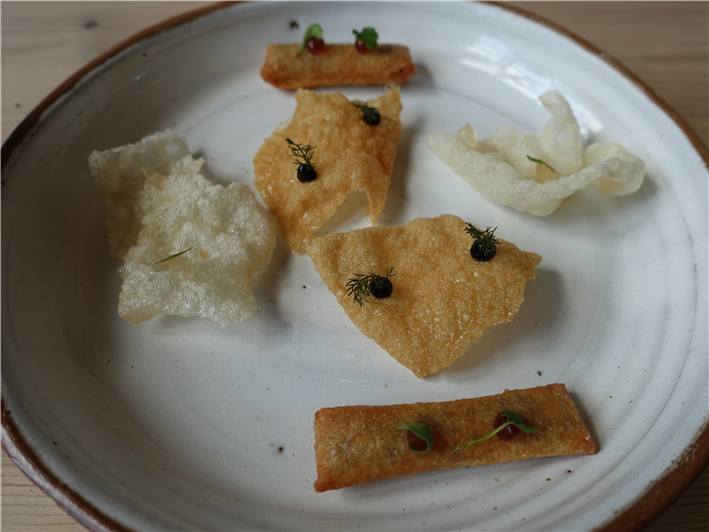
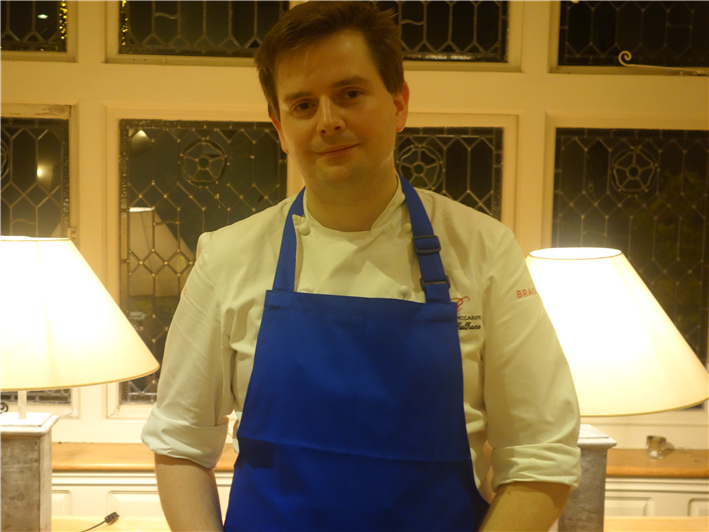
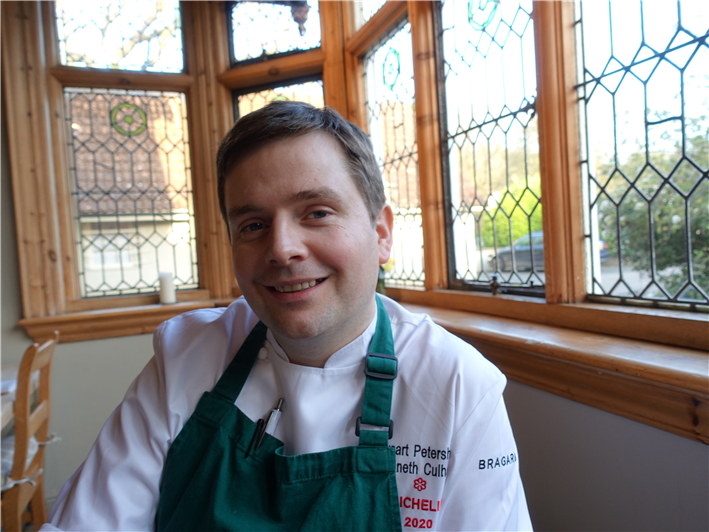
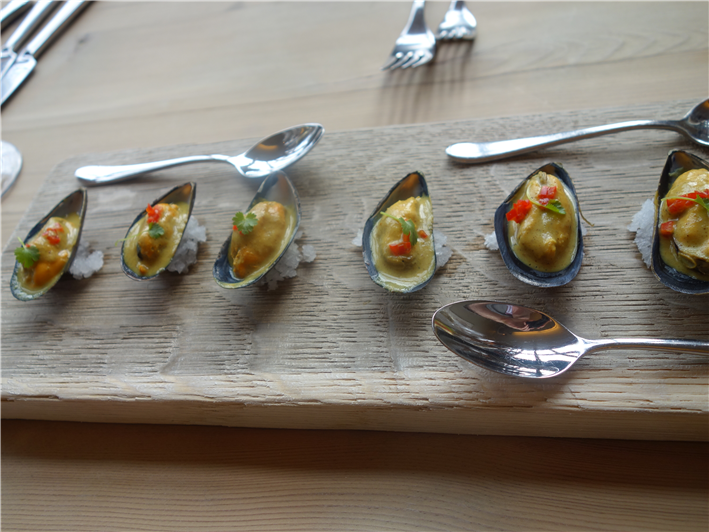
The next canape was shellfish (razor clam) tartare with ginger and shallot dressing. The shellfish was cooked gently, marinière-style, in white wine, shallots, garlic, and butter. It was then diced and mixed with a dressing of shallots, ginger, local chillies, kombu vinegar, and sesame oil. The dish was finished by topping the shellfish with a julienne of white beetroot and fresh celery leaves. Chef Ken Culhane adopted the dressing from Tetsuya in Sydney, where he spent time after winning a scholarship to work there. I thought this was a superb canape, the razor clam having lovely texture and flavour, while the balance of the ginger dressing was superb (18/20).
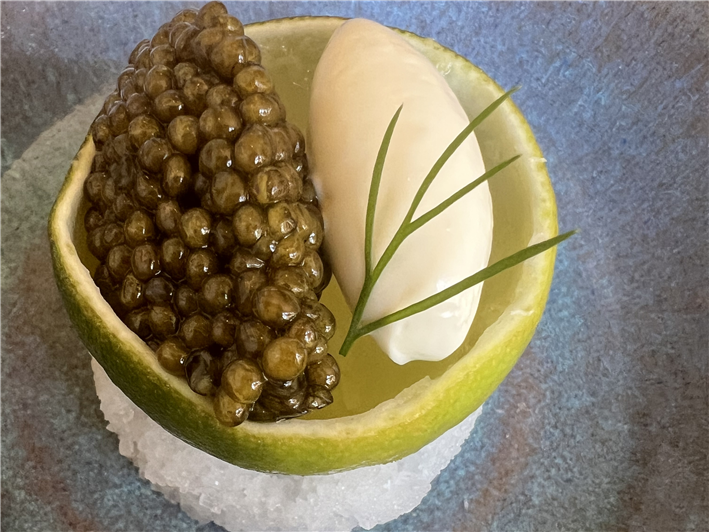
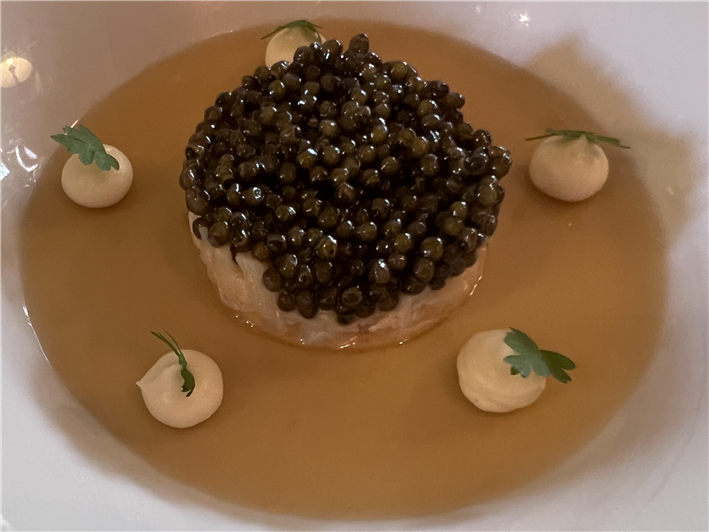
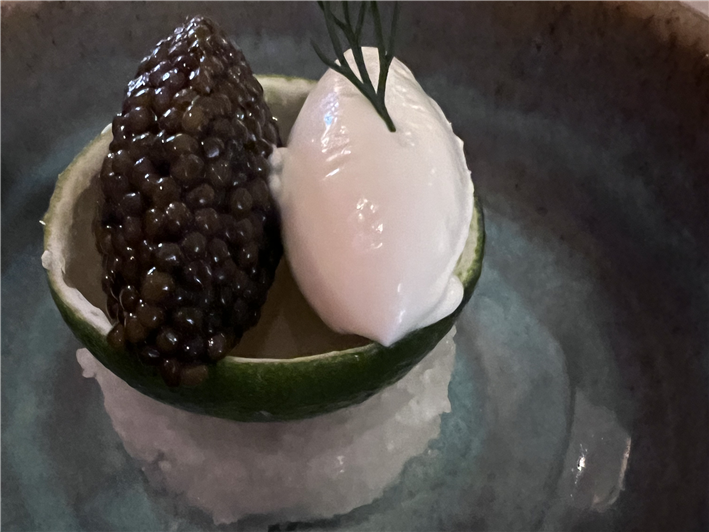
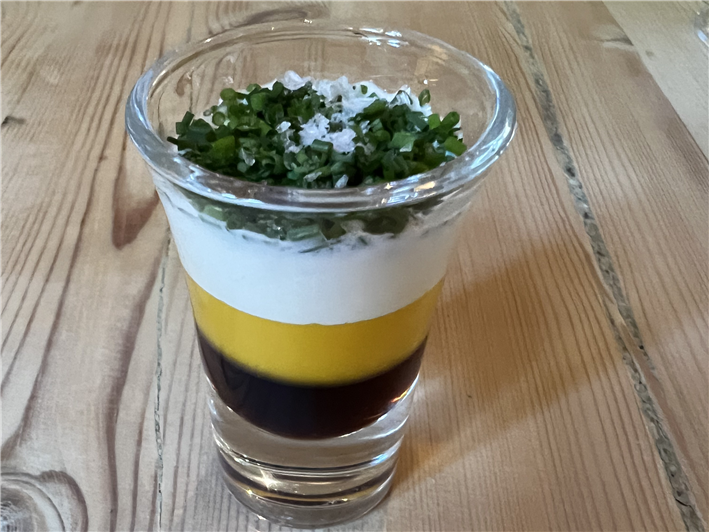
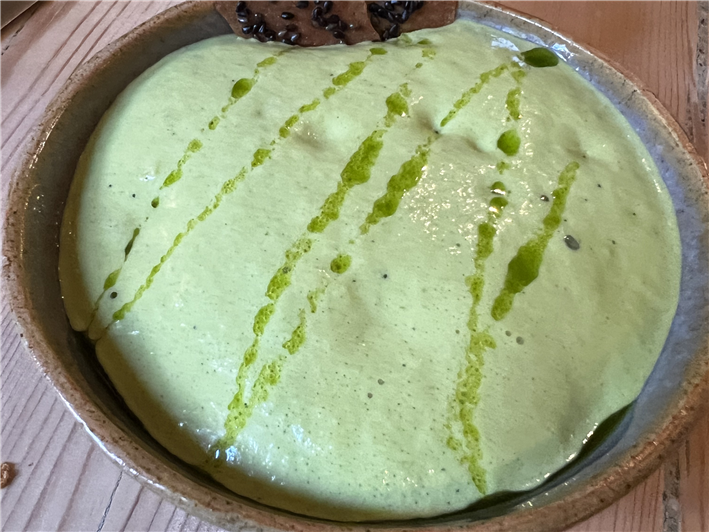
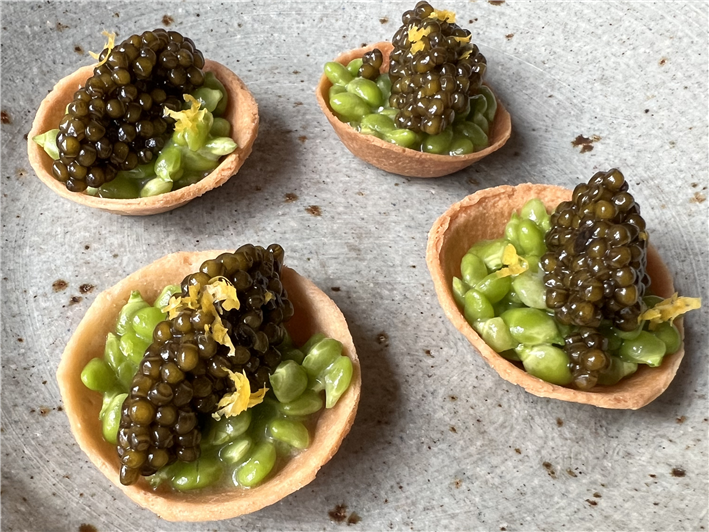
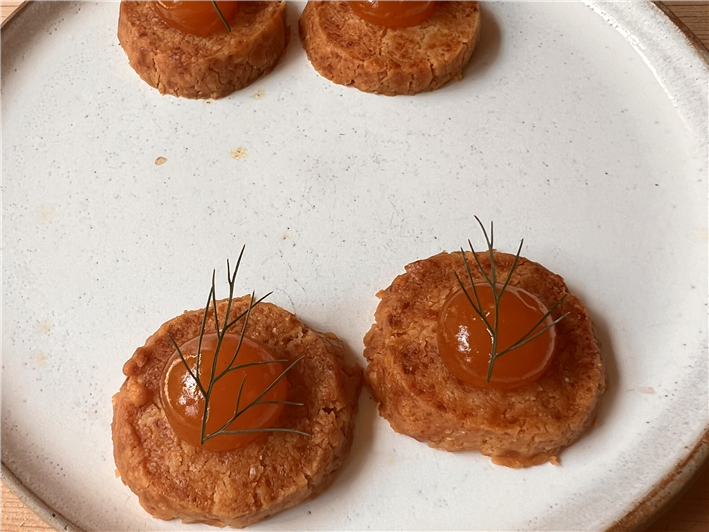
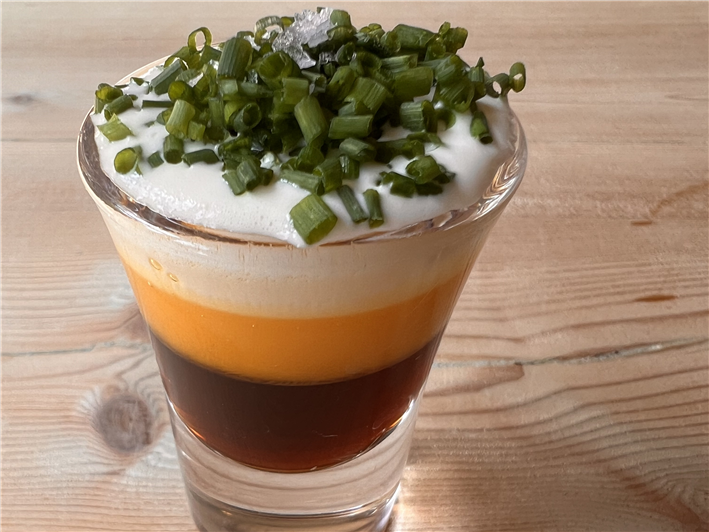
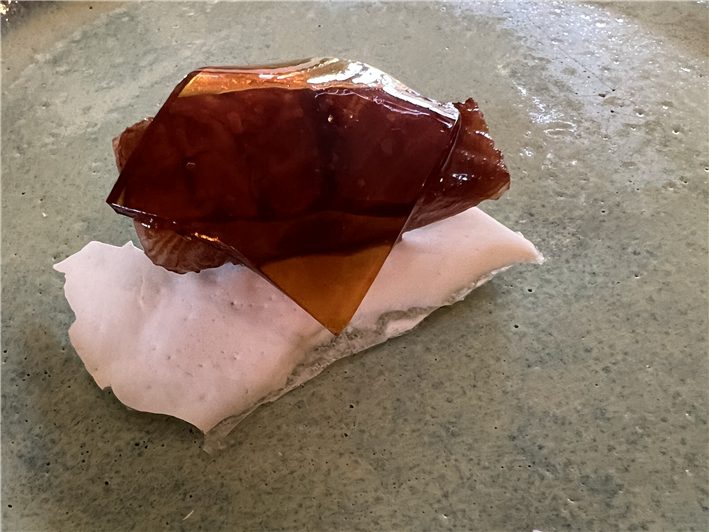
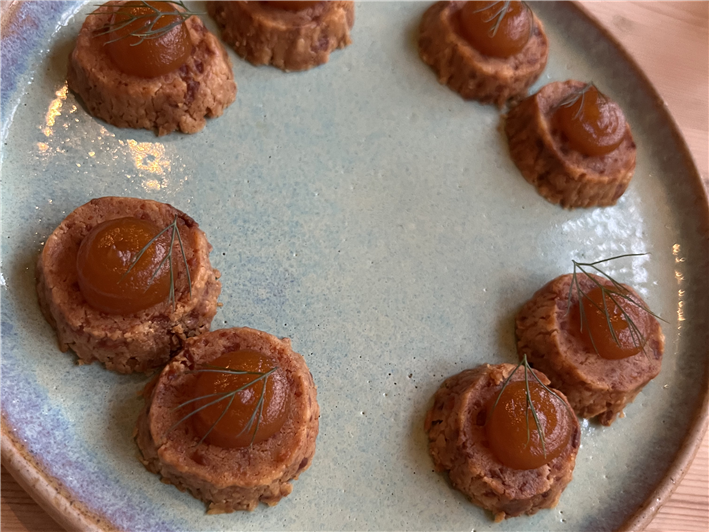
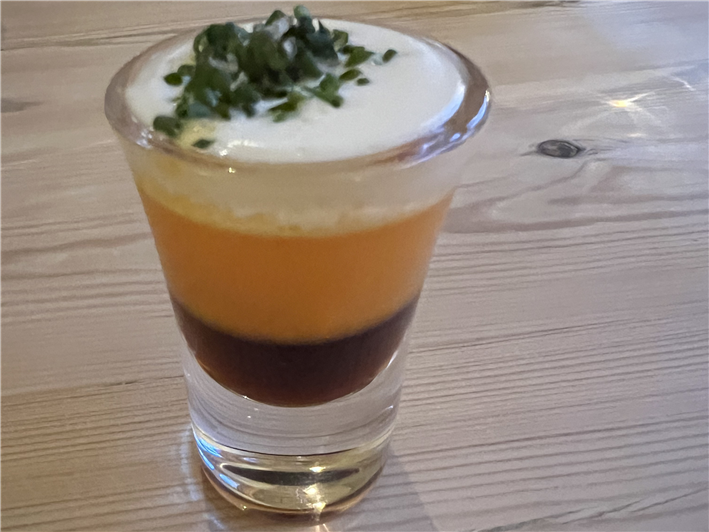
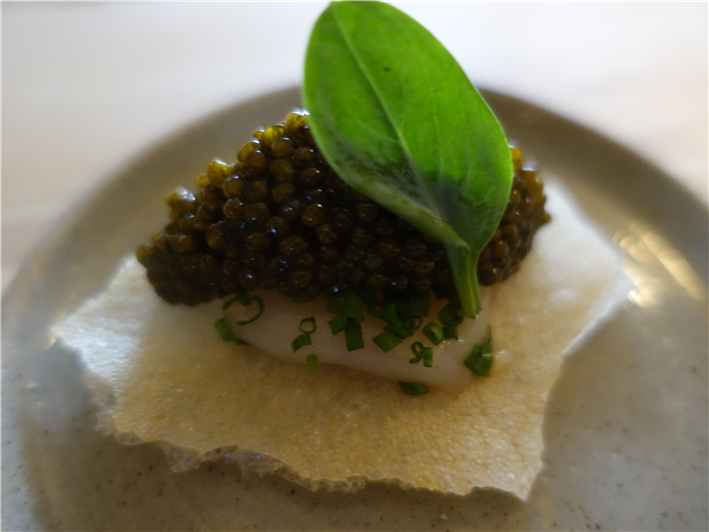
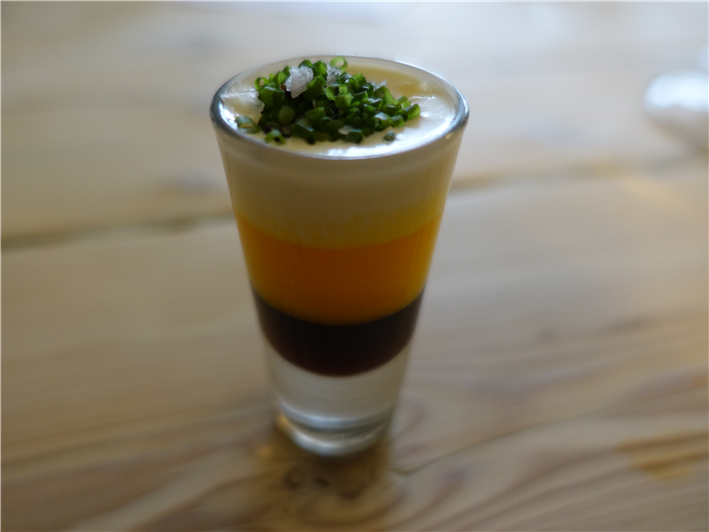
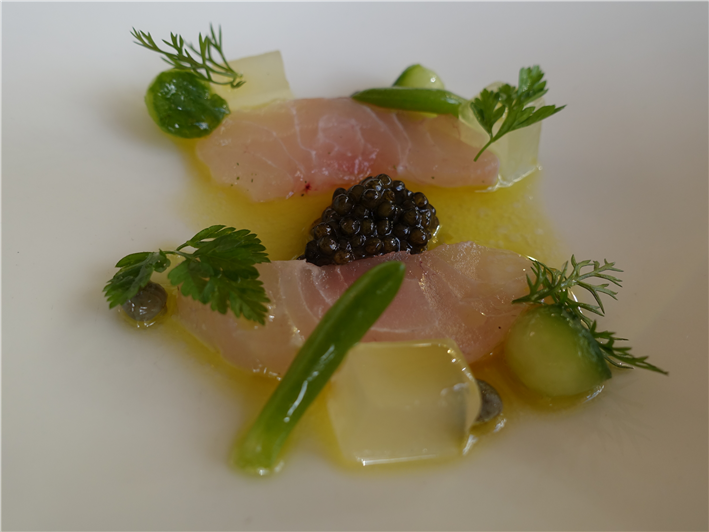
The next canape was English yuzu with caviar, crème fraiche and dill. In Japan there is a dish called yuzu kanten, a delicate jelly of yuzu juice set with kanten (agar-agar), shimmering with a clarity and brightness that feels almost jewel-like. Ken’s version of this dish involves folding in a touch of local elderflower, allowing its gentle floral notes to lift the jelly into something light and refreshing, providing a counterpoint to the caviar’s briny depth and subtle texture. The dish is finished with a little high-quality crème fraîche and a few sprigs of dill, bringing everything together in a harmony of sea scents, salt, and citrus notes. The dish was completed with a generous dollop of hybrid N25 caviar, the jelly and caviar set in a yuzu shell. The jelly was very delicate, and was a good pairing for the brininess of the caviar (16/20).
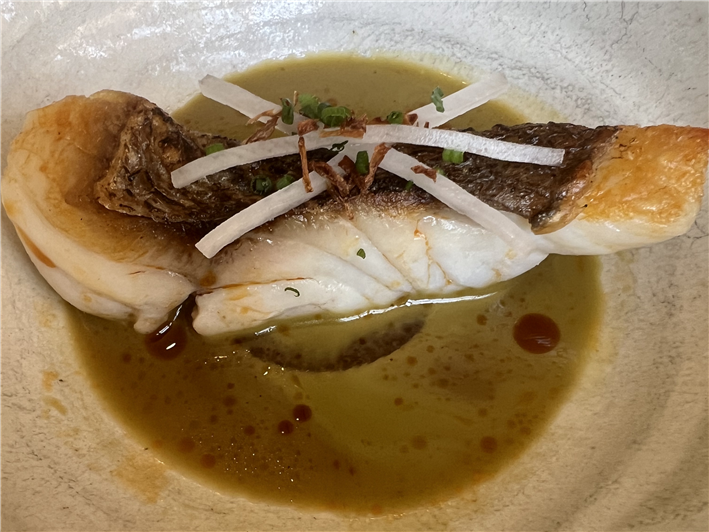
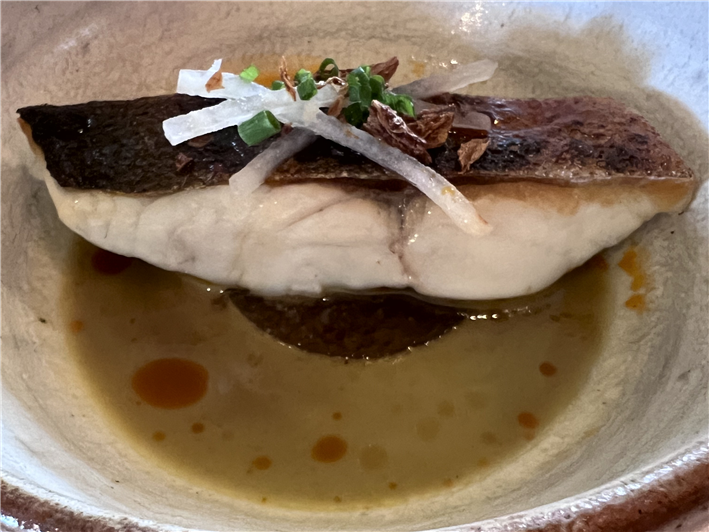
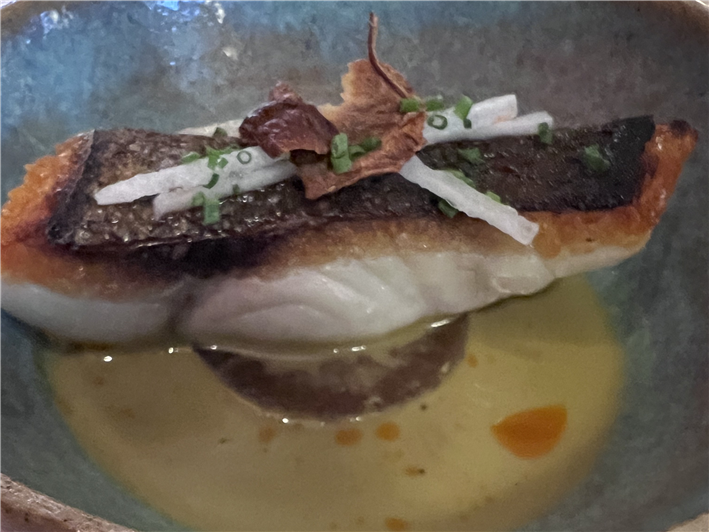
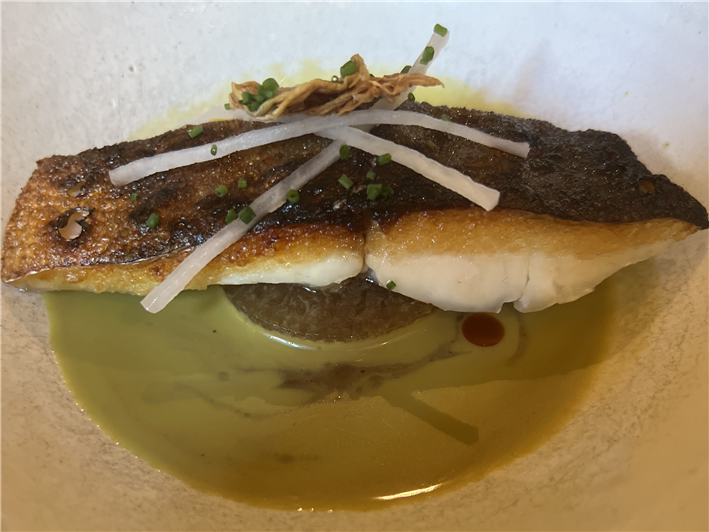
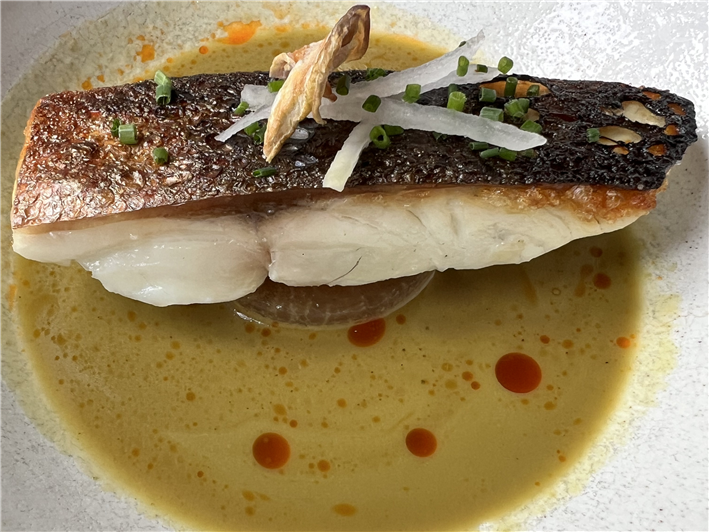
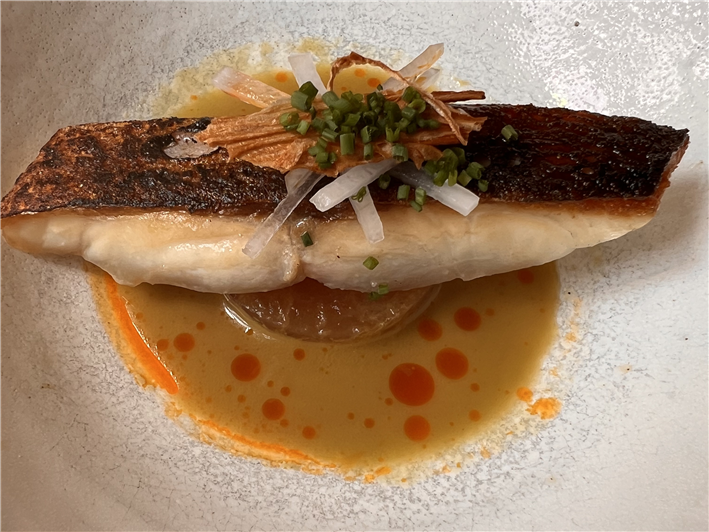
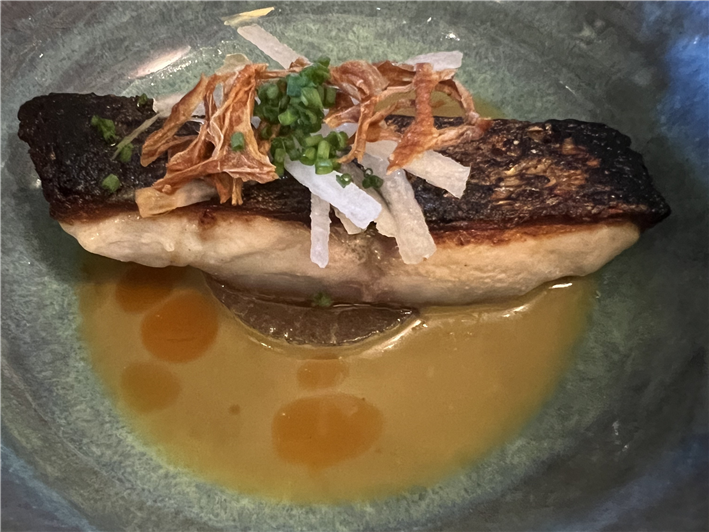
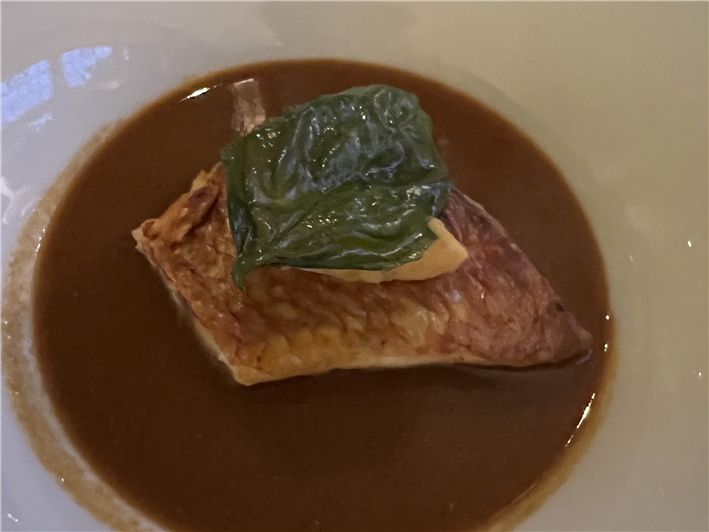
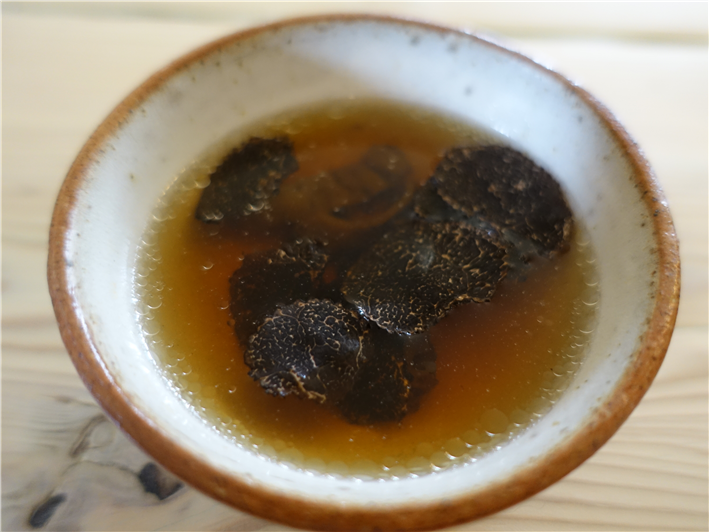
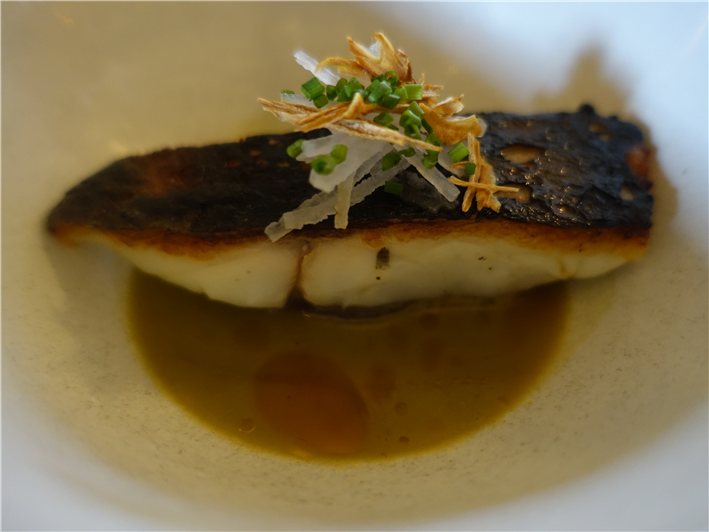
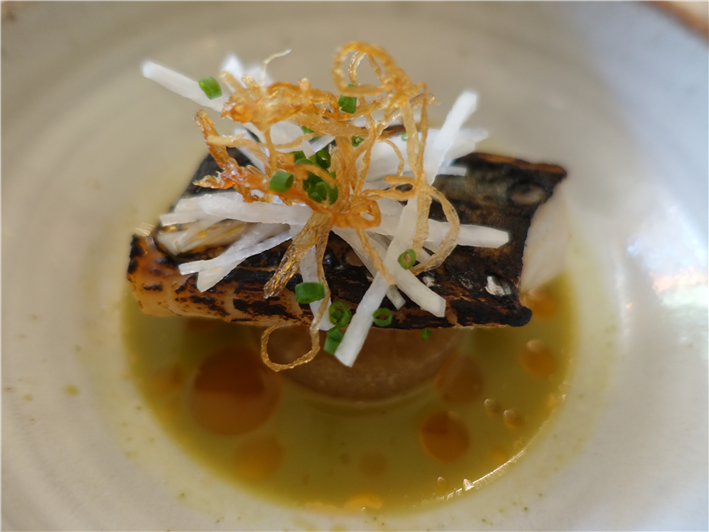
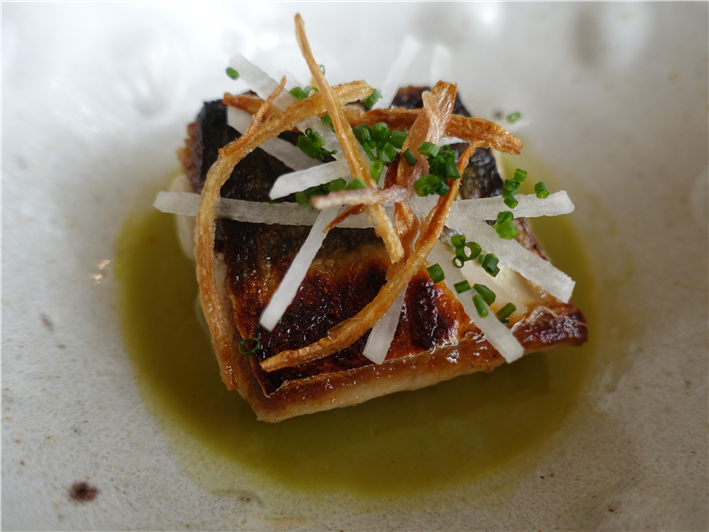
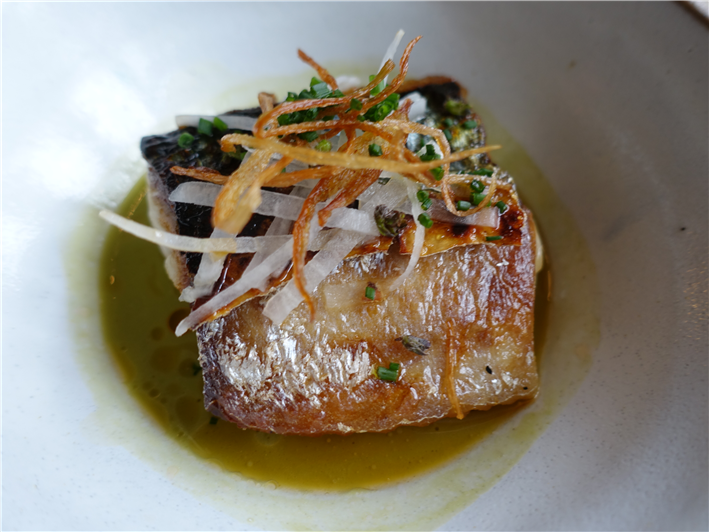
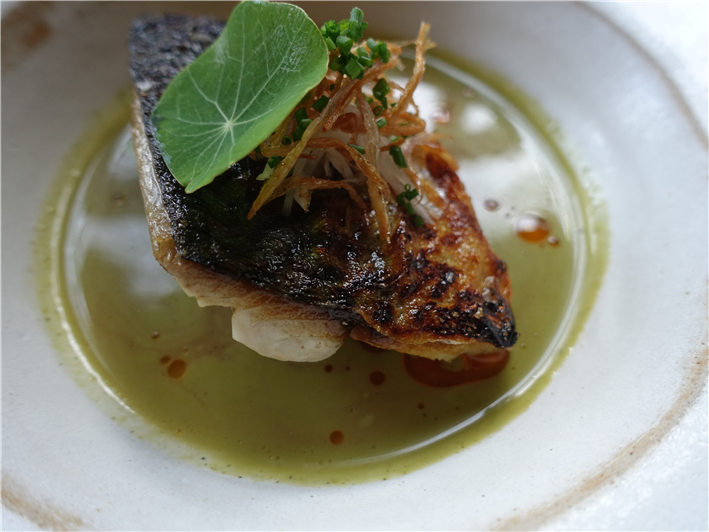
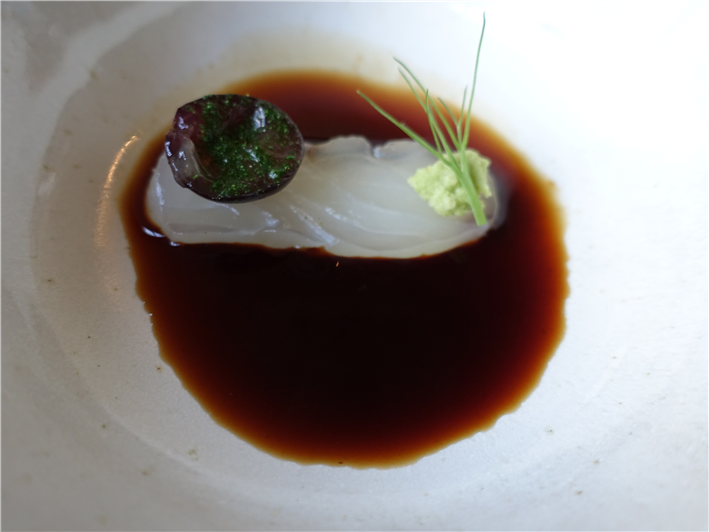
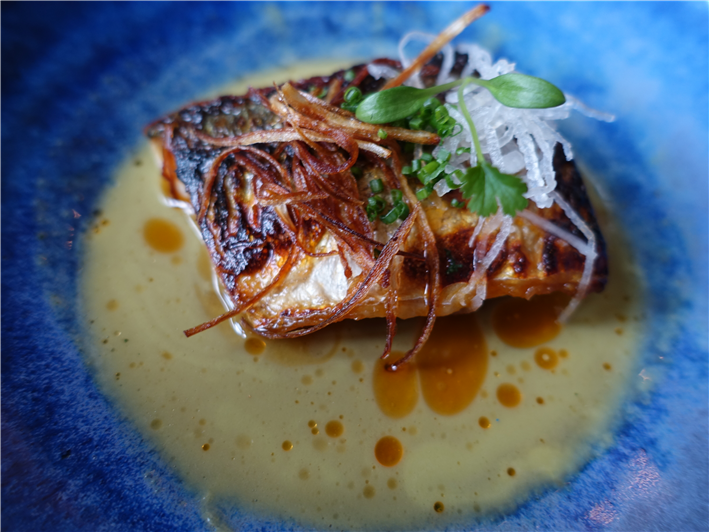
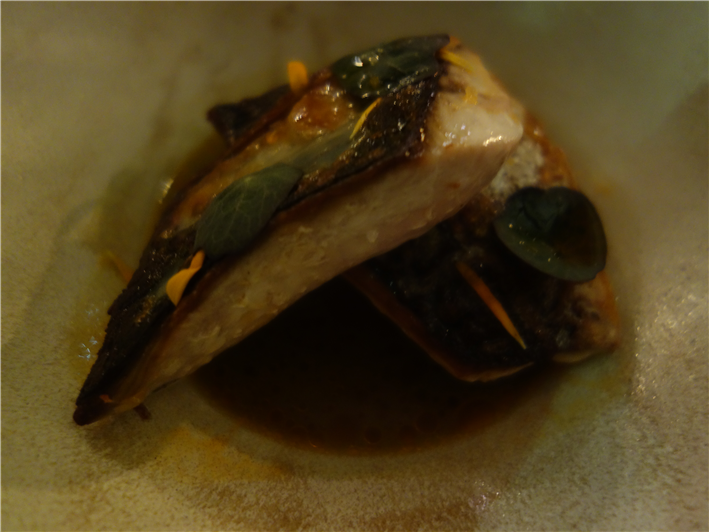
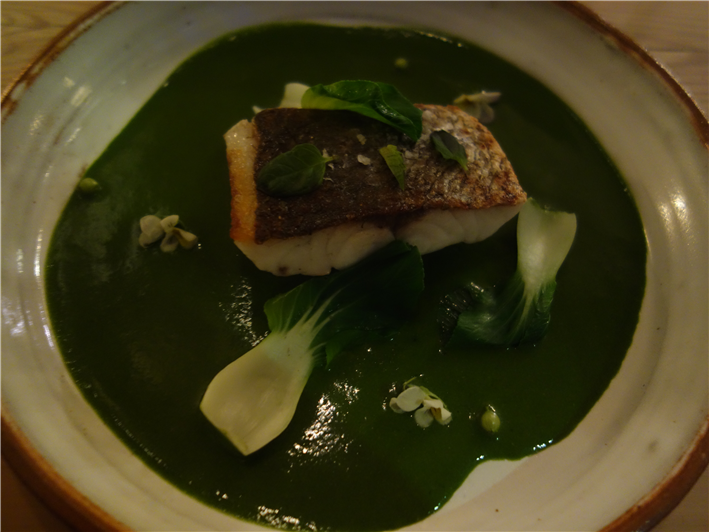
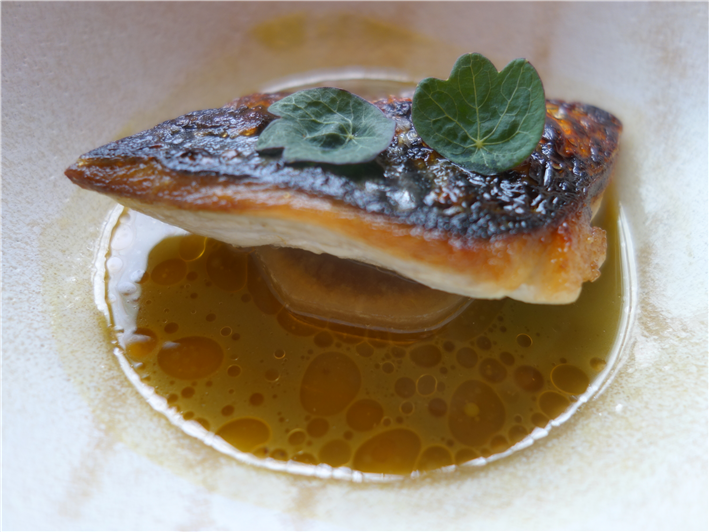
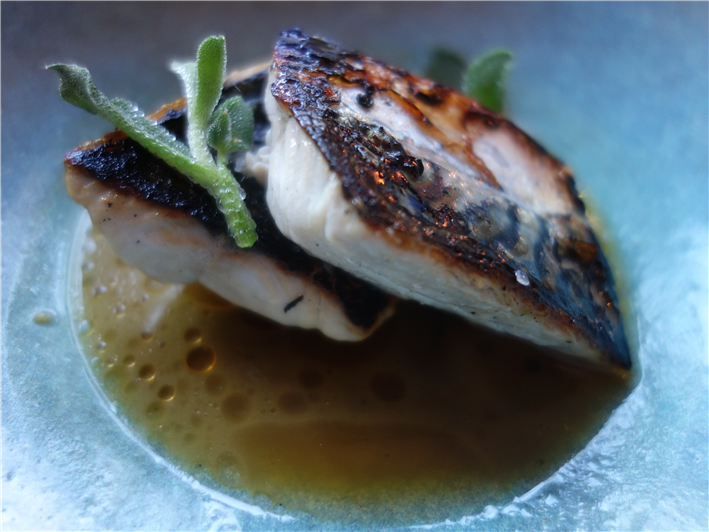
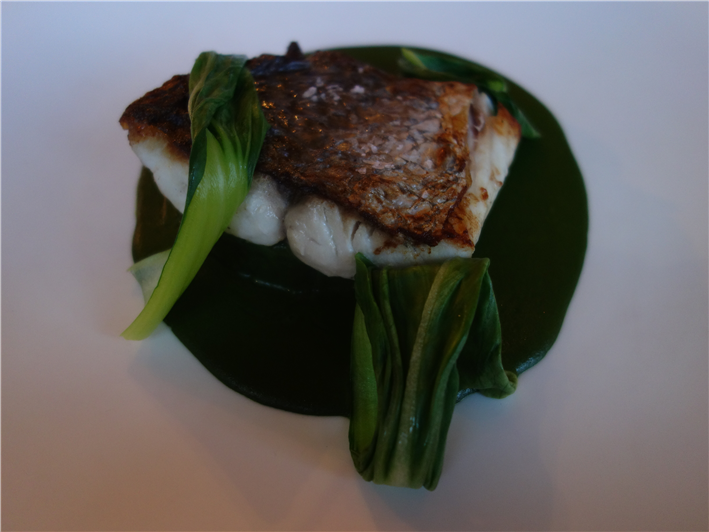
The first formal course of the meal was one that is a signature for the restaurant, charred bream with radish, ginger and champagne sauce. The dish was inspired by a visit to Japan by the chef in 2012. Originally the dish used mackerel but these days it uses bream, since the bream skin works better in the dish. The skin is aged for five days using a Japanese technique, becoming finely charred. The fresh fish initially has its scales removed and is cleaned. The fish is washed with rice vinegar both inside and out, then hung by the tail in a fridge dedicated to this ageing process. The bream is charred in a pan and seasoned with a chilli oil made from local chillies and spices. This is added immediately after cooking, with a little incorporated into the sauce to finish. The daikon is prepared in a classic braised style with kombu, sake, bonito, and soy. The sauce is a type of cold dashi. Ken mentioned that temperature is key to preserving freshness. During blending, the process must not exceed thirty seconds, as any longer subtly changes the flavour profile. He explained that temperature also guides how the guest experiences each bite. Cold temperatures prevent ingredients from being overwhelmed; in some instances, hot sauces can mute aroma. Cold sauces allow the natural flavours, the umami of the dashi, and the purity of the fresh bream to come through more clearly. The bream is served with a simple salad of daikon, chives, and Roscoff onion, lightly fried until crisp. It is a glorious dish, the balance of the sauce superb, the fish itself having terrific flavour, and the texture of the skin is lovely. I hope it never leaves the menu (strong 17/20).
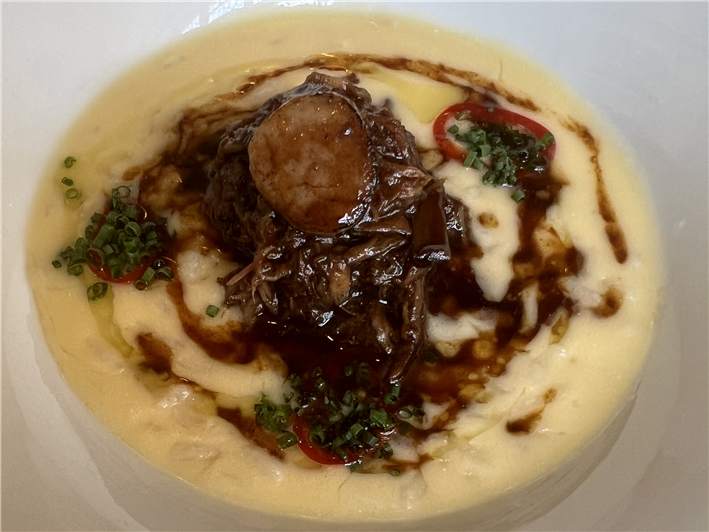
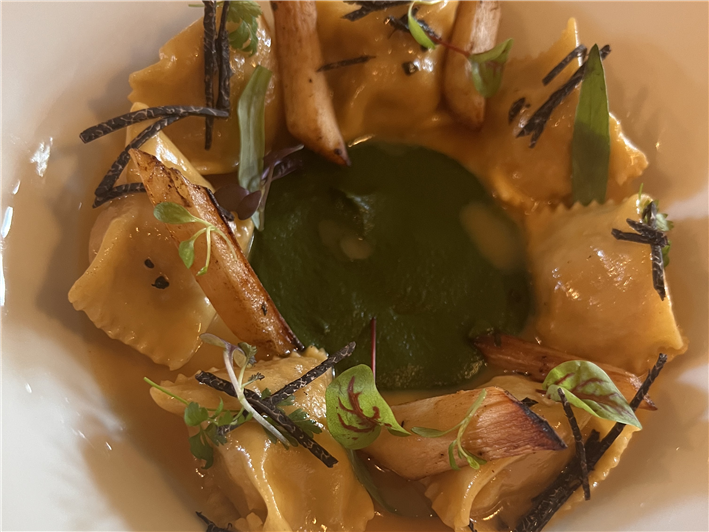
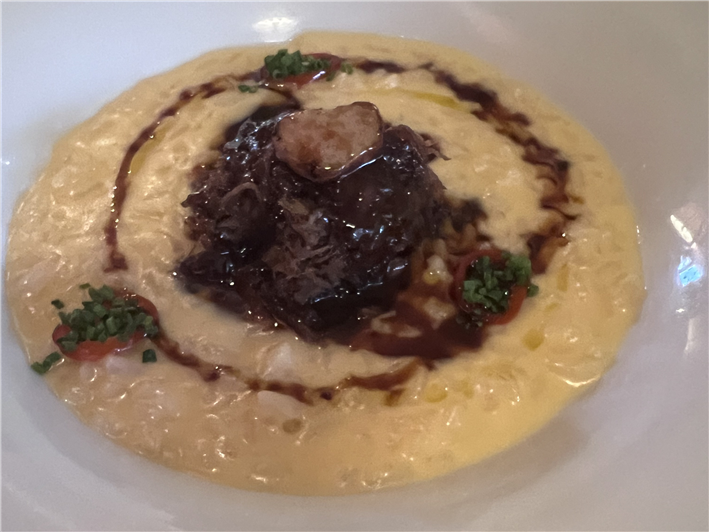
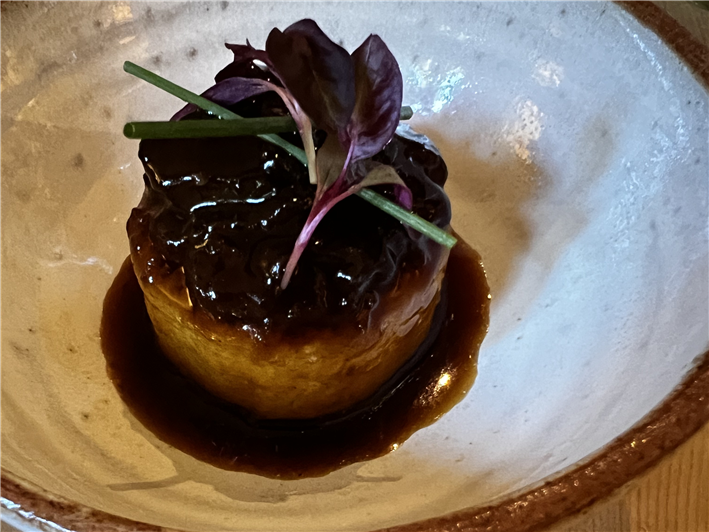
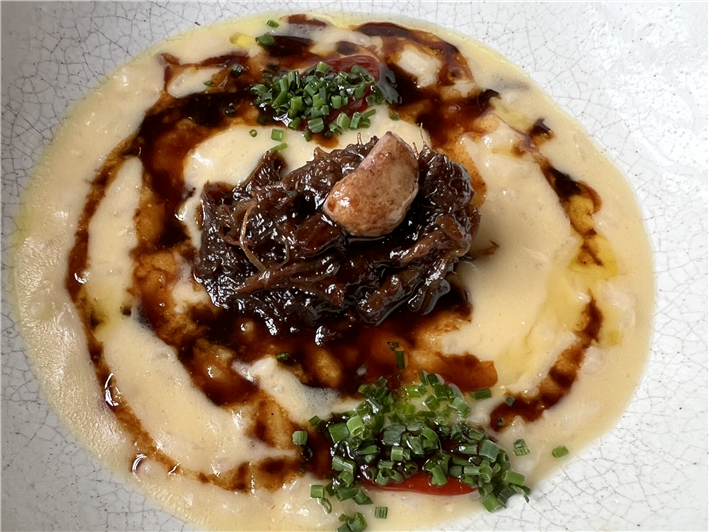
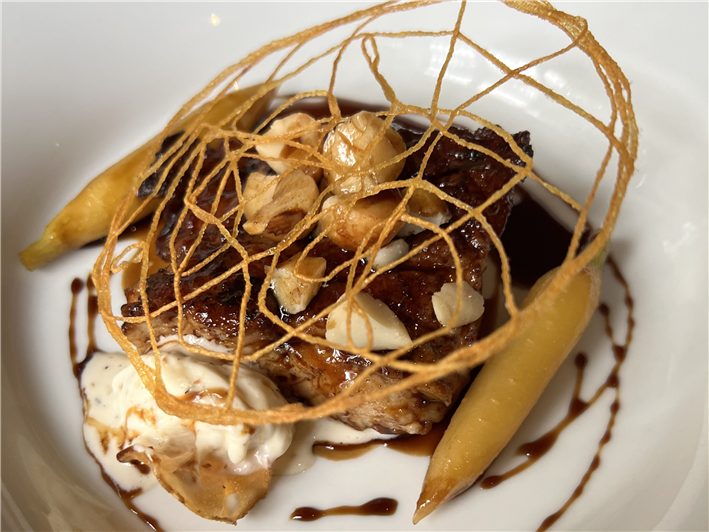
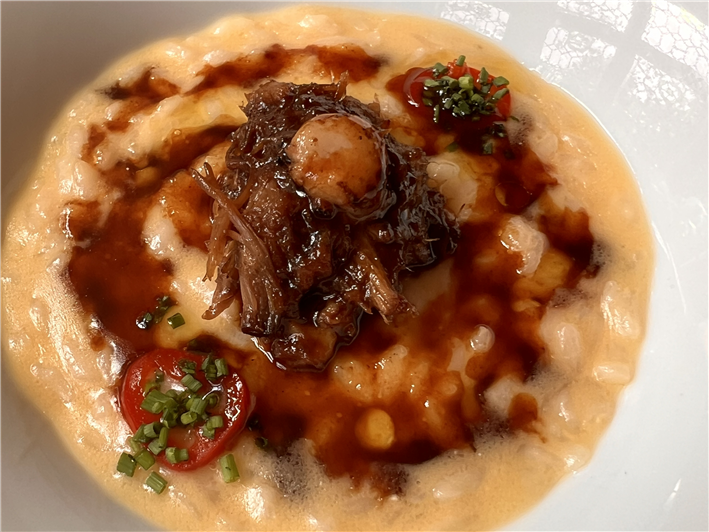
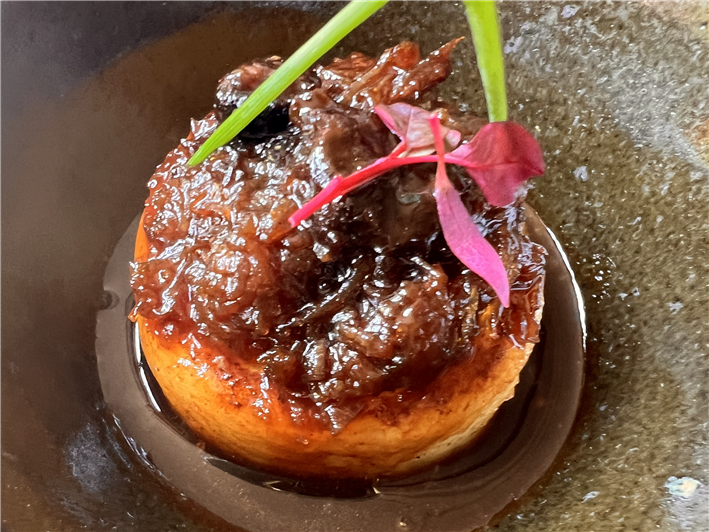
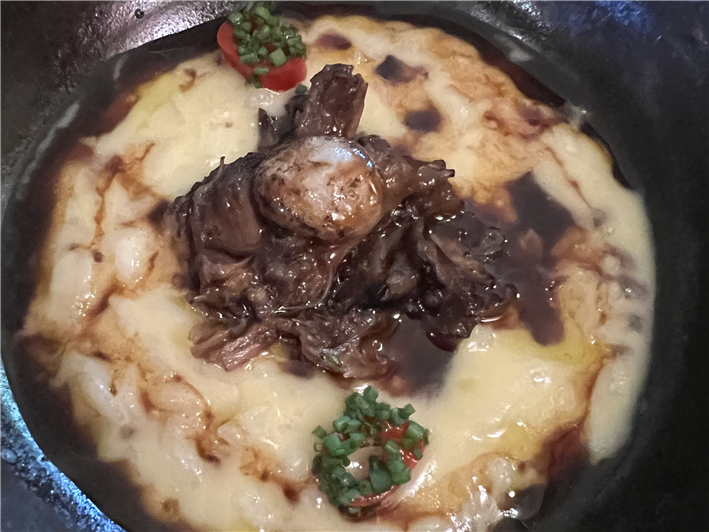
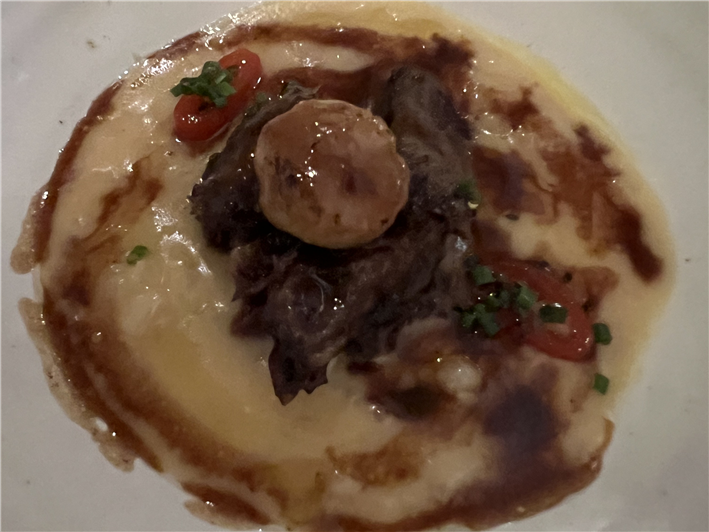
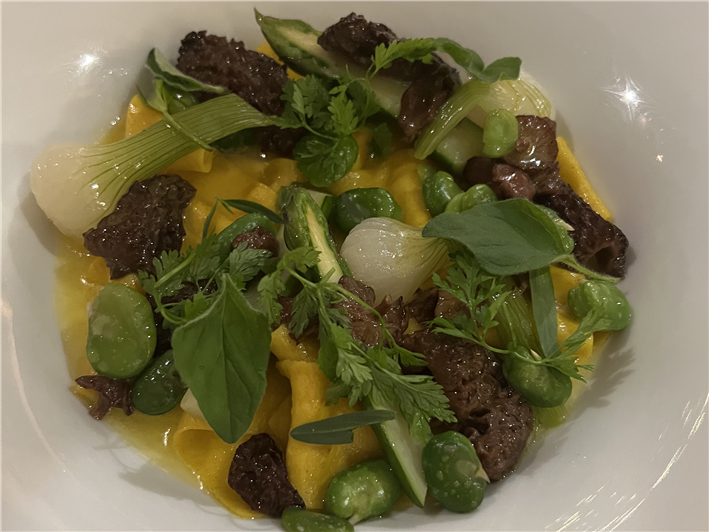
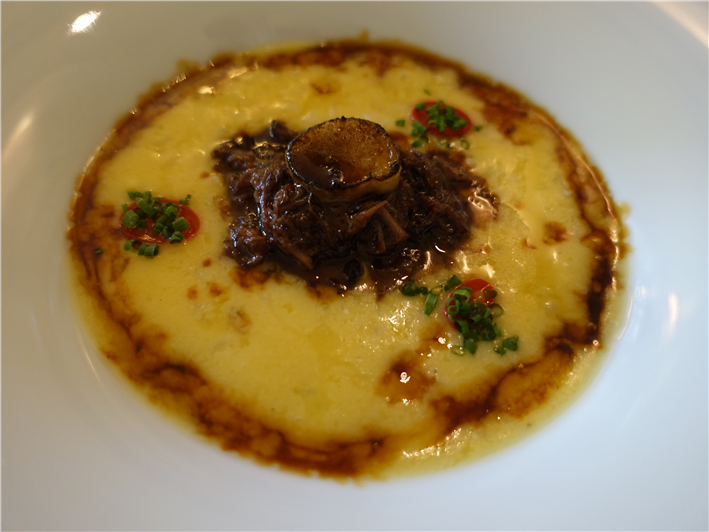
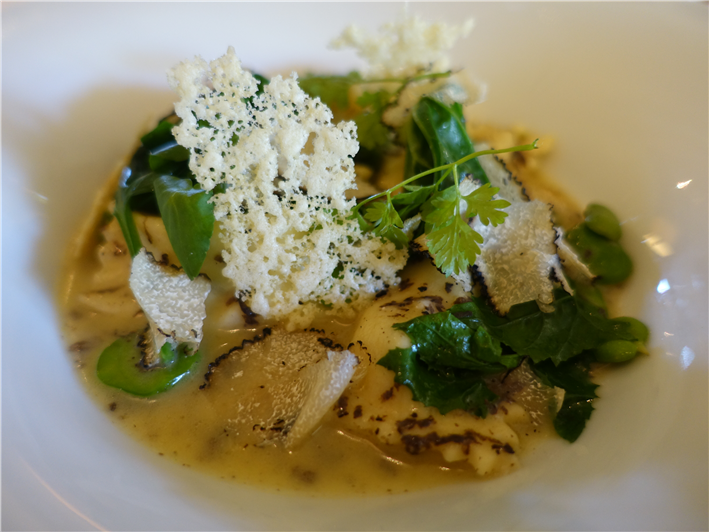
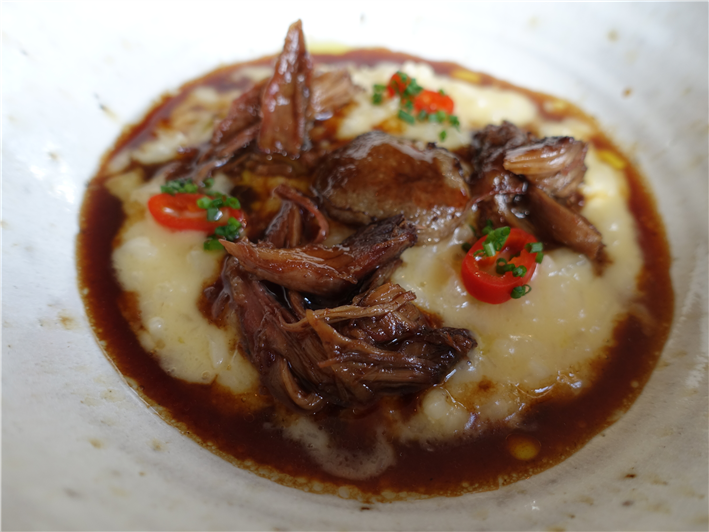
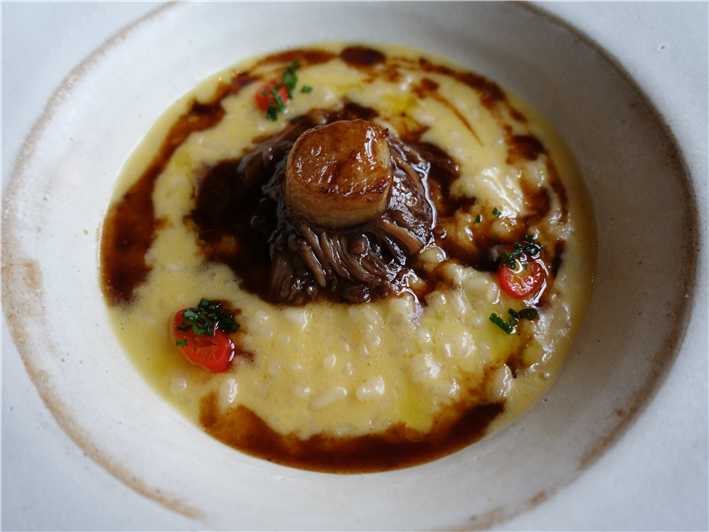
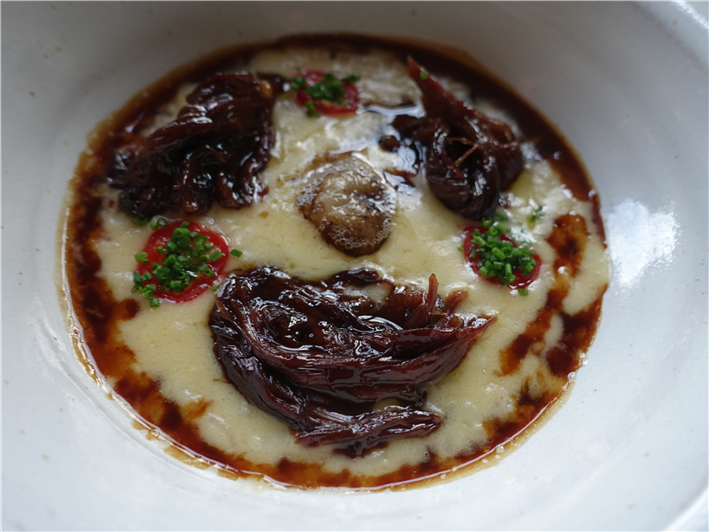
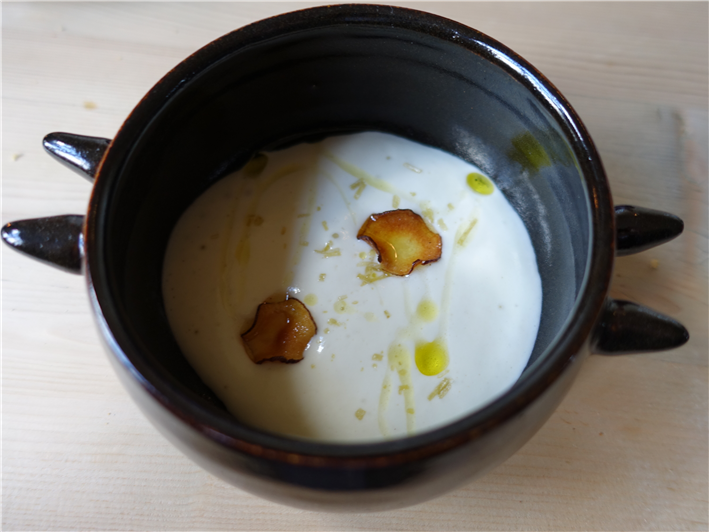
Next was oxtail risotto with bone marrow and pickled chilli. It was on the very first menu at the Dysart. The oxtail is marinated using the method Ken learned for Daube de Bœuf in France, with plenty of aromatics and red wine, for a minimum of three weeks in an airtight container, ensuring everything is fully submerged. The ingredients are then roasted except the wine, and braised slowly in veal remouillage (a mild second stock) overnight in the oven for fourteen hours. The meat is picked from the bones, and the stock is reduced with red wine, port, shallots, mushrooms, and tarragon to make a sauce that coats the oxtail. This process mirrors the method for a classic Bordelaise sauce, which is finished with bone marrow. The rice is seven-year-aged carnaroli from Acquarello, one of the best varieties for risotto. It is cooked with an extremely fine brunoise of fennel and shallots and white wine. Traditionally, a meat stock would be used, but here they use a lighter Japanese-style dashi made with herbs carefully removed from their stalks, lemon rind, lemon juice, and chilli. The risotto is finished with butter and Parmesan, with pickled chillies added for brightness and piquancy. It is finished with Manni Grand Cru extra virgin olive oil, from Tuscany, one of the finest olive oils in the world. As I have written before, this is a superb dish, not as heavy as it may sound, with the touch of chilli just cutting through the richness (strong 17/20).
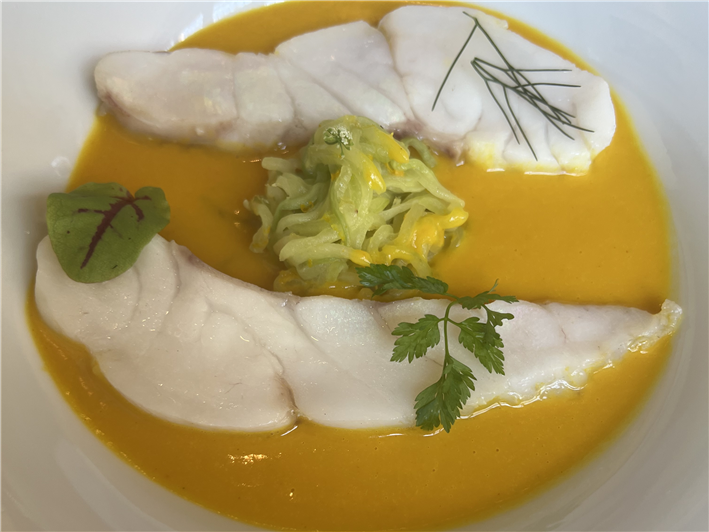
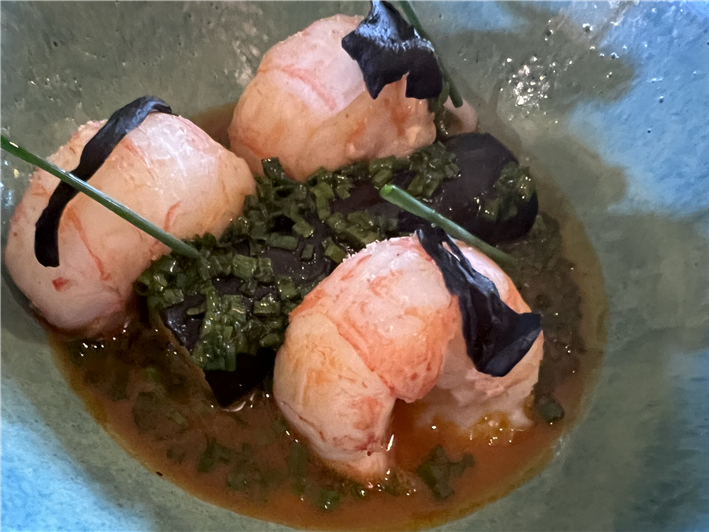
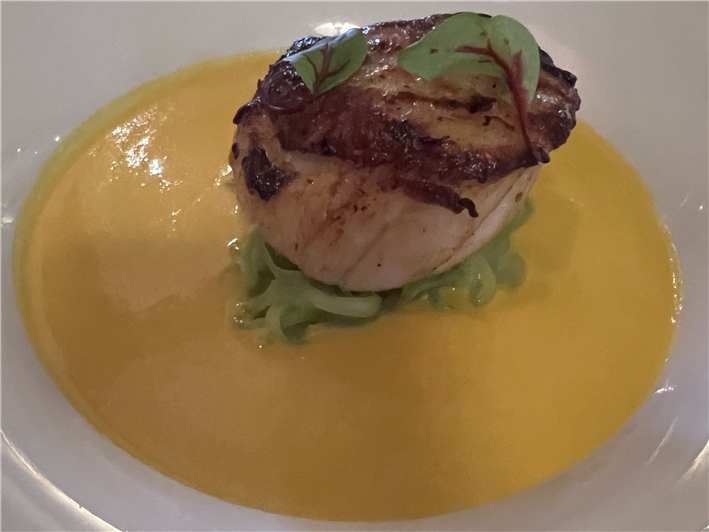
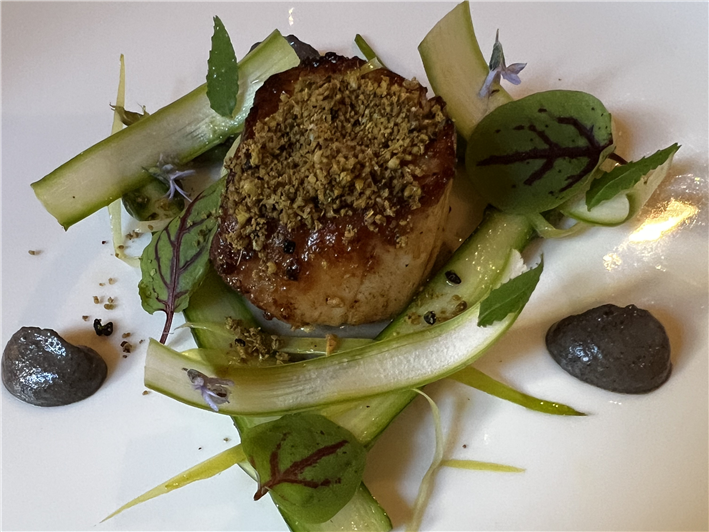
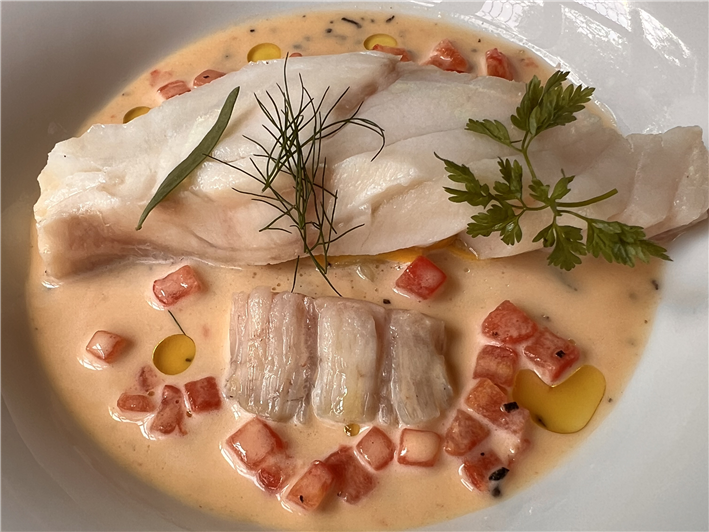
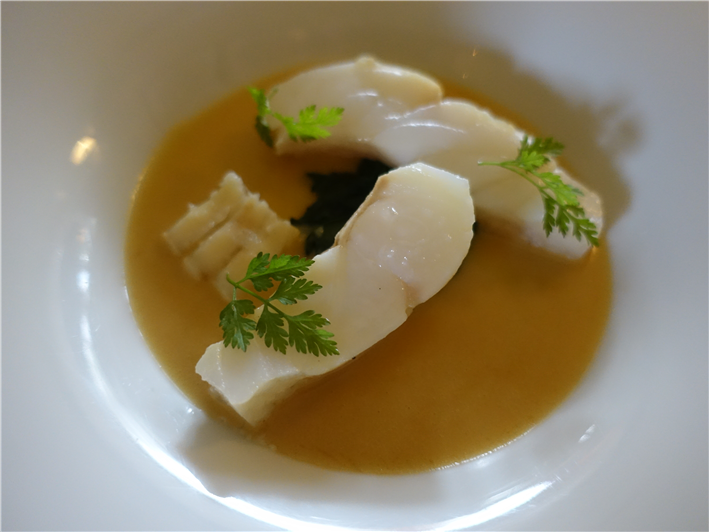
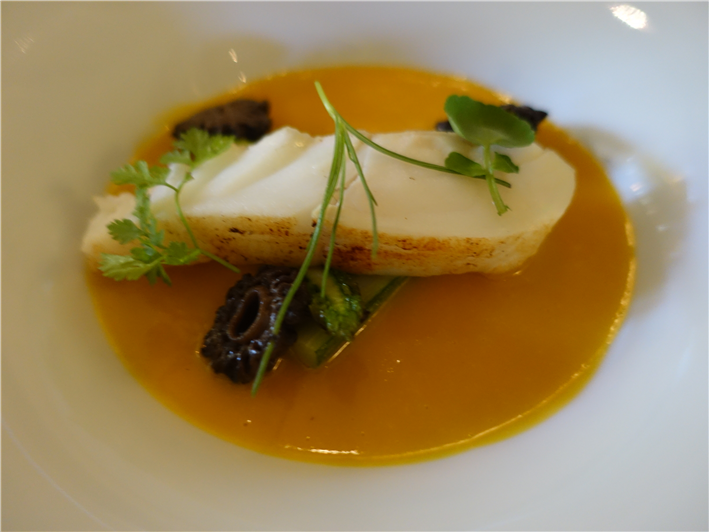
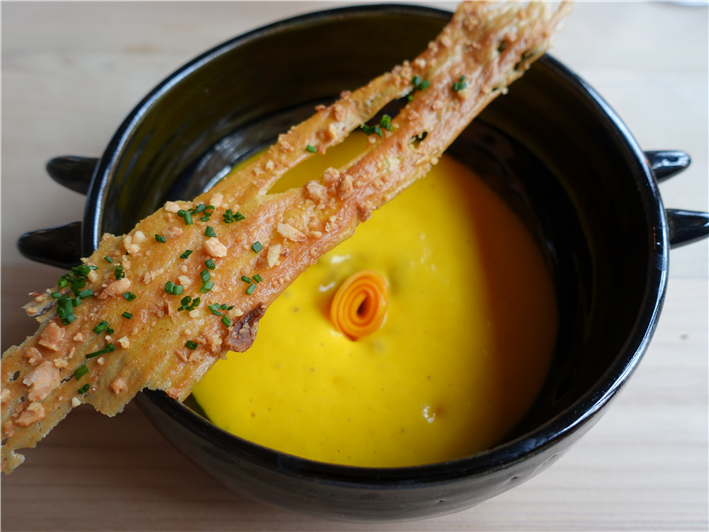
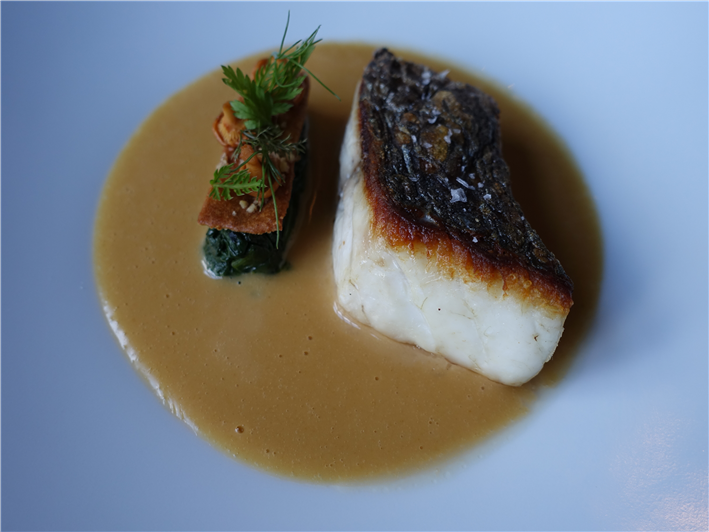
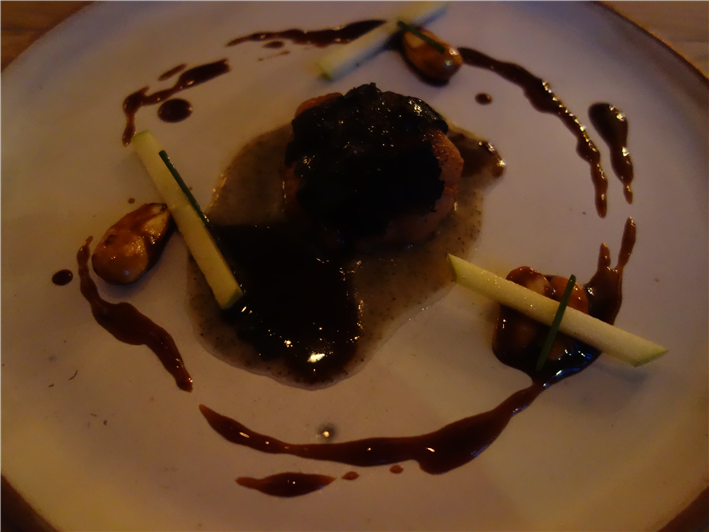
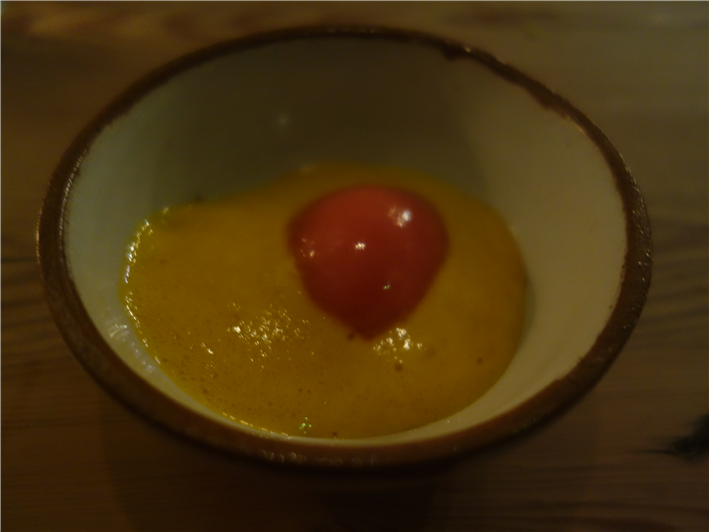
Next was a jumbo Orkney scallop with cucumber and orange julienne and a turmeric sauce Jacqueline. The scallops are hand-dived Orkney scallops, their natural sweetness, flavour, and texture reflecting the purity of the seas and the rough waters around Orkney. The scallop meat is firmer than many, as the scallops must work hard to navigate these turbulent waters. They reach around ten years of age at the size used here, with just a few available each month. The chef explained that it is important not to remove too much of the natural liquid from the scallops. They are quickly washed in iced water once removed from the shells, then roasted in clarified butter in a skillet. They are finished with their natural juices, which form a glaze and enhance their sweetness. The flavours in the dish are kept minimal to complement the scallop’s natural taste. It is served with quickly cooked cucumber julienne finished with butter and orange zest, retaining a little texture. Sauce Jacqueline is based on the original recipe by Louis Outhier, the French chef best known for his two-star restaurant L’Oasis in La Napoule, near Cannes. Traditionally, it is made by slowly sweating carrots, leeks, and celery in butter, then reducing with white wine and Vin Jaune de Château-Chalon before adding chicken stock. The chef here adds fresh turmeric for its vibrant, earthy, peppery notes, along with locally grown yellow Hungarian hot wax chillies. The sauce is blended with high-quality Jersey butter and seasoned with kombu vinegar, a technique he learned at Tetsuya during sauce preparation. The scallop had superb flavour, its natural sweetness coming through, and worked really well with the carrot-based sauce, the hint of spice avoiding any over-sweetness in the dish (17/20).
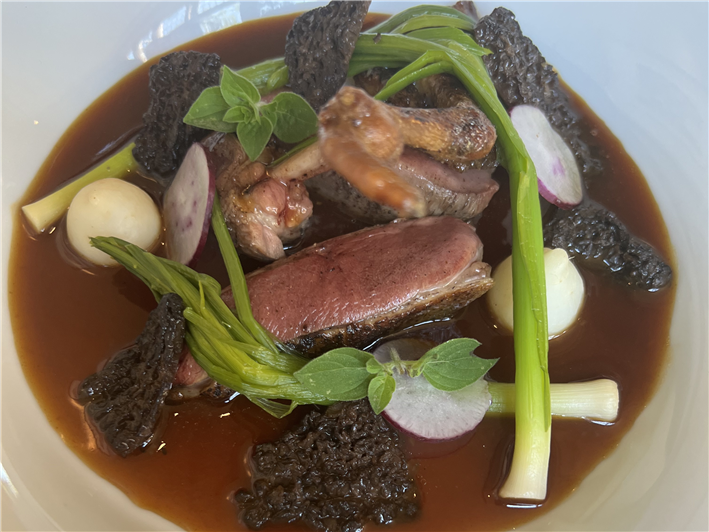
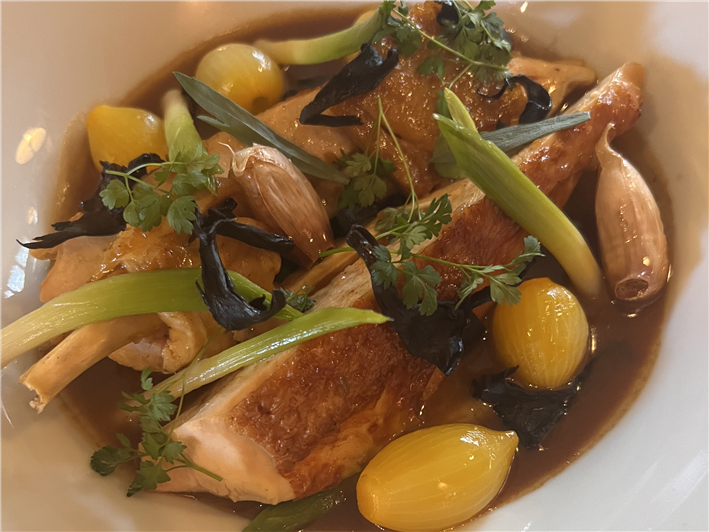
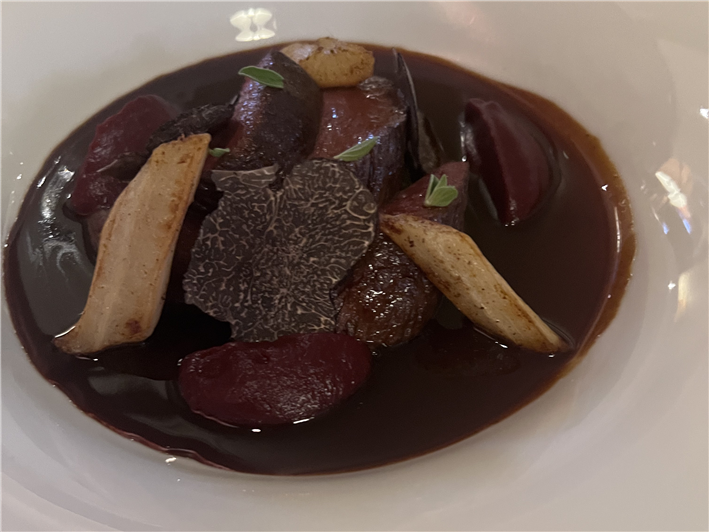
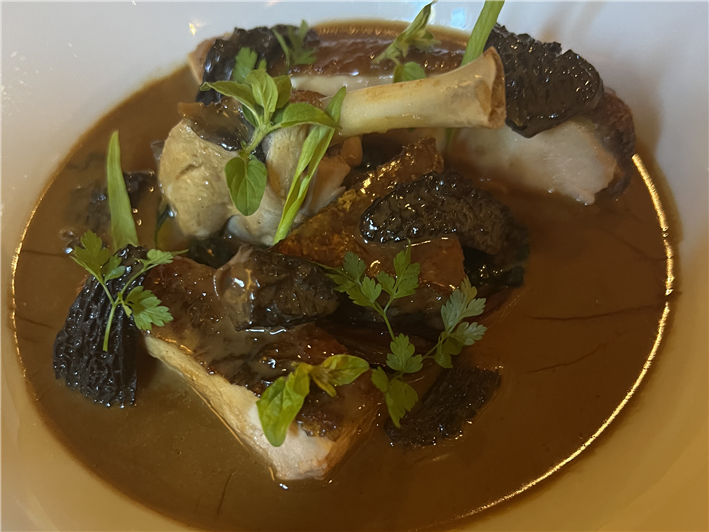
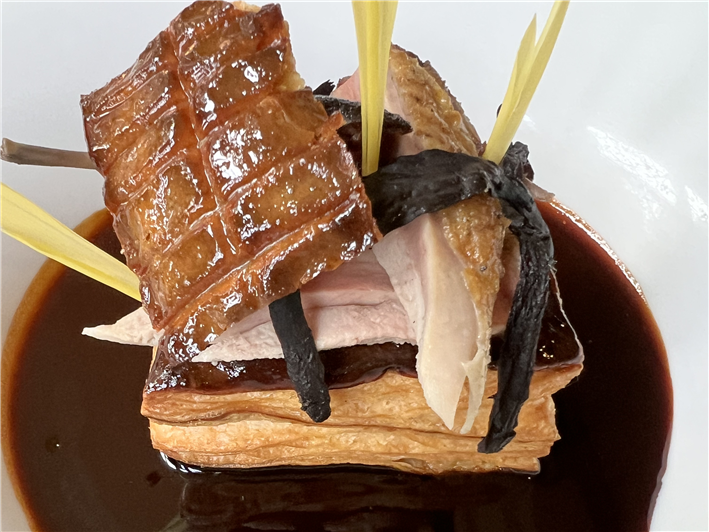
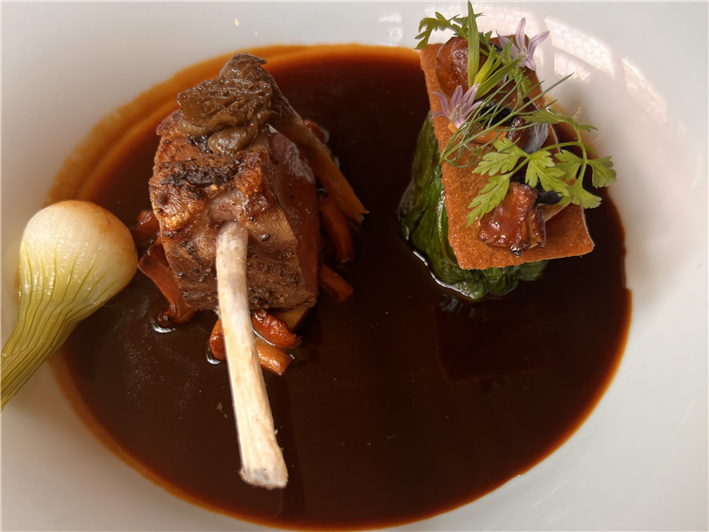
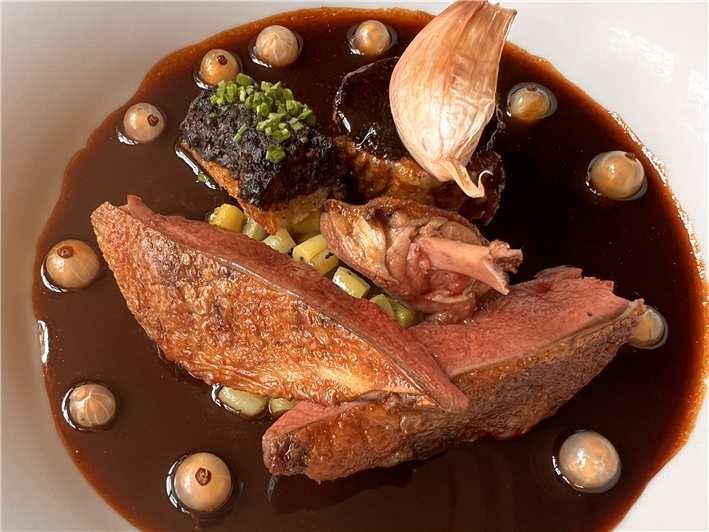
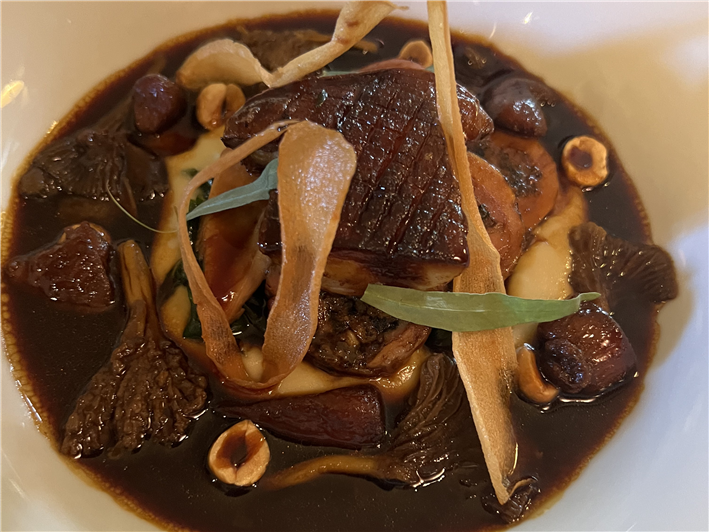
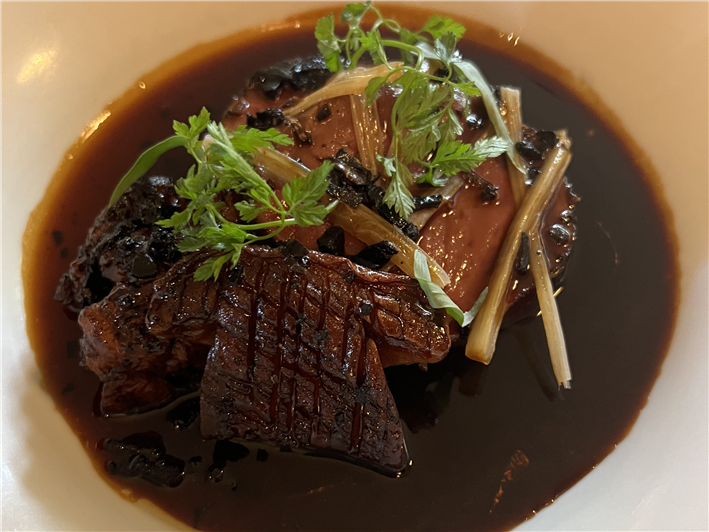
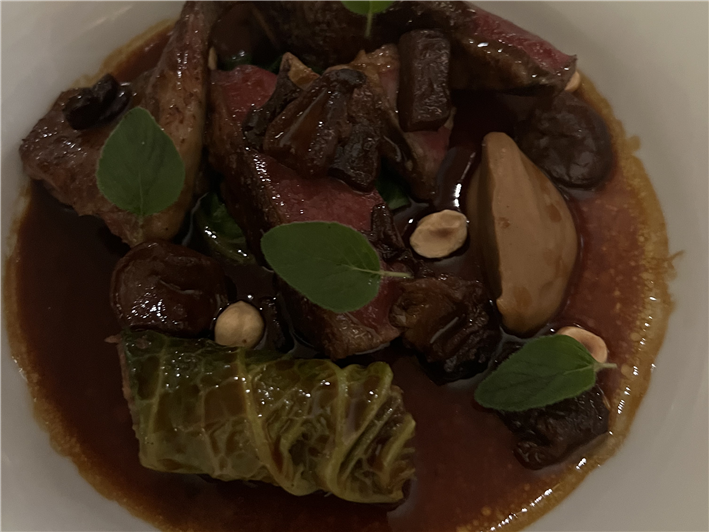
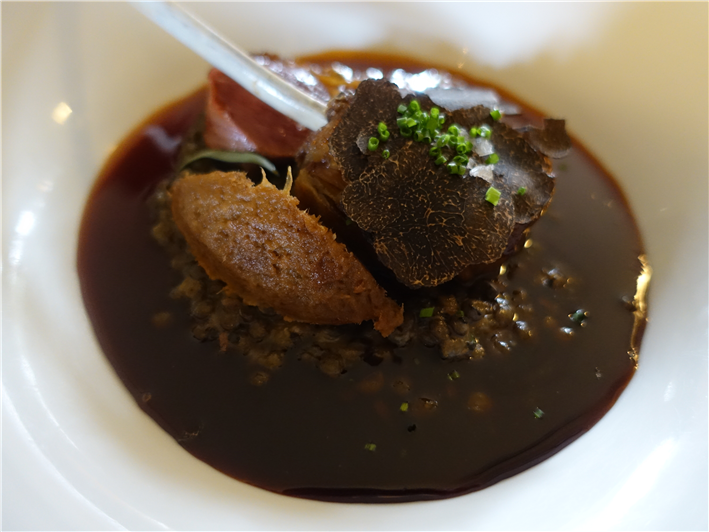
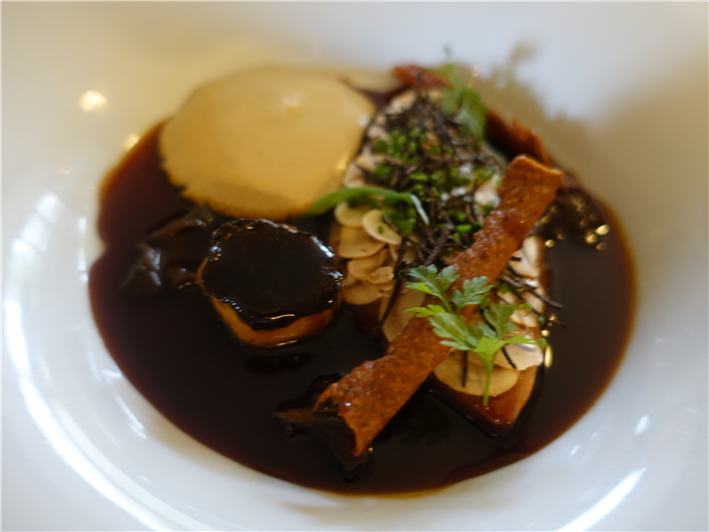
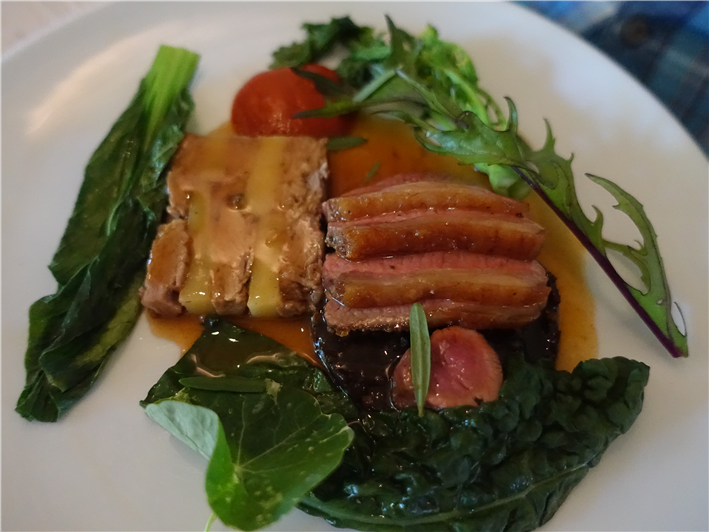
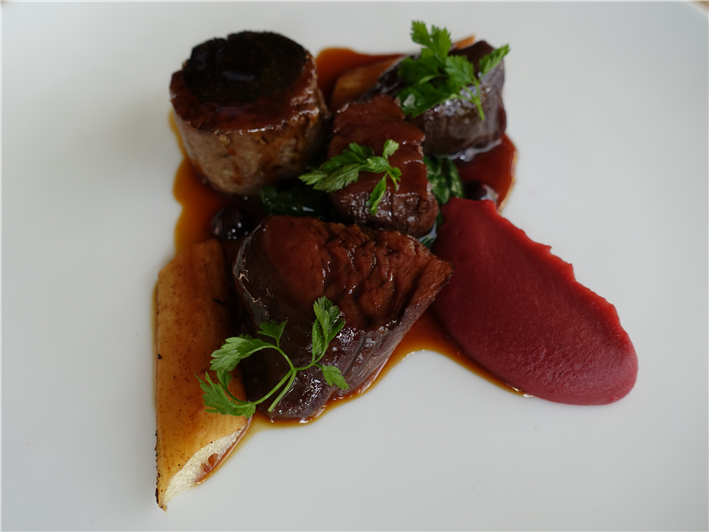
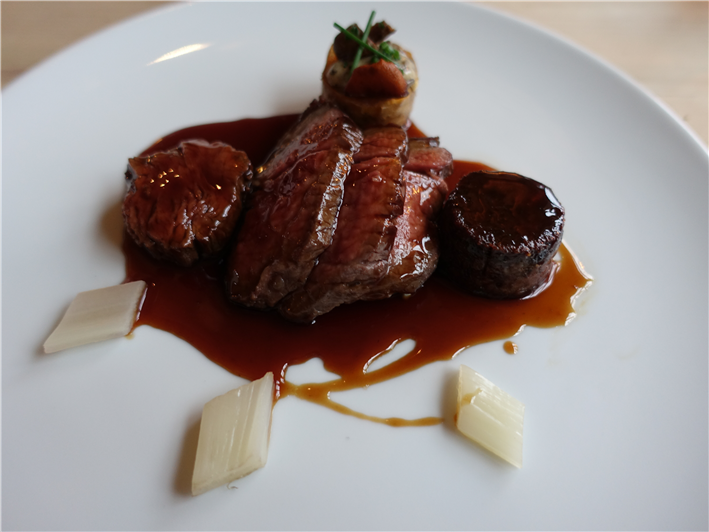
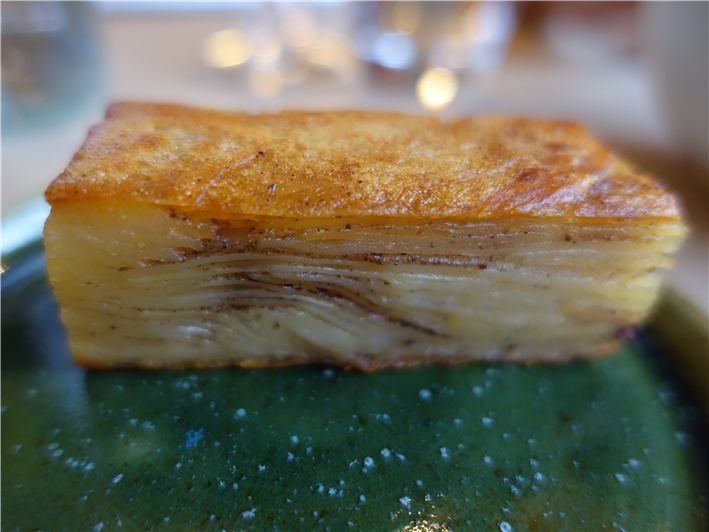
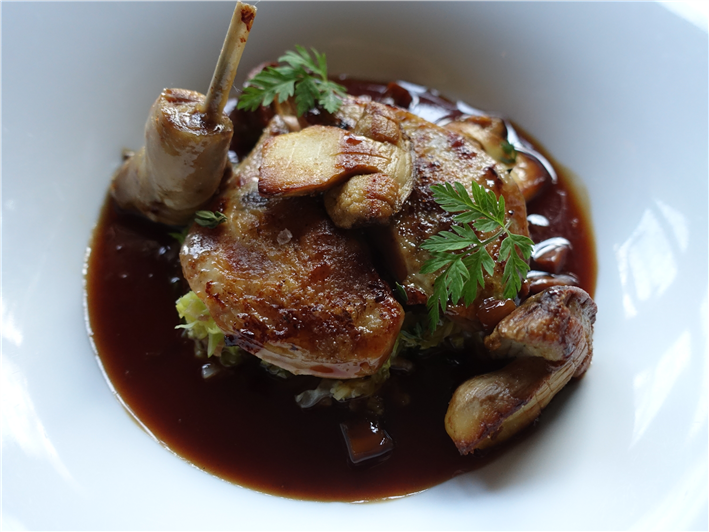
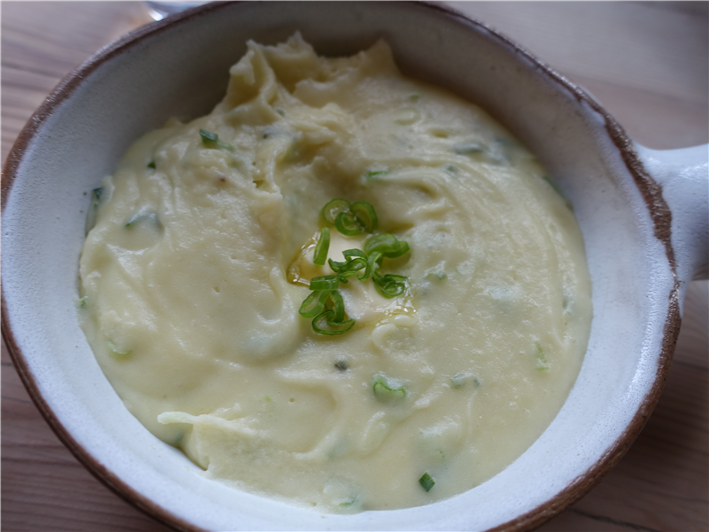
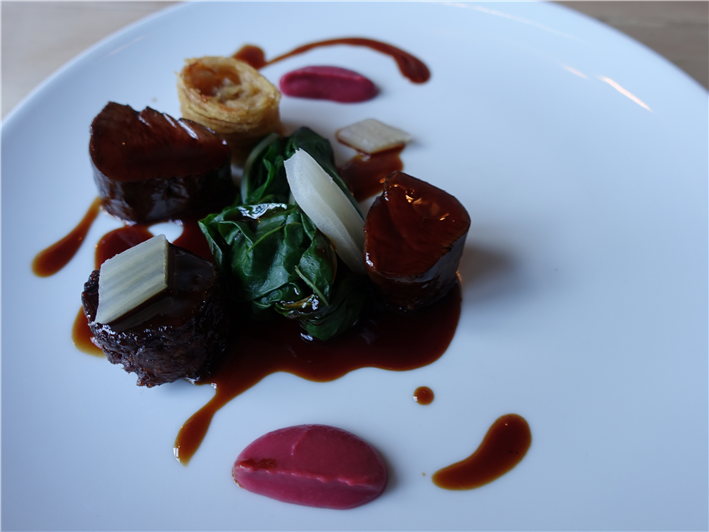
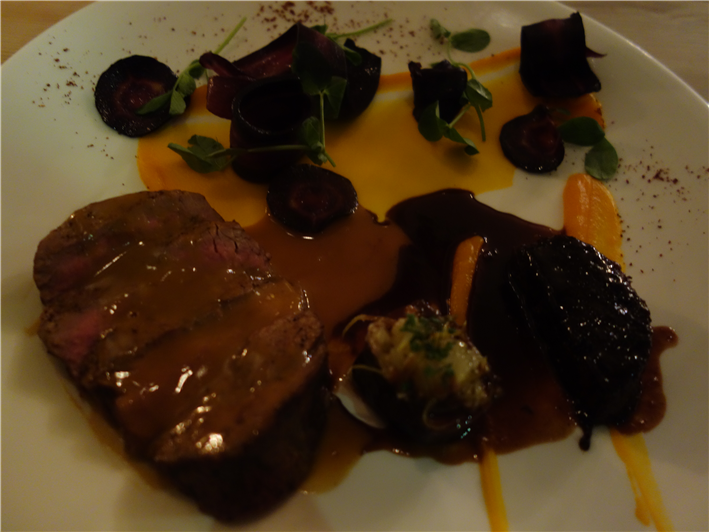
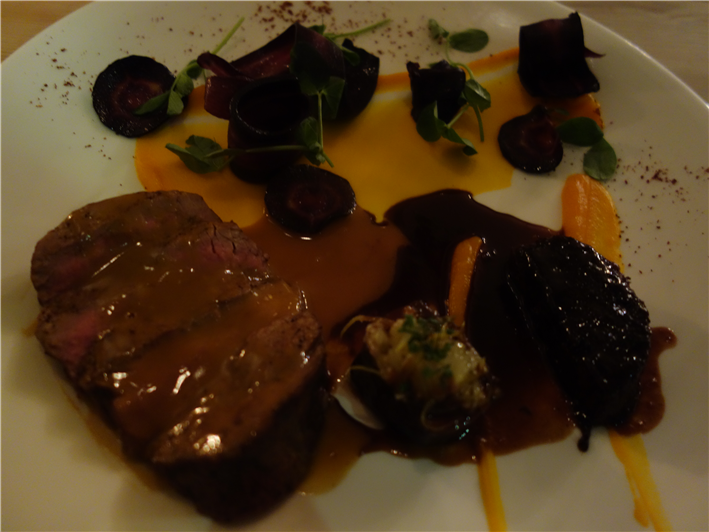
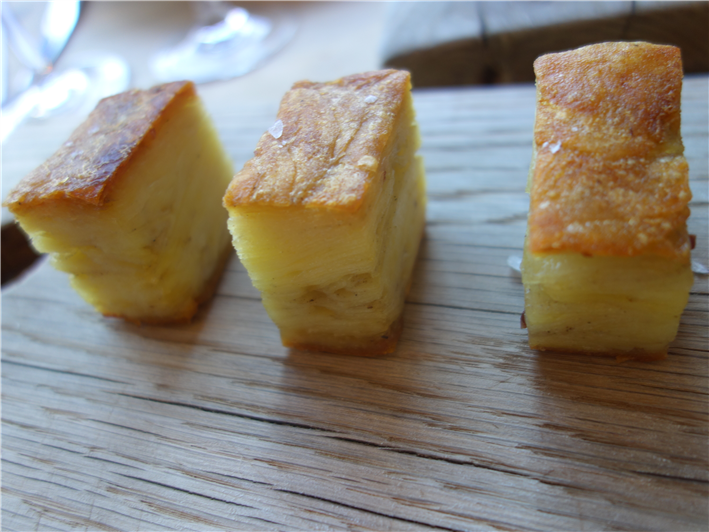
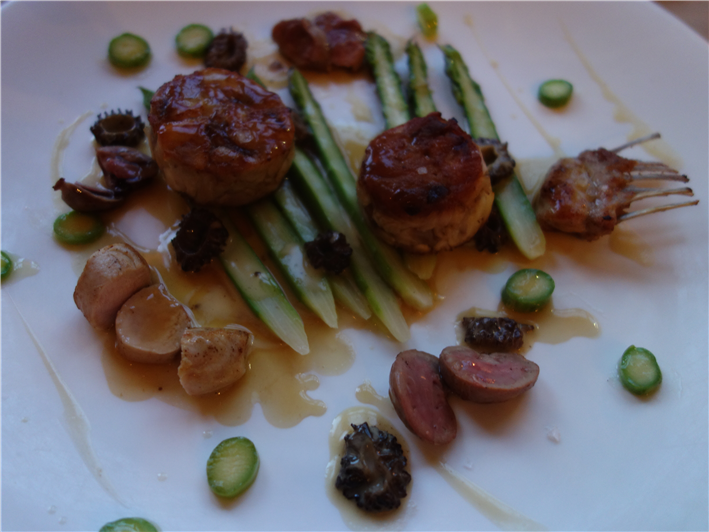
The final savoury course was sika deer with cardinal puree, salsify and grand veneur sauce. The venison loin is aged for three weeks, brought to room temperature, quickly seared, and butter-basted with herbs and garlic. It is constantly basted throughout the cooking process and lightly smoked before serving. The cardinal purée is one that chef Ken learned while working in France. It reflects the winter larder: beetroot, chestnuts, apples, Brussels sprouts, and Roscoff onions, slow-cooked in brown butter under a lid in the oven, then blended. The salsify is first cooked à blanc, in water with lemon, flour, and salt, which gives it acidity and lifts the flavours of the dish. The venison is served with a classic grand veneur sauce incorporating roasted game bones for depth of flavour. The veal sauce base takes over a week to make. The vegetable base follows a precise three-day process: shallots, carrots, and garlic on day one; celery and fennel on day two; tomatoes and sherry vinegar on day three. The bones, using oxtail, beef shin, calf’s foot, lamb bones, and veal bones, are each roasted separately, which is crucial to the final flavour. The stock is then cooked, the fat is set and removed, and reduced while constantly skimming. To finish the sauce, a gastrique is made by caramelising muscovado sugar, deglazing with sherry vinegar and high-quality balsamic vinegar, and adding a blend of peppercorns including Kampot, Malabar, cubeb, and Tasmanian pepperberry. This is reduced to a glaze, combined with the game stock, reduced again, and passed through a sieve. The sauce is finished with a little chocolate and redcurrant juice for freshness. The dish is served with a classic potato fondant side dish, with slow-cooked onion, roasted ceps, and locally sourced marjoram. This sika deer dish was exceptional, the meat beautifully cooked, with the star element for me being the grand veneur sauce. It is rare in London to encounter old-school, classical sauce-making. Many restaurants these days just buy in pre-bought bottles of sauces from TRUEfoods, but not here. This dish is a great example of the virtues of a strong classical culinary education for chefs (18/20).
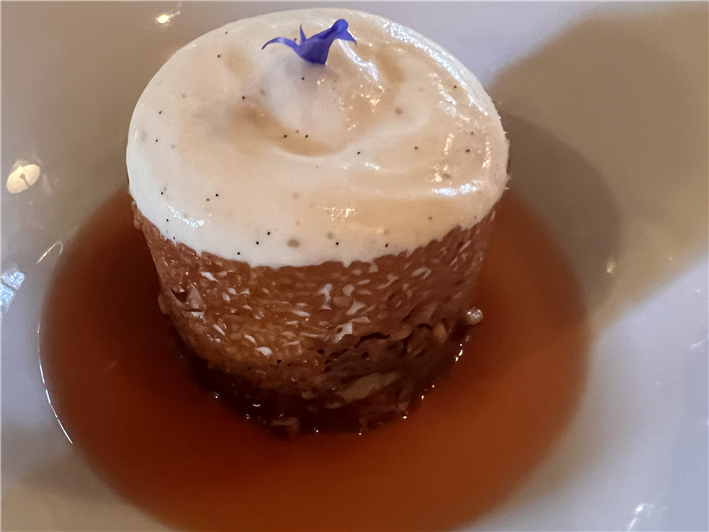
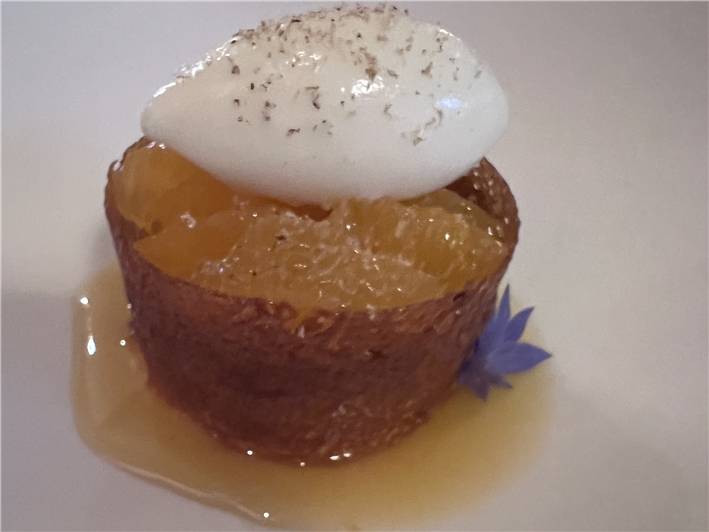
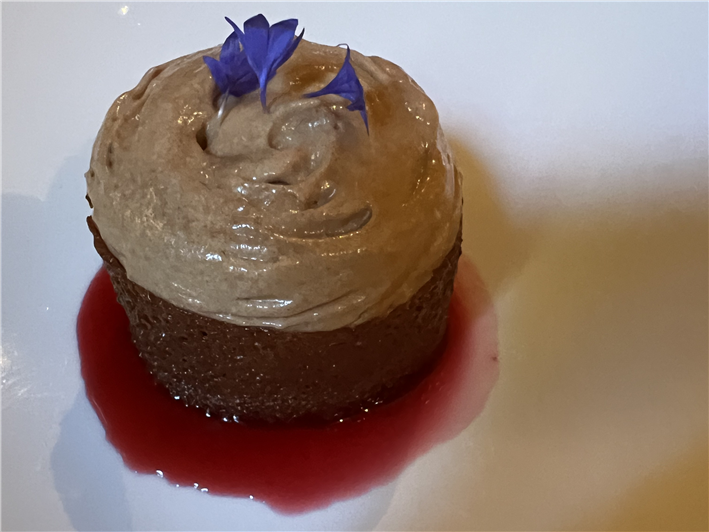
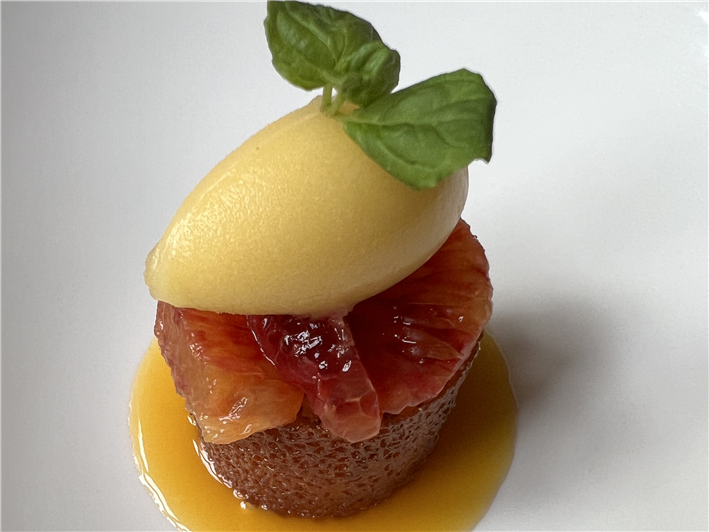
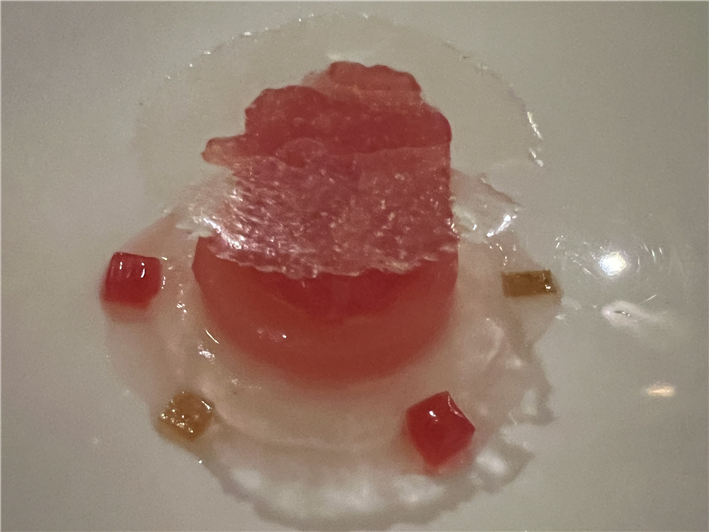
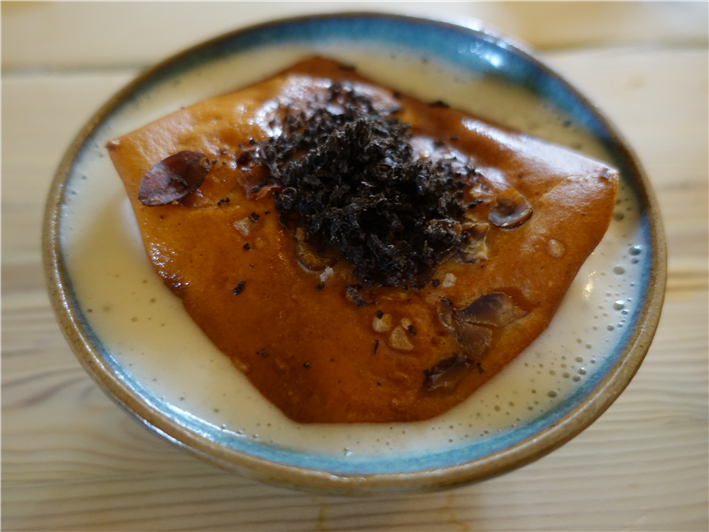
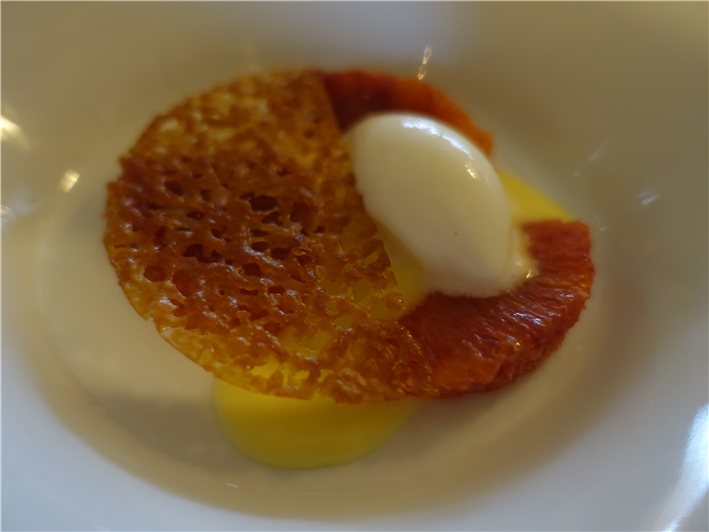
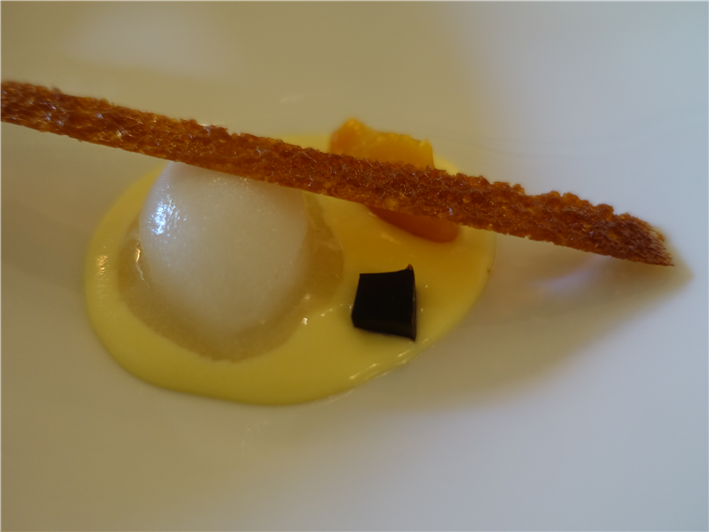
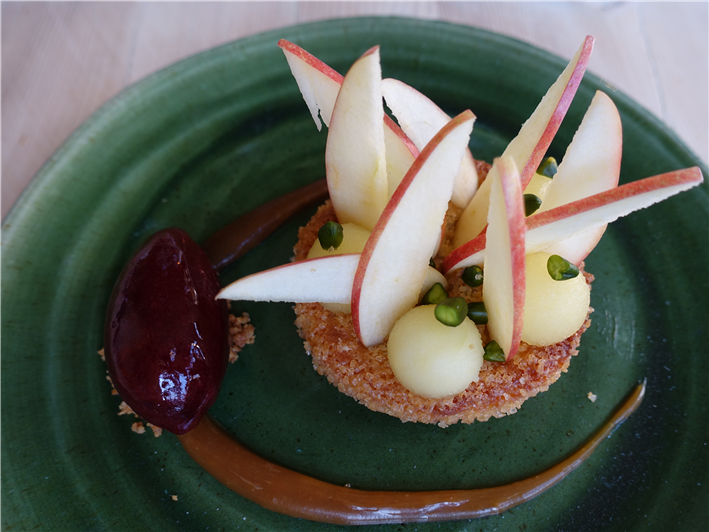
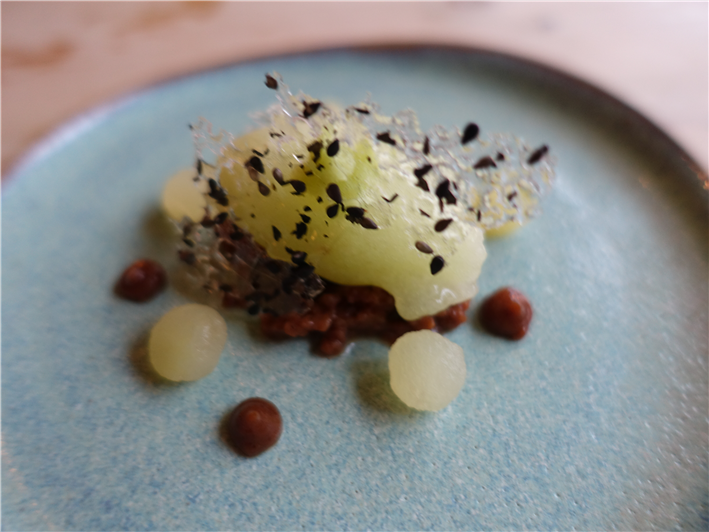
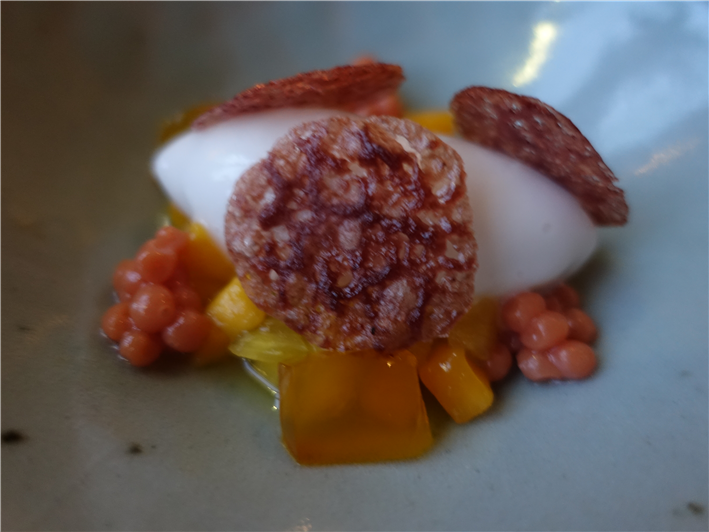
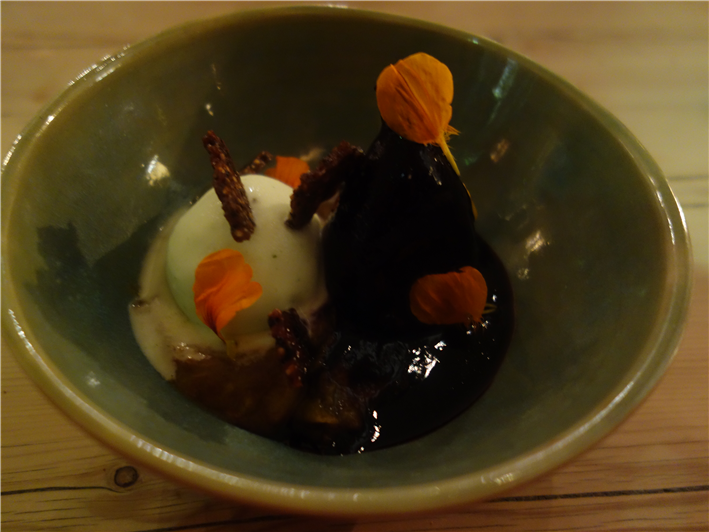
For dessert, we had fresh clementine with passion fruit curd, yuzu sorbet and nutmeg. This is based on a delicate orange dentelle tuile, filled with passion fruit curd made in the style of a lemon curd with eggs and butter. This is topped with roasted almond crumble, fresh high-quality clementines, and a quenelle of sorbet made with super-ripe yuzu and coconut. A ripe yuzu is used, contrasting with the greener, unripe yuzu that came with the caviar canape. The sauce is made from clementine juice seasoned with passion fruit for natural acidity. This initial dessert had very good freshness; I am very fond of clementine, which is not seen as often as it might be on menus in London (16/20).
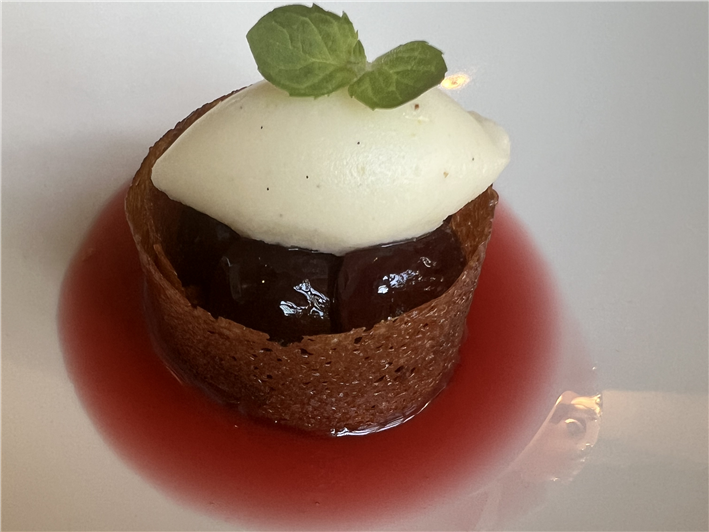
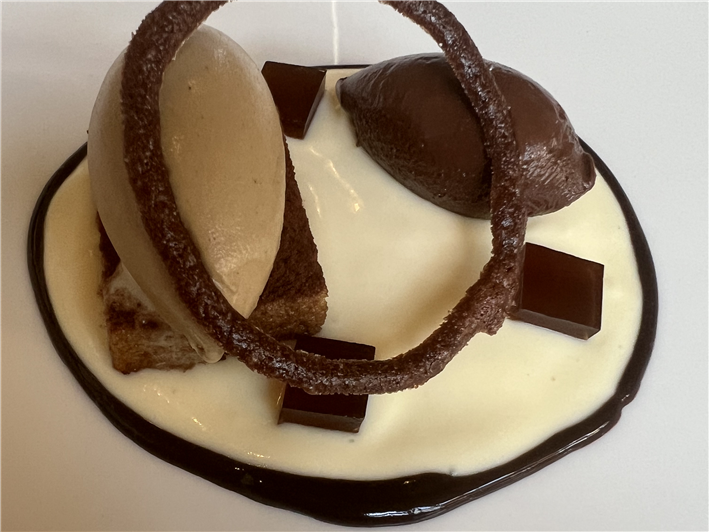
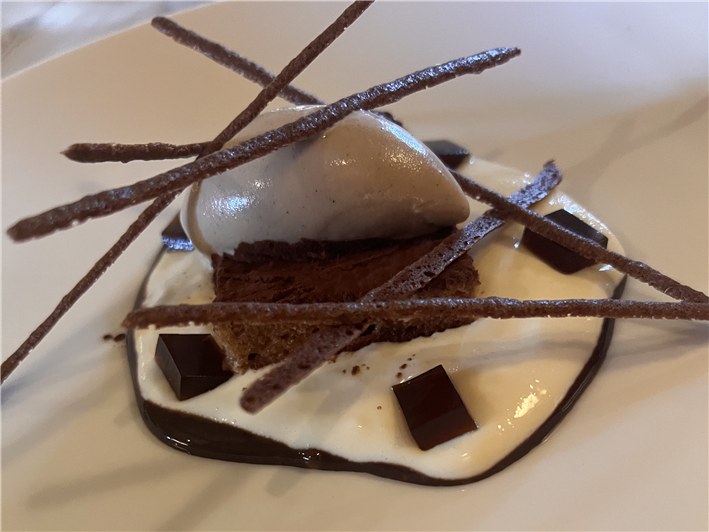
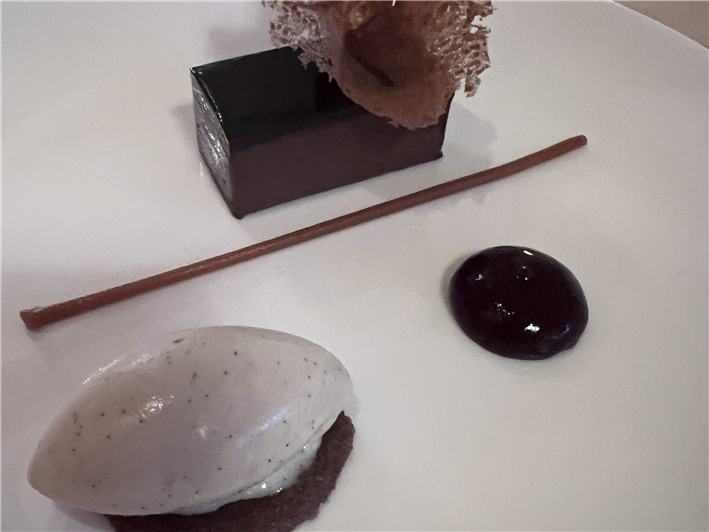
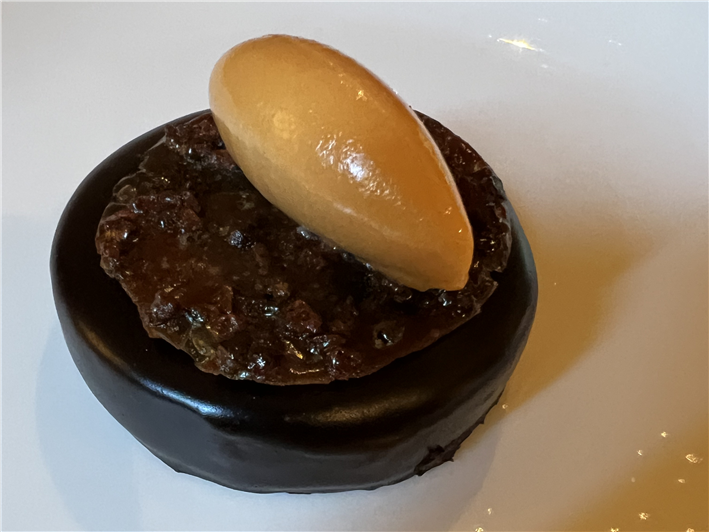
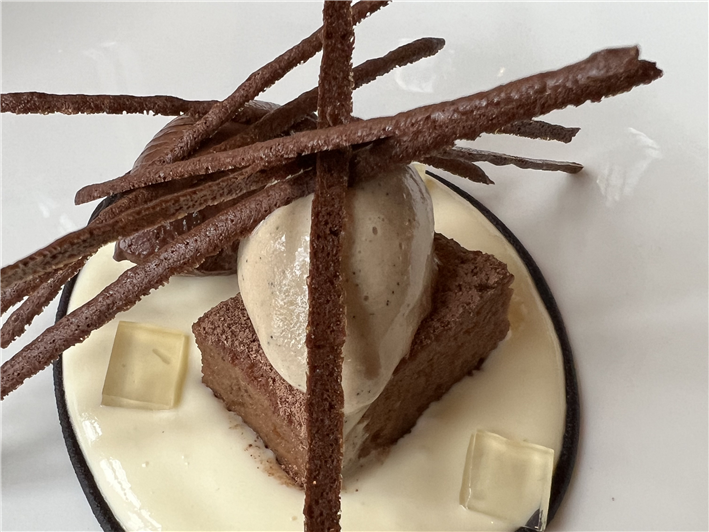
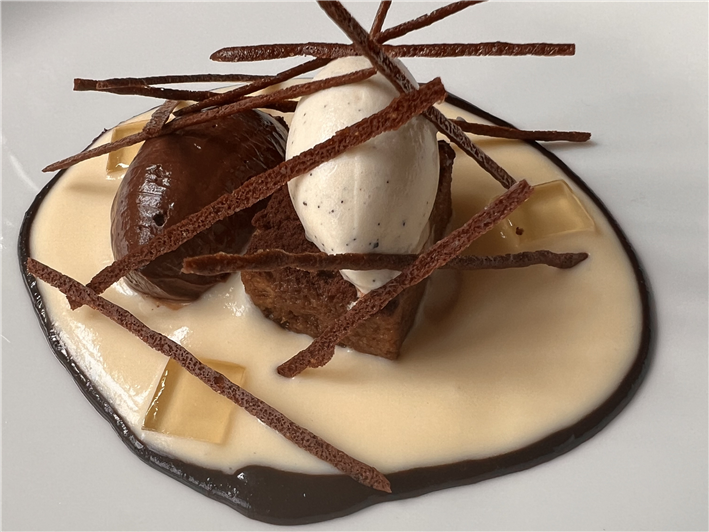
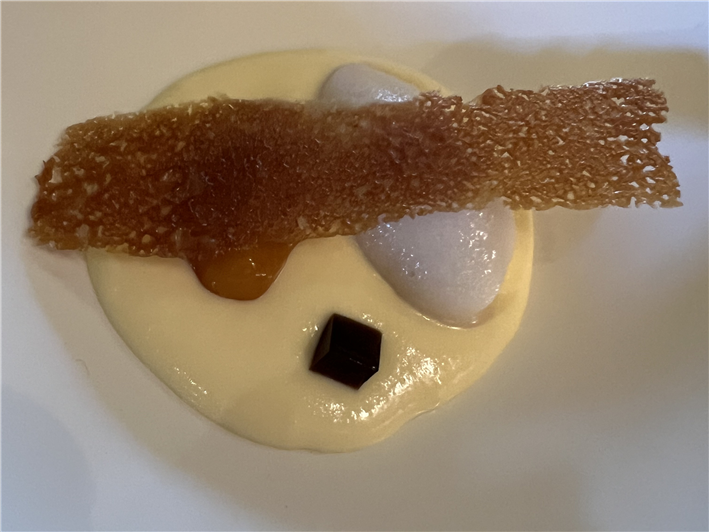
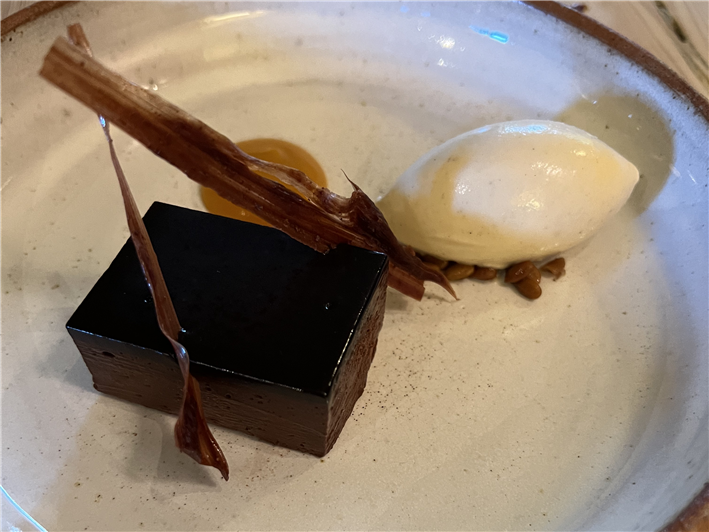
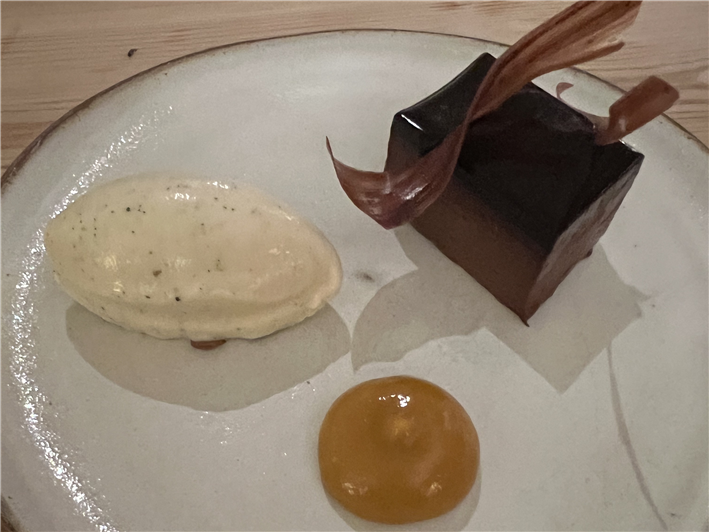
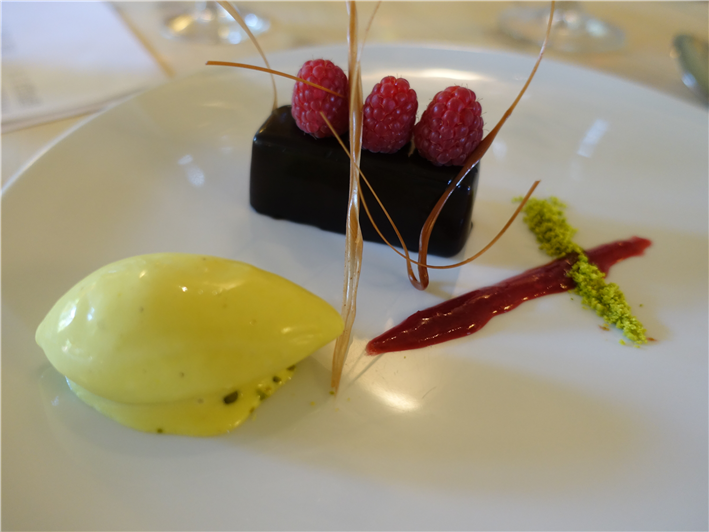
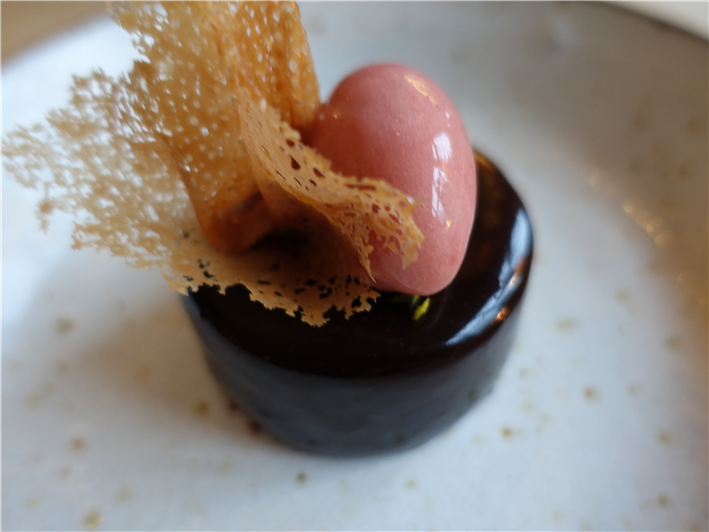
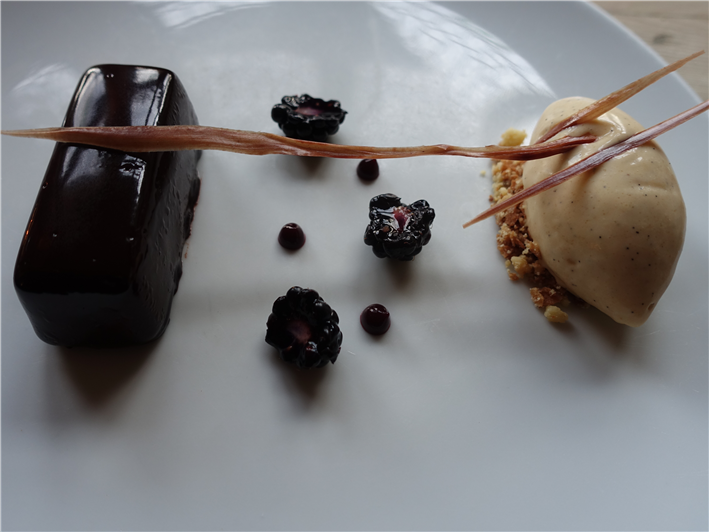
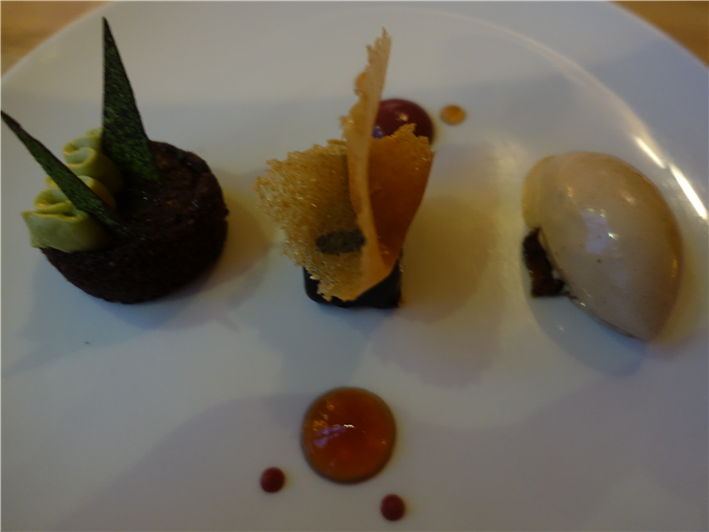
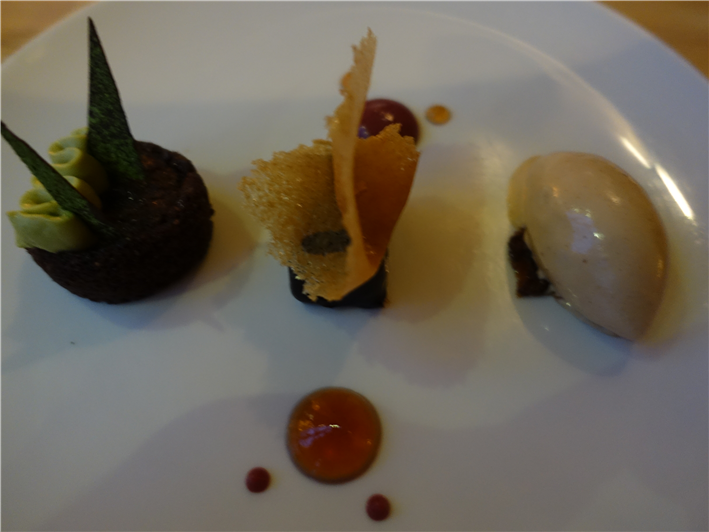
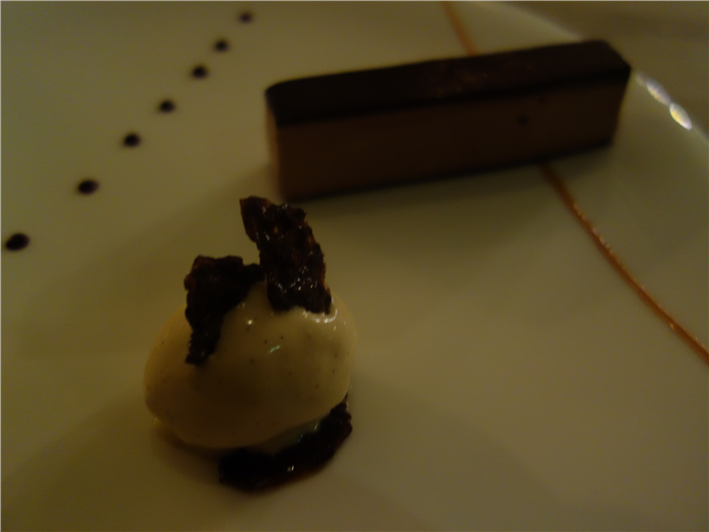
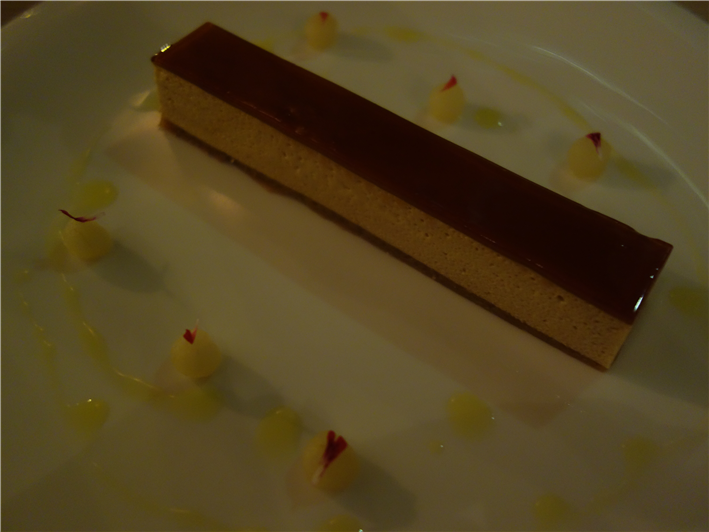
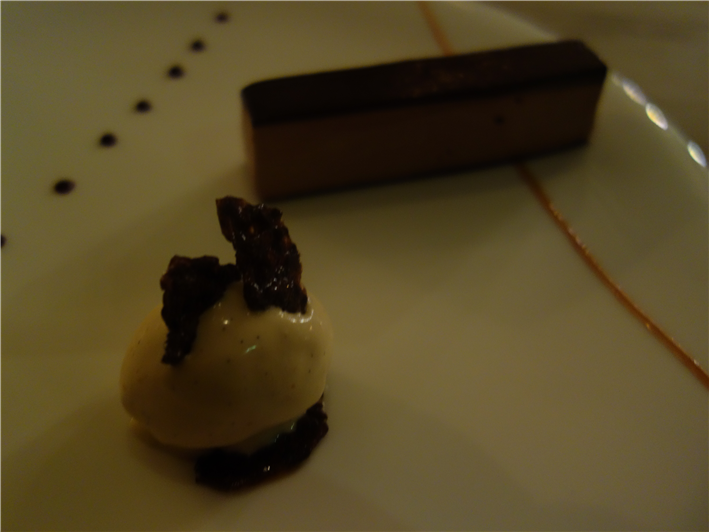
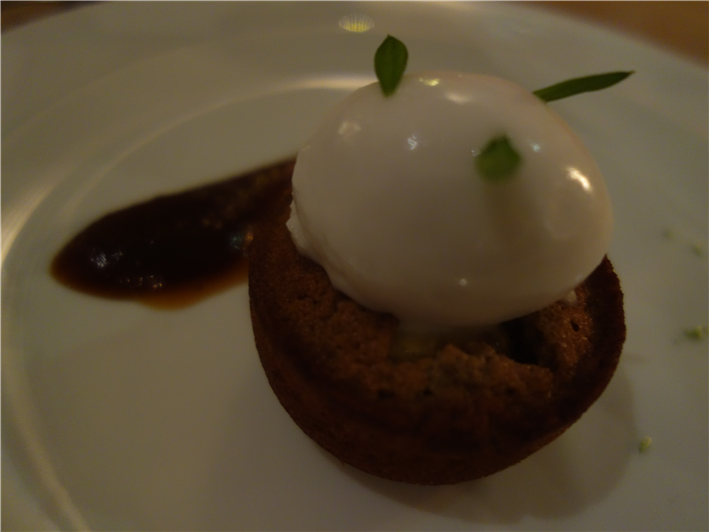
The final dessert was a dark chocolate pavé, cumin caramel and pompona vanilla ice cream. The chocolate pavé is made using Willie’s 72% Venezuelan Rio Caribe chocolate by Willie Harcourt-Cooze, a characterful producer making exceptional chocolate in Devon. The vanilla ice cream recipe comes from Patrick Guilbaud. The kitchen uses pompona vanilla, the rarest vanilla in the world, grown at 800 metres where the Andes meet the Amazon. Believed to be the original vanilla bean, it has an extraordinary flavour profile. Two pods are infused for three days before churning, with the flavour bringing notes of aniseed, dried cherry, and chocolate. Pompona beans are far less prolific than Planifolia or Tahitensis varieties. They produce fewer orchids, take longer to mature, and are difficult to cultivate at scale, making them extremely rare. This was a lovely, rich chocolate dish, and the vanilla was indeed excellent (strong 16/20).
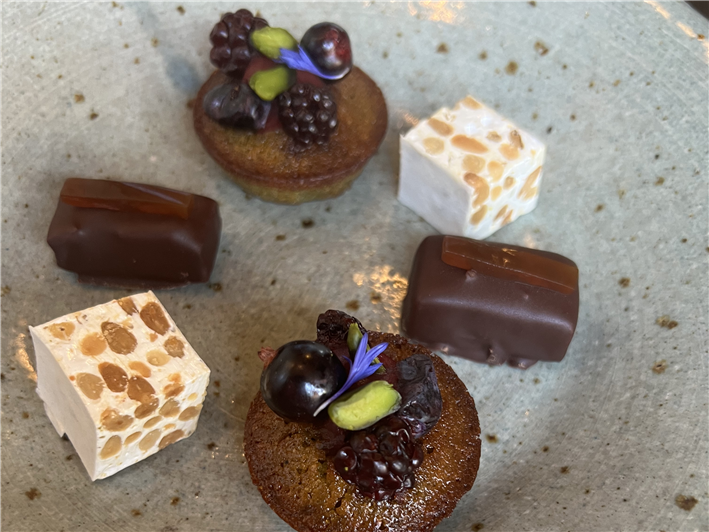
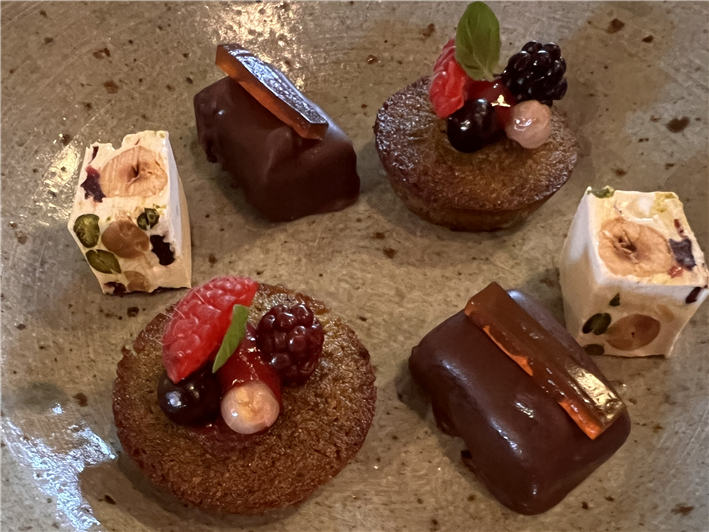
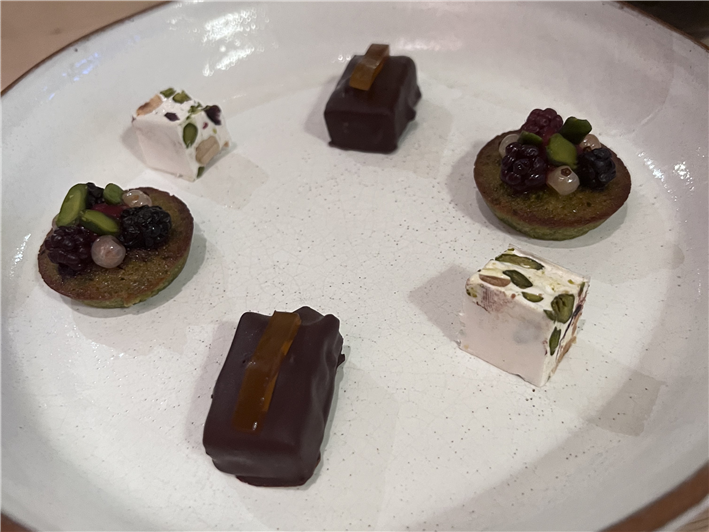
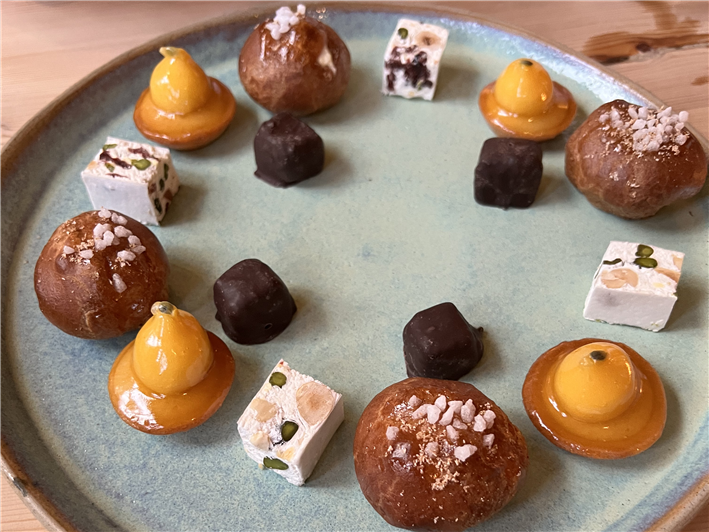
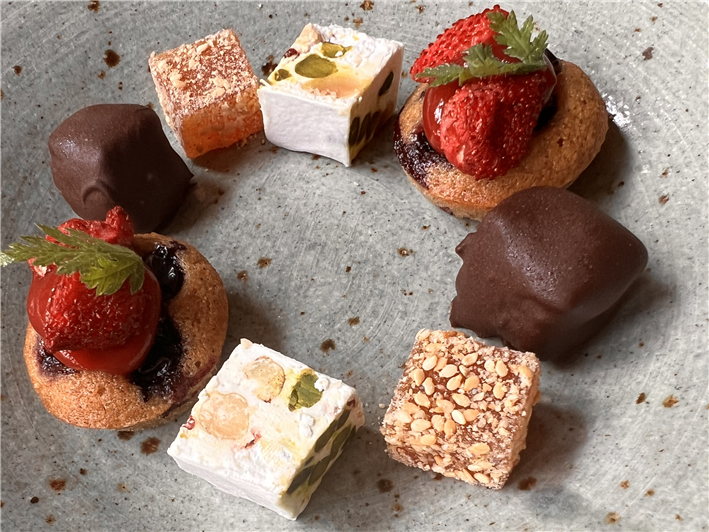
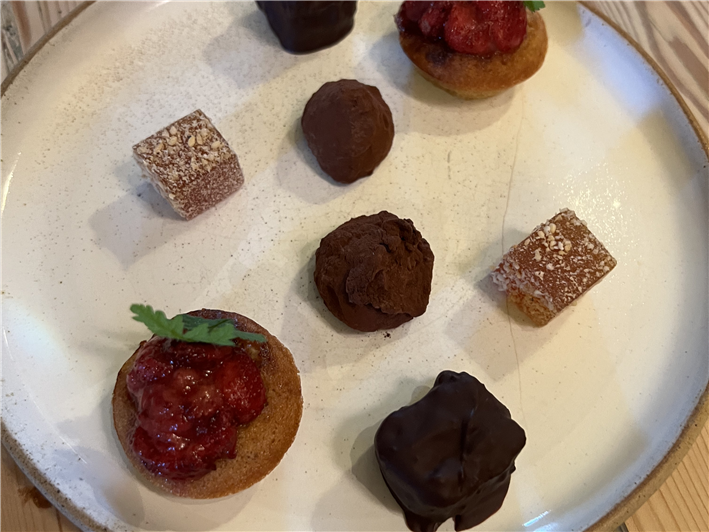
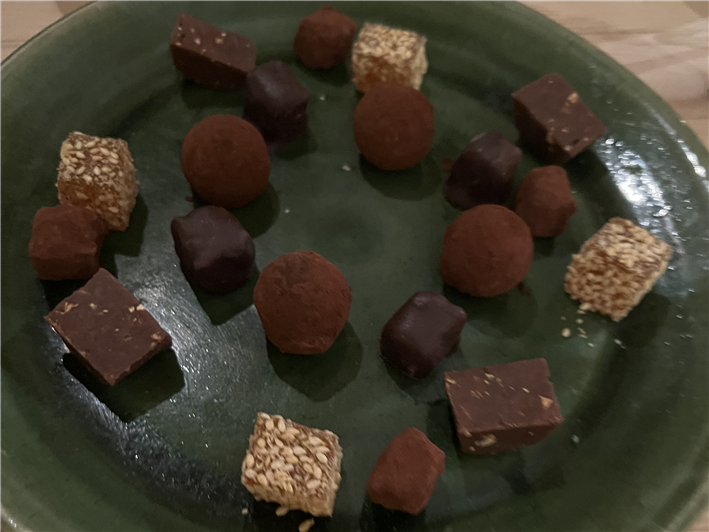
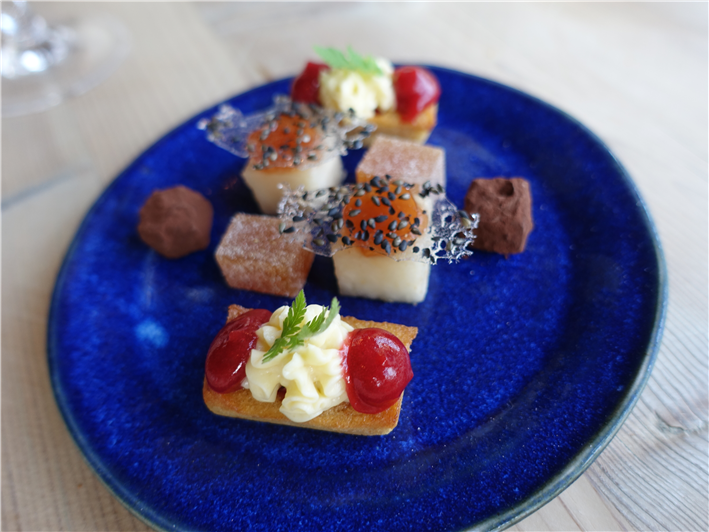
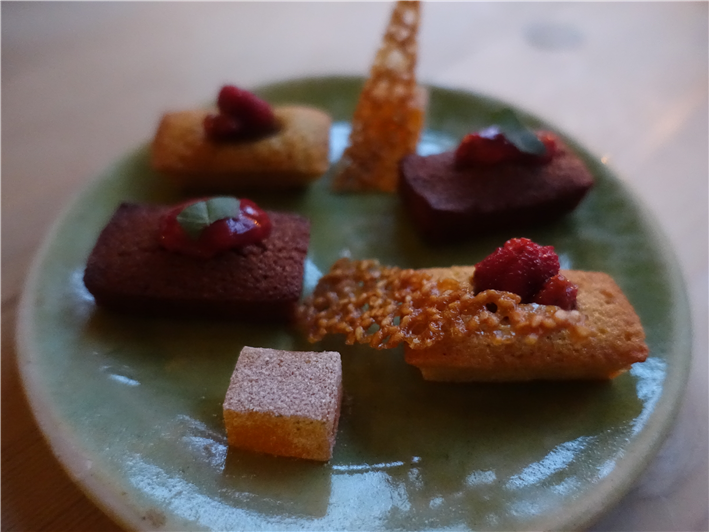
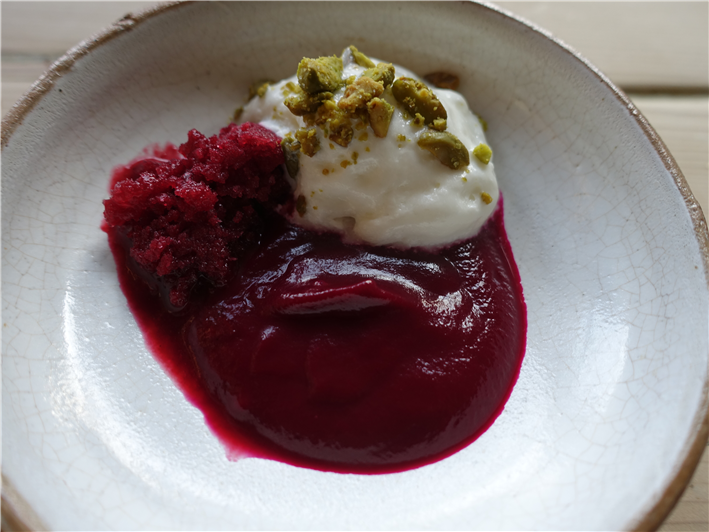
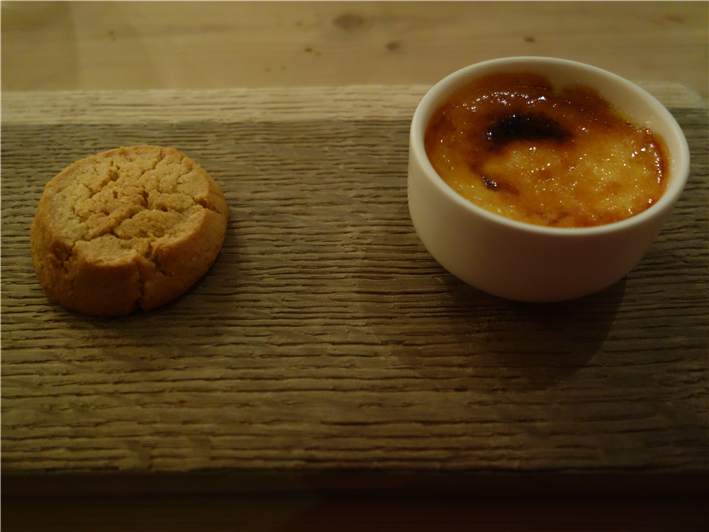
Petit fours with Jamaican Blue Mountain espresso from Difference Coffee completed the meal. There was pistachio and olive oil cake with wild local blackberries and white currants, made with pistachios, polenta, olive oil, and citrus zest, with very little flour, giving a delicate texture. The next of the petit fours was cranberry, Piedmont hazelnut and pistachio nougat, classic nougat made with the best quality Piedmont hazelnuts, green pistachios, and cranberries. The final element of petit fours was a rum and raisin chocolate with twelve-spice jellies made with Willie’s Venezuelan 72% Rio Caribe chocolate. Semi-dried grapes are soaked in rum and coated in tempered chocolate, accompanied by a spiced jelly made with twelve spices, including cardamom, cinnamon, cloves, and saffron, set with agar.
Service, led by owner Barny Taylor, was charming as always. The bill came to £338 per person. Of course, you could eat for much less, especially if you went for the three-course lunch and drank modest wine. The Dysart is one of my favourite restaurants in London. It seems to me to be nonsensical that it only has one Michelin star. The quality of the ingredients and culinary technique is hard to match, and the Dysart is a delightful setting, with its widely spaced tables and relaxed, friendly service. It is a restaurant that deserves significantly more attention than it currently receives.
Book
Further reviews: 19th Jun 2026 | 30th Jan 2026 | 09th May 2025 | 24th Jan 2025 | 01st Aug 2024 | 20th Jun 2024 | 08th Dec 2023 | 27th Oct 2023 | 17th May 2023 | 17th Feb 2023 | 18th Feb 2022 | 12th Jun 2021 | 24th Jul 2020 | 04th Jul 2020 | 13th Mar 2020 | 15th Nov 2019 | 14th Nov 2018 | 15th Dec 2017 | 15th Sep 2015 | 04th Mar 2014 | 03rd Jan 2014
Add a comment
Thank you for submitting your comment, this will be checked and added to the website very soon.
User comments